
Travel to the Land of the Giants
"Clock figures tour Soviet construction sites"
Keys: Space play/pause · ←/→ 10s · F fullscreen · M mute · </> speed
About this film
Animated figures of a mantel clock - the boy Tock and his sister Tick set off to travel through the pages of the book “Travel to the Land of the Giants”. There they learn about the great construction projects of the Soviet Union and get acquainted with production processes.
Cast & crew
More Animation films
View all →






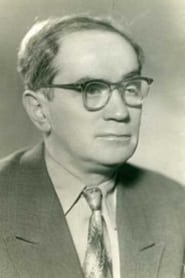
More from Dmitriy Babichenko
View all →



More about this film
About the production
Release date1947
ProductionSoyuzmultfilm
Filmed inMoscow, Soviet Union
The film was produced by Soyuzmultfilm, the premier Soviet animation studio, during the post-WWII reconstruction period. The animation team used traditional cel animation techniques combined with rotoscoping for some of the industrial sequences to achieve greater realism. The production faced material shortages in the immediate post-war years, requiring creative solutions for animation supplies. The film was part of a series of educational animations produced by the studio to promote Soviet achievements and values to younger generations.
Themes
Industrial progressSoviet technological achievementEducation through entertainmentCollective laborPost-war reconstruction
Themes & topics
animationeducationalpropagandaSoviet Unionindustrialclockadventuretechnologyconstructionchildren's film
Historical background
Travel to the Land of the Giants reached theaters around 1947, balancing wartime logistics with demand for escapist programming.
Why this film matters
Travel to the Land of the Giants reflects the range of mid-century production beyond a single national mainstream.
Making of
The production of 'Travel to the Land of the Giants' took place during a challenging period for Soviet animation. The studio was recovering from wartime disruptions, and many animators had returned from military service. Director Dmitriy Babichenko assembled a team that included several veterans of wartime animation production. The animators conducted extensive research at actual Soviet industrial sites to accurately depict the machinery and processes shown in the film. The character designs for Tock and Tick went through multiple iterations to ensure they would appeal to children while maintaining their educational function. The voice actors were chosen from Moscow's theatrical community, with special attention given to making the technical explanations accessible to young audiences. The film's color palette was carefully chosen to emphasize the grandeur and scale of Soviet industrial achievements, using bold reds and blues to reinforce patriotic themes.
What critics said
Press notices for Travel to the Land of the Giants (1947) are sparse in digitized sources; interest today rests on preserved prints and comparison with related titles.
Did you know?
- The film was created during the early years of the Cold War, when Soviet cinema was heavily focused on promoting industrial and technological achievements.
- Director Dmitriy Babichenko was one of the pioneering animators at Soyuzmultfilm and specialized in educational and propaganda films for children.
- The clock characters Tock and Tick were designed to be relatable to children while serving as guides through the complex world of Soviet industry.
- The 'giants' in the title refers metaphorically to the massive industrial projects and machinery rather than actual giants.
- The film's soundtrack incorporated elements of Soviet industrial music, including sounds from actual factories and construction sites.
- This was one of the first Soviet animated films to focus specifically on post-war reconstruction efforts.
- The animation team consulted with actual engineers and factory workers to ensure accurate depictions of industrial processes.
- The film was screened in schools across the Soviet Union as part of the curriculum on industrial education.
- Some of the background paintings were based on actual photographs of Soviet construction sites from the 1930s and 1940s.
- The film's success led to a series of similar educational animations featuring the Tock and Tick characters.
Awards & recognition
- Stalin Prize nomination (1948)
Visual style
The film employed traditional cel animation techniques characteristic of Soyuzmultfilm productions of the 1940s. The animators used a rich color palette with bold primary colors to emphasize the grandeur of Soviet industrial achievements. The visual style combined cartoon character animation with more realistic depictions of machinery and industrial processes. The film used perspective techniques to emphasize the scale of industrial projects, making machinery appear truly 'giant' from the characters' viewpoint. Background paintings were detailed and often based on actual Soviet industrial sites. The animation incorporated some limited special effects, particularly in sequences showing industrial processes in action. The visual storytelling relied heavily on contrast between the small clock characters and the massive industrial environments they explored.
Innovations
The film demonstrated technical innovation in its combination of educational content with entertainment value. The animators developed new techniques for visualizing complex industrial processes in ways that children could understand. The production team created specialized animation methods for depicting machinery and mechanical movement with greater accuracy. The film incorporated some of the first uses of multiplane camera techniques at Soyuzmultfilm for creating depth in industrial scenes. The synchronization of complex mechanical movements with musical elements was particularly advanced for its time. The film's color processing techniques were innovative for the immediate post-war period, achieving vibrant results despite material limitations. The production also pioneered methods for integrating educational diagrams and technical illustrations seamlessly into narrative animation.
Music
The musical score was composed by Soviet composers working with Soyuzmultfilm, incorporating elements of both traditional Russian folk music and industrial-themed compositions. The soundtrack included original songs that emphasized themes of progress, collective labor, and Soviet achievement. Sound effects were carefully crafted to represent industrial machinery accurately, with recordings from actual factories used when possible. The voice acting featured clear diction to ensure the educational content was easily understood by children. The musical numbers were designed to be memorable and singable, encouraging audience engagement with the film's messages. The score followed the Soviet tradition of using music to reinforce emotional and ideological content, with triumphant themes accompanying scenes of industrial achievement.
Famous quotes
In the land of giants, every machine tells a story of progress
Time moves forward, and so does our great Soviet Union
Small hands can understand big machines when they work together
Each gear that turns turns the wheel of our future
Memorable scenes
- The opening sequence where Tock and Tick come to life and leap from the mantel clock into the book
- The montage showing massive Soviet construction projects with the tiny clock figures looking on in awe
- The scene where the characters witness a hydroelectric dam in operation, with water and electricity visualized through animation
- The educational sequence explaining factory assembly lines with the characters participating in the process
What audiences thought
The film was well-received by Soviet children and became a staple of school screenings throughout the late 1940s and 1950s. Young audiences particularly enjoyed the adventures of Tock and Tick, who became recognizable characters in Soviet popular culture. Parents and educators appreciated the film's educational value and its ability to spark interest in science and industry among children. The film's success led to its regular inclusion in cinema programs for children and its broadcast on Soviet television. International audiences had limited exposure to the film during the Cold War, but it was occasionally shown at film festivals showcasing Soviet animation. Modern audiences viewing the film through archival screenings often comment on its historical significance as both an animation work and a cultural artifact of the Stalin era.
Film connections
Influenced by
- Disney educational shorts
- Soviet socialist realist art
- Pre-war Soviet animation traditions
- Industrial documentary films
- Children's educational literature
This film influenced
- Subsequent Soviet educational animations
- Later Tock and Tick films
- Eastern Bloc industrial animations
- Soyuzmultfilm educational series
Film restoration
The film is preserved in the Gosfilmofond archive in Russia, the state film archive of the Russian Federation. Digital restoration efforts have been undertaken as part of broader Soviet animation preservation projects. Some original film elements show signs of deterioration typical of nitrate-based film from the 1940s, but multiple copies exist in various archives. The film has been digitized and is available through some specialized animation archives and museum collections.
Where to watch
- Russian State Film Archive (Gosfilmofond)
- Soyuzmultfilm official archive
- Specialized animation film festivals
- Museum of Modern Art film collection (occasionally)
- Academic film archives specializing in Soviet cinema