
Turkish Dance, Ella Lola
"Motion captured before the nickelodeon boom"
Keys: Space play/pause · ←/→ 10s · F fullscreen · M mute · </> speed
About this film
Dancer Ella Lola performs a Turkish variation of a "Danse Du Ventre", the oriental belly dance. In her dance she shakes, twists and turns around in a very energetic dance.
Cast & crew
More films like this
More from James H. White
View all →


More about this film
About the production
Release dateOctober 1898
Box officeUnknown (early Edison films were sold rather than exhibited for box office)
ProductionEdison Manufacturing Company
Filmed inEdison's Black Maria Studio, West Orange, New Jersey
Filmed in Edison's innovative Black Maria studio, which featured a retractable roof to utilize natural sunlight. The production used a single stationary camera positioned to capture the full body of the performer. The film was shot on 35mm film stock at approximately 16 frames per second, standard for Edison productions of this era. The studio backdrop was deliberately plain to focus attention on the dancer's movements and costume. This was one of two films made featuring Ella Lola, the other being 'Ella Lola, a la Trilby' (1898).
Themes
Cultural documentationPerformance artOrientalismArtistic expression through movementEarly cinema spectacle
Themes & topics
dancebelly danceTurkish danceperformancesilent filmshort filmEdisonBlack Mariaexotic dancecultural performance
Historical background
Turkish Dance, Ella Lola reached screens around 1898, produced in its country of origin. Programs then mixed actualities, dances, and staged scenes in single-reel slots.
Why this film matters
Researchers cite Turkish Dance, Ella Lola when tracing screen culture of its decade. Its brevity makes it useful for teaching how early narratives were staged.
Making of
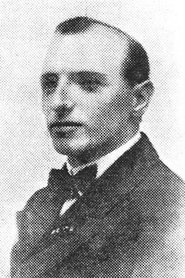
James H. White, who directed this film, was one of Edison's principal filmmakers in the late 1890s and directed hundreds of short subjects. The Black Maria studio where it was filmed was a cramped, tar-paper-covered building that could rotate to follow the sun, providing consistent lighting throughout the day. Ella Lola would have performed multiple takes to ensure the camera captured her best performance, as film stock was expensive and retakes were costly. The studio's lack of heating meant filming could be uncomfortable in winter months. The film was created during a period when Edison was competing with other early filmmakers like the Lumière brothers and American Mutoscope, leading to rapid innovation in film subjects and techniques.
What critics said
Reviewers in 1898 weighed Turkish Dance, Ella Lola on clarity, pacing, and audience response rather than prestige status. No single canonical review dominates later reference works for the title.
Did you know?
- The Black Maria studio where this was filmed was the world's first film production studio, built specifically for Edison's film company
- Ella Lola was a professional dancer who had been performing since childhood and was known for her expertise in various dance styles
- The film was part of Edison's 'exotic dance' series, which was popular with audiences in the late 1890s
- This film survives today and is part of the collection at the Library of Congress
- The term 'Danse Du Ventre' was the French term for belly dance, commonly used in the 19th century
- Edison films of this era were typically sold to exhibitors for $10-15 per copy
- The film was shot on a single continuous take, as editing technology was not yet developed
- Ella Lola's costume was designed to be authentic to Turkish dance traditions of the period
- This film represents one of the earliest cinematic documentations of belly dance
- The film was exhibited in vaudeville houses and penny arcades alongside other short Edison subjects
Visual style
The film was shot using a single stationary camera positioned at eye level to capture the full body of the performer. The lighting came from natural sunlight through the Black Maria's retractable roof, creating the bright, even illumination characteristic of Edison studio productions. The composition places Ella Lola centrally in the frame against a dark, neutral background that emphasizes her movements and costume. The camera work is straightforward and functional, typical of early cinema where the technology itself was the main attraction rather than artistic cinematography.
Innovations
While not technically innovative for its time, the film represents the standardization of Edison's production methods. It was shot on 35mm film at approximately 16 frames per second using Edison's patented equipment. The film demonstrates the effective use of the Black Maria studio's lighting system and the successful capture of rapid movement without the motion blur that plagued early cameras. The preservation of the film showcases the durability of Edison's early film stock and printing processes.
Music
The film was originally silent, as all films were in 1898. When exhibited, it would have been accompanied by live music, typically a pianist or small orchestra in the venue. The musical accompaniment would likely have been Turkish-inspired or exotic-sounding pieces popular in the late 19th century. Modern restorations sometimes add period-appropriate music, but no original score exists as none was created for the film.
Memorable scenes
- The complete performance showcases Ella Lola's remarkable control as she executes complex hip movements while maintaining graceful arm positions, her Turkish costume creating flowing patterns that emphasize the dance's distinctive characteristics. The moment when she performs a series of rapid torso twists demonstrates the technical precision that distinguished her from other dance performers of the era.
What audiences thought
The film was well-received by audiences of its time, who were fascinated by the novelty of moving pictures and exotic subjects. Dance films were particularly popular in penny arcades and vaudeville houses, as they offered visual spectacle without requiring narrative understanding. Ella Lola's performances were noted in contemporary accounts as being among the more sophisticated dance films available. Modern audiences viewing the film in archives and museums often express surprise at the dancer's technical skill and the film's preservation of 19th-century performance styles.
Film connections
Influenced by
- Stage performances of Turkish and Middle Eastern dances popular in American vaudeville
- The 1893 Chicago World's Columbian Exposition which featured Turkish dancers and increased American interest in exotic performances
- Contemporary fascination with Orientalism in art and literature
This film influenced
- Subsequent Edison dance films featuring various ethnic and exotic dance styles
- Later documentary-style dance films
- Early ethnographic films that captured cultural performances
Film restoration
The film is preserved and available through the Library of Congress and various film archives. It has been digitally restored and is part of the public domain. The original 35mm negative and prints are maintained in archival collections, ensuring the film's survival for future generations.
Where to watch
- Library of Congress website (public domain)
- Internet Archive
- YouTube (various public domain uploads)
- Museum of Modern Art film collection
- UCLA Film & Television Archive