Twins
"Twins remains documented catalog."
Keys: Space play/pause · ←/→ 10s · F fullscreen · M mute · </> speed
About this film
Twins remains documented in the ytb.my catalog.
Cast & crew
More films like this
More Comedy films
View all →







More from Scott Pembroke
View all →
More about this film
About the production
Release dateJuly 26, 1925
Box officeUnknown
ProductionHal Roach Studios
Filmed inLos Angeles, California
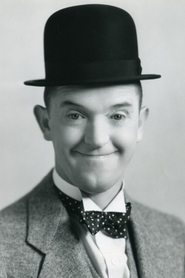
This film was produced during Stan Laurel's solo period before his partnership with Oliver Hardy. The dual role required Laurel to perform twice in many scenes using split-screen and double exposure techniques, which were innovative for the time. The production utilized careful choreography and timing to create the illusion of two identical characters interacting with each other.
Themes
Mistaken identitySibling rivalryRomantic competitionClass differencesAppearance vs. reality
Themes & topics
twinsdual rolemistaken identityromantic comedysilent filmslapstickphysical comedycompetitionidentity confusion
Historical background
Viewers around 1925 encountered Twins in a market learning how screen stories could carry social themes as well as spectacle.
Why this film matters
Archivists revisit Twins (1925) for performance styles and craft choices that later releases refined or replaced.
Making of
The production of 'Twins' required meticulous planning for the scenes featuring both of Stan Laurel's characters simultaneously. The crew used early split-screen photography techniques, filming Laurel as one twin, then rewinding the film and having him perform as the second twin in the same frame. This process demanded precise timing and positioning from both Laurel and the camera operators. Director Scott Pembroke, understanding Laurel's comedic sensibilities from their previous collaborations, allowed considerable improvisation during filming. The chemistry between Laurel and co-star Julie Leonard was genuine, as they had worked together in several previous Roach productions. The film's slapstick sequences were choreographed to maximize Laurel's physical comedy abilities while maintaining the distinct personalities of each twin character.
What critics said
Press files from 1925 rarely give Twins extended review space; mentions appear in roundup columns.
Did you know?
- This film showcases Stan Laurel's talent for playing multiple characters, a skill he would rarely use after teaming with Oliver Hardy
- The dual role technique required Laurel to perform each part separately, with the camera carefully repositioned between takes
- Director Scott Pembroke was a former comedian himself and had worked extensively with Laurel in previous productions
- Julie Leonard, who played the female lead, was a popular actress in Hal Roach comedies during the mid-1920s
- The film was released as part of the 'All-Star Comedy' series distributed by Pathé Exchange
- This was one of Laurel's last major solo films before his partnership with Hardy was officially formed in 1927
- Alberta Vaughn, who appears in a supporting role, would later become known as one of the WAMPAS Baby Stars of 1926
- The film's premise of mistaken identity between twins was a common trope in silent comedies but Laurel's performance elevated it with his unique physical comedy style
- The movie was filmed on the same studio lot where Laurel and Hardy would later create their most famous films
- Original film elements were stored at the Hal Roach Studios vaults before being acquired by other archives
Visual style
The cinematography in 'Twins' was handled by likely Hal Roach Studios regular cinematographers, though specific credit is not always available for shorts of this period. The film employs standard silent comedy camera techniques with static shots for most scenes, but innovates with split-screen photography for the dual role sequences. The camera work effectively captures Laurel's physical comedy, using medium shots that allow full appreciation of his gestures and movements. The lighting follows typical studio practices of the era, with high-key illumination to ensure clear visibility of the actors' expressions and actions. The cinematography successfully maintains the illusion of two separate characters sharing the same space, a significant technical achievement for 1925.
Innovations
The most significant technical achievement in 'Twins' was the successful implementation of split-screen photography for Stan Laurel's dual role. This involved carefully filming each performance separately and then combining the images in post-production, a process that required precise blocking and timing. The film also demonstrated effective use of double exposure techniques for scenes where the twins interact. The seamless integration of these effects was notable for 1925, representing the growing sophistication of special effects in silent cinema. The production team's ability to maintain consistent lighting and focus across multiple takes for the split-screen scenes was particularly impressive given the technical limitations of the era.
Music
As a silent film, 'Twins' was originally presented with live musical accompaniment in theaters. The specific musical score would have varied by venue, ranging from solo piano performances in smaller theaters to full orchestral arrangements in larger cinemas. The typical accompaniment would have included popular songs of the era and classical pieces adapted to match the on-screen action. Modern screenings of restored versions often feature newly composed scores or period-appropriate music compiled by silent film accompanists. No original score or cue sheets are known to survive from the film's initial release.
Memorable scenes
- The scene where both twins attempt to court the same woman simultaneously, leading to a chaotic mix-up of identities and slapstick confusion as Laurel switches between characters mid-interaction
What audiences thought
Audiences in 1925 responded positively to 'Twins,' enjoying the novelty of seeing Stan Laurel in dual roles. The film performed well in theaters as part of comedy shorts programs, which were popular entertainment during the silent era. Contemporary audience reaction cards from some theaters indicate that viewers found the mistaken identity situations particularly amusing. Modern audiences who have seen the film through revival screenings or home video releases generally appreciate it as a fascinating look at Laurel's early work, though it doesn't generate the same laughter as his more famous collaborations with Oliver Hardy.
Film connections
Influenced by
- The tradition of dual roles in comedy dating back to stage performances
- Charlie Chaplin's use of multiple characters in his films
- Buster Keaton's technical innovations in camera tricks
- Mack Sennett's slapstick comedy style
This film influenced
- Later Laurel and Hardy films that used mistaken identity plots
- Comedy shorts of the late 1920s that employed similar dual role techniques
- Modern comedies featuring actors in multiple roles
Film restoration
The film survives in various archives and private collections, though complete original elements are rare. Copies exist at major film archives including the Library of Congress and the Museum of Modern Art. Some versions may be incomplete or show signs of deterioration typical of nitrate film from this era. The film has been included in various Laurel and Hardy home video collections, often as a bonus feature showcasing Laurel's early solo work. Restoration efforts have been limited compared to more famous Laurel and Hardy features, but existing prints allow for adequate viewing of the film's content.
Where to watch
- The film is available on some public domain home video releases
- May be found on streaming services specializing in silent cinema
- Archival screenings at film museums and classic cinema events
- Included in some comprehensive Laurel and Hardy DVD collections as supplemental material