Watermelon Contest
"First man through the melon wins"
Keys: Space play/pause · ←/→ 10s · F fullscreen · M mute · </> speed
About this film
Two men compete to finish a large slice of watermelon first in an 1896 Lumière actuality. The brief record captures a simple eating contest staged for early cinema audiences.
Cast & crew
More films like this

More Comedy films
View all →







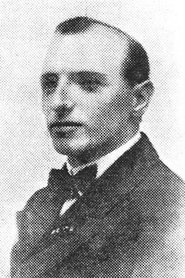
More from James H. White
View all →


More about this film
About the production
Release dateJuly 1896
Box officeUnknown - Edison films were sold rather than exhibited for box office returns
ProductionEdison Manufacturing Company
Filmed inBlack Maria Studio, West Orange, New Jersey
Filmed in Edison's revolutionary Black Maria studio, which could be rotated to follow the sun's movement for optimal lighting. The watermelon eating contest was likely staged specifically for the camera, as early films often featured novelty acts or simple competitions that could be easily filmed and understood by audiences. The participants were likely studio employees or local talent hired for the day.
Themes
CompetitionHumorFood cultureEntertainmentAmerican leisure activities
Themes & topics
Historical background
Watermelon Contest (1896) reached audiences during cinema's first decade, when exhibitors mixed shorts and features on the same program.
Why this film matters
Historians retain Watermelon Contest as a record of how filmmakers in 1896 addressed popular genres.
Making of
The filming of 'Watermelon Contest' took place in Edison's innovative Black Maria studio, a tar-paper-covered building designed specifically for movie production. The studio featured a retractable roof that could be opened to allow sunlight in, and the entire structure could be rotated on tracks to follow the sun's path throughout the day, ensuring consistent lighting. James H. White, who directed the release, was Edison's principal filmmaker and had to work with the cumbersome Kinetograph camera, which weighed nearly 500 pounds and had to be bolted down. The watermelon eating contest was likely rehearsed multiple times to ensure it fit within the extremely short film length limits of the era. The participants, probably local workers or studio employees, would have been instructed to exaggerate their eating motions for visual clarity in the tiny Kinetoscope viewing frames.
What critics said
Trade coverage from 1896 treated Watermelon Contest as program material; later writers evaluate it through preservation and genre context.
Did you know?
- the release was shot on 35mm film using Edison's Kinetograph camera, which was so heavy it had to be bolted to the floor
- The Black Maria studio where this was filmed was the world's first film production studio, built specifically for Edison's film experiments
- Watermelon was a popular subject in early films due to its visual appeal and the humorous possibilities of eating it messily on camera
- Director James H. White was one of Edison's most prolific early filmmakers, directing hundreds of short films between 1896-1902
- The film was likely shown on Edison's Kinetoscope, a peep-hole viewing device that allowed one person at a time to watch the film
- Early films like this were often sold to vaudeville theaters as novelty acts between live performances
- The participants in the film were probably paid about $1-2 for their performance, a typical rate for early film extras
- the release represents the emerging genre of comedy in cinema, showing that even in 1896, filmmakers understood the entertainment value of humor
- The watermelon eating contest format would become a recurring theme in early films and later in television variety shows
- Like most Edison films of this era, no copyright was registered, making it part of the public domain from the beginning
Visual style
The cinematography in 'Watermelon Contest' reflects the technical limitations and innovations of 1896. The film was shot using a single stationary camera, as camera movement was not yet technically feasible. The lighting came entirely from natural sunlight entering through the Black Maria studio's retractable roof, creating a harsh, high-contrast look typical of early films. The composition places the two competitors centrally in the frame, ensuring maximum visibility for the Kinetoscope's small viewing area. The camera angle is straight-on, providing a documentary-style view of the action. The film speed was likely around 16 frames per second, giving the motion a slightly jerky quality when viewed at modern speeds. Despite these technical constraints, the framing effectively captures the competitive dynamic and humorous elements of the watermelon eating contest.
Innovations
While 'Watermelon Contest' itself was not technically innovative, it represents the state-of-the-art filmmaking of 1896. The film was created using Edison's Kinetograph camera, which was one of the first practical motion picture cameras. The ability to capture and reproduce motion at 16 frames per second was itself a major technological achievement. The film was shot on 35mm celluloid film, establishing a format that would become the industry standard for over a century. The Black Maria studio's rotating design was an engineering innovation that solved the lighting problems faced by early filmmakers. The film also demonstrates the early understanding of continuity editing, with the entire contest captured in a single, uninterrupted take.
Music
As a film from 1896, 'Watermelon Contest' was produced during the silent era and had no synchronized soundtrack. When exhibited in theaters, it would have been accompanied by live musical performance, typically a pianist or small orchestra playing appropriate mood music. The music might have been light and comical to match the on-screen action. In Kinetoscope parlors, where individual viewers watched the film through peep-hole devices, there was no musical accompaniment. The sounds of the actual eating contest - chewing, swallowing, and the participants' breathing - were not recorded, as synchronized sound technology would not be developed for another three decades.
Famous quotes
No dialogue - silent film
Memorable scenes
- The climactic moment when one contestant finishes their watermelon slice first, raising their arms in victory while the other continues eating, their face and hands covered in watermelon juice
What audiences thought
Early audiences were fascinated by any moving images, and a film showing a competitive eating contest would have been particularly entertaining. Viewers watching through the Kinetoscope peep-hole devices would have been amused by the novelty of seeing real people captured in motion, especially engaged in a humorous activity. The universal appeal of watching someone eat messily quickly made this type of film popular across different demographics. In vaudeville theater settings where such films were shown between live acts, audiences reportedly responded with laughter and applause to the simple visual comedy. The film's success likely encouraged Edison to produce more similar competition and novelty films.
Film connections
Influenced by
- Edison's earlier actuality films
- Vaudeville comedy routines
- Photographic sequences by Eadweard Muyveybridge
- Stage magic shows and novelty acts
This film influenced
- Other Edison competition films
- Early comedy shorts by Georges Méliès
- Food-based comedy films throughout cinema history
- Reality television competition shows
Film restoration
Preserved in the Library of Congress collection as part of the Edison Manufacturing Company papers. The film survives in 35mm format and has been digitally restored. Multiple copies exist in film archives worldwide, including the Museum of Modern Art and the British Film Institute. The film is in the public domain.
Where to watch
- Library of Congress National Screening Room
- YouTube (public domain uploads)
- Internet Archive
- Various early cinema compilation DVDs
- Museum of Modern Art online collection
- Kino Lorber's 'The Movies Begin' DVD collection