Watermelon Contest
"Four men race to finish enormous slices of watermelon."
Keys: Space play/pause · ←/→ 10s · F fullscreen · M mute · </> speed
About this film
Watermelon-eating contest a large slice of watermelon, and have a race to see who can finish eating first. All four move quickly, but one man seems to be pulling ahead of the others. Soon the contestants begin to hinder one another's efforts.
Cast & crew
More films like this
More Comedy films
View all →







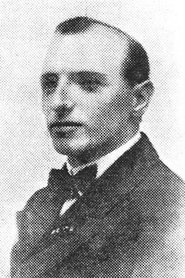
More from James H. White
View all →


More about this film
About the production
Release dateMarch 1900
ProductionEdison Manufacturing Company
Filmed inBlack Maria Studio, West Orange, New Jersey
Filmed in Edison's Black Maria studio, the first film production studio in the world. The film was shot on 35mm film using Edison's own camera equipment. As with most Edison productions of this era, it was likely filmed in a single take with minimal editing.
Themes
CompetitionPhysical comedyGluttonySportsmanshipAmerican leisure activities
Themes & topics
Historical background
The 1900 premiere placed Watermelon Contest alongside contemporaneous releases that were collectively teaching viewers how to read cinematic time and space.
Why this film matters
Later homages and restorations keep Watermelon Contest circulating among silent- and classic-film communities long after its first run.
Making of
The film was shot at Edison's revolutionary Black Maria studio, which was essentially a large wooden shed covered in tar paper that could rotate on a track to follow the sun. The studio featured a retractable roof to allow natural sunlight to illuminate the set, as artificial lighting technology was still primitive. James H. White, who directed this film, was especially prolific filmmakers of the 1890s and early 1900s, directing hundreds of short films for Edison. The contestants were likely studio employees or local residents recruited for the shoot, as professional film actors did not yet exist. The entire film was probably shot in one continuous take, as editing was extremely difficult and expensive in 1900. The watermelon used would have been real, and the mess created was an authentic part of the performance.
What critics said
Audience surveys from 1900 are scarce; reception for Watermelon Contest must be inferred from reissue patterns and how often programmers still book it.
Did you know?
- This film was directed by James H. White, who was one of Edison's principal directors and cinematographers during the early cinema period.
- The film was produced by the Edison Manufacturing Company, which was one of the first and most influential film production companies in America.
- Watermelon eating contests were a popular subject for early films because they provided visual humor that didn't require intertitles or sound.
- The Black Maria studio where this was filmed was nicknamed the 'Doghouse' due to its appearance and had a retractable roof to allow for natural sunlight.
- This film was part of Edison's early comedy series that showcased simple, physical humor suitable for audiences of all ages.
- The film was copyrighted on March 24, 1900, as was standard practice for Edison productions to protect against unauthorized copying.
- Like many early films, it was likely shown as part of a vaudeville program rather than as a standalone feature.
- The actors in the film were likely Edison studio regulars rather than professional actors, as the concept of film stardom had not yet developed.
- The watermelon contest theme was repeated in several other early films by different companies, showing its popularity as a subject.
- This film represents an early example of the sports/competition genre that would become popular throughout cinema history.
Visual style
The cinematography in Watermelon Contest is representative of early 1900s filmmaking techniques. The film uses a single static camera position, typical of the era, capturing the entire action in one wide shot. The camera was likely hand-cranked, resulting in variable frame rates that would create slight speed variations in the motion. The lighting would have been natural sunlight coming through the retractable roof of the Black Maria studio, creating harsh shadows and high contrast typical of early films. The composition is simple and functional, with all four contestants clearly visible throughout the competition. There are no camera movements or changes in angle, as these techniques had not yet been developed. The black and white film stock of the era would have rendered the watermelon in various shades of gray, though the red of the fruit would have appeared darker in the final image.
Innovations
While not technically innovative for its time, Watermelon Contest demonstrates the standard technical capabilities of Edison's studio in 1900. The film was shot on 35mm film using Edison's own patented equipment, ensuring high quality for the era. The single-take filming approach required precise timing and coordination from the performers, as there was no opportunity for editing or retakes. The film's successful capture of rapid motion shows the advancement of camera technology from the earliest days of cinema, where movement often appeared jerky or unclear. The preservation of the film for over 120 years is itself a technical achievement, though much of Edison's early output has been lost to time. The film represents the standardization of film formats and techniques that would allow cinema to develop into a global industry.
Music
As a silent film from 1900, Watermelon Contest had no synchronized soundtrack. When originally shown, it would have been accompanied by live music, typically a pianist or small orchestra playing popular tunes of the era or improvising music to match the on-screen action. The music would have been upbeat and playful to enhance the comedic nature of the contest. Some exhibitors might have used sound effects created manually, such as bells or whistles, to punctuate key moments. The Edison studio did produce some sound films using their phonograph technology around this time, but this particular film was purely visual. Modern screenings of the film might feature newly composed scores or period-appropriate music to recreate the original viewing experience.
Memorable scenes
- The chaotic finale where all four contestants are simultaneously interfering with each other's eating, creating a comical mess of watermelon and frantic motion
What audiences thought
Audiences in 1900 would have found this short film highly entertaining due to its novelty and straightforward humor. The sight of grown men frantically eating watermelon and interfering with each other would have elicited laughter from viewers of all ages. The film's brevity made it perfect for the short attention spans of early cinema audiences who were still adjusting to this new medium. The physical comedy was easily understood without needing intertitles or spoken dialogue, making it accessible to diverse audiences including immigrants who might not speak English. The messy nature of the contest would have added to the spectacle, as early audiences were fascinated by any visual display, no matter how simple. The film likely received enthusiastic responses when shown as part of Edison's touring exhibitions or at the Black Maria studio itself.
Film connections
Influenced by
- Earlier Edison comedy shorts
- Vaudeville comedy routines
- Circus sideshow acts
This film influenced
- Later Edison comedy shorts
- Early Keystone comedies
- Slapstick food comedy films
- Modern competitive eating documentaries
Film restoration
Preserved in the Library of Congress collection as part of the Paper Print Collection. The film survives in reasonably good condition for its age, though some deterioration is visible. It has been digitized and made available through various archival websites.
Where to watch
- Library of Congress National Screening Room
- Internet Archive
- Early Cinema databases
- Museum of Modern Art film collection