Weaving Women
"Film where group women involved"
Keys: Space play/pause · ←/→ 10s · F fullscreen · M mute · </> speed
About this film
1905 silent short film where a group of women involved in the weaving process.
Cast & crew
More films like this
More Documentary films
View all →





More from Janaki Manaki
View all →
More about this film
About the production
Release date1905
ProductionManaki Brothers Studio
Filmed inManastir, Ottoman Empire (present-day Bitola, North Macedonia)
Filmed using a Bioscope camera, one of the first motion picture cameras in the Balkans. The Manaki brothers had to import their equipment from Western Europe, as there were no local suppliers. The film was shot in natural light, as artificial lighting technology was not yet available for motion pictures. The women featured were likely local residents from the Bitola area, captured in their authentic working environment.
Themes
Traditional craftsWomen's laborCultural preservationEthnographic documentationRural life
Themes & topics
Historical background
Weaving Women (1905) emerged during the earliest years of projected motion pictures, when exhibition habits and national film industries were still taking shape.
Why this film matters
Weaving Women remains accessible through digital archives, giving modern viewers a direct link to 1905 screen culture.
Making of
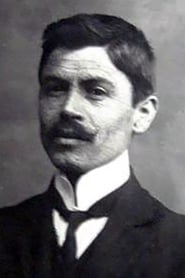
Janaki Manaki, working with his brother Milton, established one of the first photographic studios in the Balkans before venturing into cinematography. The brothers had to travel to Vienna and other European cities to acquire their camera equipment and learn the new technology of motion pictures. For 'Weaving Women,' they likely set up their cumbersome Bioscope camera in a location where local women regularly gathered to weave, possibly a workshop or home. The filming process would have been challenging due to the camera's hand-crank mechanism, requiring careful coordination to capture the weaving process smoothly. The women in the film were not actors but actual craftspeople, making this one of the earliest examples of observational documentary filmmaking.
What critics said
Retrospective notes on Weaving Women emphasize its value as a silent-era document rather than blockbuster reception.
Did you know?
- This is considered one of the first films ever made in the Balkans region, marking the beginning of cinema in Southeastern Europe
- The Manaki brothers, Janaki and Milton, were actually of Aromanian ethnicity, not Macedonian, though they worked extensively in Macedonia
- The film was shot on 35mm film stock, which was extremely expensive and difficult to obtain in the Ottoman Empire at the time
- Janaki Manaki was primarily a photographer before moving into cinematography, bringing his photographic eye to moving images
- The film survived through the efforts of film archivists who preserved the Manaki brothers' legacy despite political upheavals in the region
- This documentary predates the establishment of most national film industries in the Balkans by decades
- The weaving techniques shown in the film represent traditional Macedonian patterns that are now considered cultural heritage
- The film was likely screened locally as part of traveling cinema shows that were popular in the Ottoman Empire in the early 1900s
Visual style
The cinematography reflects the technical limitations and aesthetic conventions of 1905. The camera was likely stationary, mounted on a tripod, as camera movement technology had not yet been developed. The film uses natural lighting, creating high contrast images typical of early cinema. The framing is composed with the photographer's eye that Janaki Manaki brought from his still photography work. The black and white images have a distinctive grain quality due to the film stock of the period. The camera distance was chosen to capture both the women's actions and their working environment, providing context for the weaving process.
Innovations
The film represents a technical achievement simply by virtue of being produced in the Ottoman Empire's European territories in 1905, where motion picture technology was virtually nonexistent. The Manaki brothers were among the first to import and operate film equipment in the region. The survival of the film itself is remarkable, given the political upheavals and lack of formal film preservation infrastructure in the Balkans throughout the 20th century. The use of 35mm film stock was advanced for the region at the time, as many early filmmakers used smaller, less expensive formats.
Memorable scenes
- The opening shot showing women gathered around wooden looms, their hands moving rhythmically as they manipulate threads and create traditional Macedonian patterns, all captured in the authentic lighting of their workspace.
What audiences thought
Original audience reception is not documented, but early films like this were typically shown as part of variety programs or traveling exhibitions. Local audiences in Bitola and surrounding areas would have been fascinated by the novelty of seeing moving images, especially of familiar people and activities. Modern audiences viewing the film in archives or museums are struck by its historical significance and the window it provides into a vanished way of life. The film is now primarily viewed by researchers, students of film history, and those interested in Macedonian cultural heritage.
Film connections
Influenced by
- Lumière brothers' actuality films
- Early ethnographic photography
- Travel documentaries
This film influenced
- Subsequent Manaki brothers documentaries
- Yugoslav ethnographic films
- Modern Macedonian documentary tradition
Film restoration
The film is preserved in the Manaki Brothers Film Archive in Bitola, North Macedonia. It has been digitized as part of efforts to preserve the Manaki brothers' legacy. The original nitrate film stock has been carefully stored under archival conditions. The film is included in UNESCO's Memory of the World Register as part of the Manaki brothers' collection, recognizing its cultural and historical significance.
Where to watch
- Manaki Brothers Film Museum, Bitola, North Macedonia
- Cinematheque of North Macedonia
- Selected film festivals specializing in early cinema
- Academic archives and university film studies departments
- Occasional screenings at documentary film festivals