
Where Is The Friend's House?
"a grade schooler from the village of Koker"
Keys: Space play/pause · ←/→ 10s · F fullscreen · M mute · </> speed
About this film
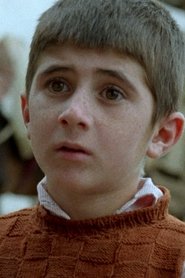
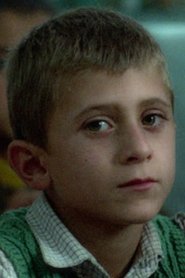
Full film Ahmad, a grade schooler from the village of Koker, watches as his teacher berates a fellow student, Mohammad Reza, for repeatedly failing to complete the homework in his notebook, threatening expulsion on the next offense. When Ahmad returns home, he realizes he has accidentally taken Reza's notebook. Against his mother's orders, he sets out in search for Reza's house in the neighbouring Poshteh, encountering false leads, dead ends, and distractions as he attempts to enlist adults in his search, most of whom ignore him or cannot answer his questions.
Cast & crew
More films like this
More Drama films
View all →







More from Abbas Kiarostami
View all →

More about this film
About the production
Release dateFebruary 1987 (premiered at Tehran International Film Festival)
BudgetApproximately $25,000-$30,000 USD (typical for Iranian art films of this era)
Box officeLimited commercial release, primarily in art house circuits and film festivals
ProductionInstitute for the Intellectual Development of Children and Young Adults (Kanoon)
Filmed inKoker, Iran (a village in northern Iran that was later damaged in the 1990 Manjil-Rudbar earthquake)
Shot with non-professional actors from the local village, with director Abbas Kiarostami employing a documentary-style approach. The film was made during the Iran-Iraq war period, which created additional production challenges. Kiarostami often improvised scenes with the child actors, allowing them to react naturally to situations rather than following a strict script. The production used minimal equipment and natural lighting to maintain authenticity.
Themes
Themes & topics
notebookschoolfriendshipjourneyvillagechild protagonistmistakesearchresponsibilityeducationrural Iranmoral dilemmadeterminationinnocence
Historical background
Where Is The Friend's House? (1987) emerged during contemporary moving-image culture. Full film Ahmad, a grade schooler from the village of Koker, watches as his teacher berates a fellow student, Mohammad Reza, for repeatedly failing to complete the homework in his notebook, threatening expulsion on the next offense. Archival records and catalog entries help place the work within film-history surveys of the period.
Why this film matters
Preserved under Wikidata ID Q2308266, Where Is The Friend's House? is valued as a screen drama within catalog and archive collections. Wikipedia's "Where Is the Friend's House?" entry connect it to broader histories of cinema exhibition and restoration.
Making of
The production was marked by Kiarostami's innovative approach to working with non-professional child actors. He would often set up situations and let the children react naturally, capturing genuine emotions rather than coached performances. The director faced numerous challenges during filming, including limited resources, political restrictions, and the ongoing Iran-Iraq war. Many scenes had to be shot quickly and discreetly, with the crew sometimes having to pretend they were making a documentary to avoid suspicion. The film's authentic village setting was crucial, and Kiarostami spent months building relationships with the local community before filming began. The child actors were not given the full script to maintain their natural reactions to unfolding events.
What critics said
Trade and archival sources offer limited day-one review coverage for Where Is The Friend's House?. Modern reception rests on its availability in collections, repertory screenings, and reference works that document 1987 cinema.
Did you know?
- This is the first film in what became known as the Koker Trilogy, followed by 'And Life Goes On' (1992) and 'Through the Olive Trees' (1994)
- The film's title in Persian is 'Khane-ye doust kodjast?' which literally translates to 'Where is the friend's home?'
- Director Abbas Kiarostami discovered the lead actor Babek Ahmed Poor when he was visiting the village for another project
- The notebook that drives the plot was actually written by a real student to maintain authenticity
- Many scenes were shot with hidden cameras to capture natural reactions from villagers
- The film was initially intended as an educational movie for children but gained international recognition as art cinema
- The winding path Ahmad follows through the village was inspired by Kiarostami's own childhood experiences
- The film was banned in some countries due to political tensions with Iran during the 1980s
- Kiarostami often had to hide his camera during filming to avoid drawing attention from authorities
- The adult actor who plays Ahmad's grandfather was actually the boy's real grandfather
Awards & recognition
- Golden Leopard (Best Film) at Locarno International Film Festival 1987
- Golden Plaque at Chicago International Film Festival 1987
- Best Film at Fajr Film Festival 1987
- UNICEF Award at Cannes Film Festival 1989
Visual style
The film features naturalistic cinematography by Farhad Saba, employing documentary-style techniques with handheld cameras and natural lighting. The visual approach emphasizes authenticity, with long takes that allow scenes to unfold organically. The camera often follows Ahmad from a child's eye level, creating intimacy and emphasizing his perspective within the adult world. The winding paths through the village are captured in sweeping shots that mirror the journey's emotional arc. The use of available light and real locations creates a sense of immediacy and truthfulness. The visual style avoids artificial beauty in favor of capturing the raw poetry of everyday life, with compositions that find grace in ordinary moments.
Innovations
The film's primary technical achievement lies in its seamless blending of documentary and fiction techniques. Kiarostami pioneered methods for working with non-professional child actors that felt completely authentic while still serving a carefully constructed narrative. The production team developed innovative approaches for low-budget filmmaking that maximized visual impact with minimal resources. The film's editing creates a rhythm that mirrors a child's sense of urgency and determination. The technical team succeeded in capturing the essence of village life without romanticizing or exploiting it. The film demonstrated how technical limitations could become artistic strengths, influencing independent filmmakers worldwide to embrace minimalism and authenticity.
Music
The film uses minimal music, relying instead on natural sounds of the village environment. When music does appear, it's subtle and often diegetic, coming from sources within the scene rather than an orchestral score. The soundtrack emphasizes ambient sounds - footsteps on dirt paths, village conversations, distant calls, and the rustling of papers. This naturalistic audio approach enhances the documentary feel of the film. The few musical moments are typically traditional Persian melodies that blend seamlessly with the environment. The deliberate absence of dramatic scoring forces viewers to focus on the visual storytelling and the emotional weight of simple actions and silences.
Famous quotes
Where is your friend's house?
If you don't bring your notebook, you'll be expelled
I must find his house before tomorrow
Why won't anyone help me?
My friend will be punished because of me
Memorable scenes
- Ahmad running through the winding village paths searching for his friend's house as evening approaches
- The scene where Ahmad repeatedly asks adults for directions but is consistently dismissed or misunderstood
- The emotional climax when Ahmad finally finds the correct house and returns the notebook
- The opening sequence in the classroom where the teacher's strict rules establish the stakes
- Ahmad's interaction with the elderly carpenter who tries to help him
- The final shot of Ahmad walking home, exhausted but triumphant
What audiences thought
While the film had limited commercial release due to its art house nature, it resonated deeply with audiences who discovered it through film festivals and specialized cinemas. Iranian audiences embraced the film for its authentic portrayal of village life and its celebration of childhood innocence. International audiences were moved by its universal themes and the young protagonist's determination. Over time, through home video releases and streaming platforms, the film has developed a devoted cult following. Many viewers report being profoundly affected by its emotional power and simple wisdom. The film's accessibility despite its cultural specificity has made it a beloved introduction to Iranian cinema for Western audiences.
Film connections
Influenced by
- Italian Neorealism (particularly De Sica's 'Bicycle Thieves')
- Iranian literary traditions
- Documentary filmmaking techniques
- Persian poetry and storytelling
- Children's literature
- French New Wave observational cinema
This film influenced
- The Sweet Hereafter
- Children of Heaven
- The White Balloon
- Ratcatcher
- Beasts of the Southern Wild
- The Kid with a Bike
- Capernaum
- Mustang
Film restoration
The film has been well-preserved and restored by the Criterion Collection, which released a digitally restored version in 2015. The original negative is maintained in Iranian film archives. Given its cultural significance, the film has been carefully preserved by international film institutions including the Cinémathèque Française and the Museum of Modern Art. The restoration process involved cleaning the original elements and creating new digital masters to ensure the film's availability for future generations.
Where to watch
- The Criterion Channel (streaming)
- MUBI (streaming)
- Kanopy (streaming with library card)
- Criterion Collection Blu-ray/DVD
- Various art house cinema retrospective screenings
- Film festival archives and special programs