

Abbas Kiarostami
Director
Born: June 22, 1940 in Tehran, Iran Died: July 4, 2016 Active: 1970-2016
Films
4 films

About Abbas Kiarostami
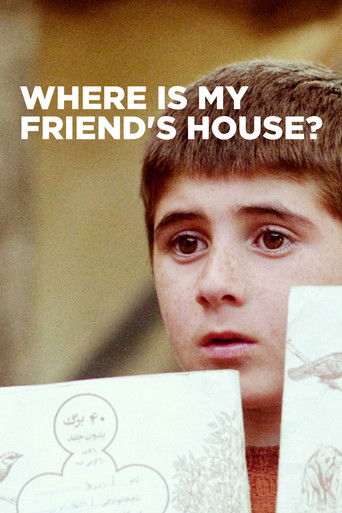
Iranian film director, screenwriter, photographer, and film producer who became a leading filmmaker in world cinema during the late 20th century. Born in Tehran in 1940, he began his career in the 1960s working at the Center for Intellectual Development of Children and Young Adults, where he made numerous short films. His feature film debut came with 'The Report' in 1977, followed by the acclaimed 'Where Is the Friend's House?' in 1987, which became part of his celebrated Koker trilogy. Kiarostami gained international recognition with 'Close-Up' (1990), a documentary-fiction hybrid that showcased his innovative approach to storytelling. His masterpiece 'A Taste of Cherry' (1997) won the prestigious Palme d'Or at the Cannes Film Festival, cementing his reputation among the world's leading filmmakers. Throughout his career, he continued to push boundaries with films like 'The Wind Will Carry Us' (1999), 'Ten' (2002), and 'Certified Copy' (2010), which was his first film made outside Iran. Kiarostami's work is characterized by its poetic humanism, philosophical depth, and revolutionary blurring of documentary and fiction.
The Craft
Behind the Camera
Kiarostami's directing style is characterized by poetic minimalism, philosophical contemplation, and innovative narrative structures. He frequently employed non-professional actors, improvisation, and long takes to create authentic human moments. His films often blur the boundaries between documentary and fiction, using meta-cinematic techniques to explore the nature of reality and representation. Kiarostami was known for his use of landscape as character, particularly the Iranian countryside, and his distinctive use of car interiors as framing devices. His approach emphasized humanism, everyday life, and the search for meaning in ordinary experiences.
Milestones
- Directed 'Close-Up' (1990), documentary-fiction hybrid
- Won Palme d'Or at Cannes for 'A Taste of Cherry' (1997)
- Created the acclaimed Koker trilogy
- First Iranian to win major international film awards
- Pioneered digital filmmaking with 'Ten' (2002)
- Received honorary Academy Award in 2012
- Served on Cannes Film Festival jury multiple times
Best Known For
Must-See Films
Accolades
Won
- Palme d'Or at Cannes Film Festival for 'A Taste of Cherry' (1997)
- Grand Prix du Jury at Cannes for 'Taste of Cherry' (1997)
- UNESCO Award at Cannes for 'The Wind Will Carry Us' (1999)
- Silver Lion at Venice for 'Certified Copy' (2010)
- Honorary Academy Award (2012)
- Honorary Golden Bear at Berlin Film Festival (2015)
- Best Director at Cannes for 'Taste of Cherry' (1997)
Nominated
- Academy Award nomination for Best Foreign Language Film for 'A Separation' (as producer, 2012)
- Palme d'Or nomination for 'The Wind Will Carry Us' (1999)
- Palme d'Or nomination for 'Certified Copy' (2010)
- Golden Lion nomination at Venice for 'Shirin' (2008)
Special Recognition
- Honorary Academy Award (2012)
- Honorary Golden Bear at Berlin (2015)
- Knight of the Legion of Honour (France, 2012)
- Commander of Order of Arts and Letters (France)
- Lifetime Achievement Award from Cannes Film Festival (2013)
Working Relationships
Worked Often With
Studios
Why They Matter
Impact on Culture
Abbas Kiarostami revolutionized world cinema by introducing Iranian film to international audiences and challenging conventional narrative structures. His work demonstrated that profound philosophical themes could be explored through simple, everyday stories, influencing filmmakers globally. Kiarostami's innovative blending of documentary and fiction techniques opened new possibilities for cinematic expression, particularly in art house cinema. His success at major international film festivals helped establish Iranian cinema as a major force in world cinema, inspiring a generation of Iranian filmmakers and bringing attention to Iranian culture and society. His films often explored universal themes of life, death, and human connection while maintaining distinctly Iranian cultural contexts.
Lasting Legacy
Kiarostami's legacy endures through his profound influence on contemporary cinema and his role as a cultural ambassador for Iran. His films continue to be studied in film schools worldwide for their innovative techniques and philosophical depth. The 'Kiarostami style'—characterized by poetic minimalism, non-professional actors, and blurred reality—has influenced countless directors across different cultures. His success paved the way for other Iranian filmmakers to gain international recognition, and his humanistic approach to storytelling demonstrated the power of cinema to bridge cultural divides. Many of his former assistants and collaborators have become successful directors themselves, continuing his artistic vision.
Who They Inspired
Kiarostami influenced filmmakers including Jim Jarmusch, Michael Winterbottom, Nuri Bilge Ceylan, and Jia Zhangke. His documentary-fiction hybrid approach inspired the Dogme 95 movement in Denmark and influenced contemporary reality-based filmmaking. His use of long takes and minimal intervention influenced directors like Andrei Tarkovsky and Theo Angelopoulos. The Iranian New Wave cinema movement that he helped create has influenced filmmakers across Asia, the Middle East, and beyond. His later work with digital cameras in 'Ten' pioneered new approaches to intimate filmmaking that have influenced smartphone and digital cinema aesthetics.
Off Screen
Kiarostami was known for being intensely private about his personal life, preferring to let his work speak for itself. He was married twice, first to Parvin Amir-Gholi, with whom he had two sons, Ahmad and Bahman. After their divorce, he married Zahra Keshavarz. Despite his international acclaim, Kiarostami remained closely connected to his Iranian roots and continued to live in Tehran for most of his life. He was also an accomplished photographer and poet, publishing several books of his work. In his later years, he taught filmmaking workshops around the world and mentored younger directors.
Education
Studied Fine Arts at University of Tehran, graduated 1963; attended School of Dramatic Arts in Tehran
Family
- Parvin Amir-Gholi (1960s-1982)
- Zahra Keshavarz (1982-2016)
Did You Know?
- Originally studied graphic design before turning to film
- Made over 40 short films before directing his first feature
- Was an accomplished photographer with exhibitions worldwide
- Also published several volumes of poetry
- Never learned English despite international fame
- Was a skilled tennis player and painter
- His film 'Close-Up' used the real people involved in the story playing themselves
- Was the first Iranian filmmaker to win the Palme d'Or at Cannes
- His films were often banned or censored in Iran
- Taught filmmaking workshops at Harvard University and Columbia University
- Was a jury president at Cannes Film Festival in 2006
- His final film '24 Frames' was completed posthumously
In Their Own Words
Cinema is a window that looks out onto a world that is both real and imagined.
I don't make films to give lessons, I make films to ask questions.
The best films are like poems—they leave space for interpretation.
In life, we don't always get what we want. In my films, we don't either.
I'm more interested in what happens between people than what happens to them.
Every film is a documentary of its own making.
Frequently Asked Questions
Who was Abbas Kiarostami?
Internationally acclaimed Iranian on YTB.my.
What films is Abbas Kiarostami best known for?
Titles linked here include A Taste of Cherry (1997), Close-Up (1990).
When was Abbas Kiarostami born and when did he die?
Born June 22, 1940; died July 4, 2016.
What awards did Abbas Kiarostami win?
Kiarostami won numerous major awards including the Palme d'Or at Cannes for 'A Taste of Cherry' (1997), the Grand Prix du Jury at Cannes, an honorary Academy Award in 2012, the honorary Golden Bear at Berlin, and the Silver Lion at Venice. He was the first Iranian filmmaker to receive such international recognition.
What was Abbas Kiarostami's directing style?
Kiarostami's directing style was characterized by poetic minimalism, philosophical depth, and innovative blending of documentary and fiction. He frequently used non-professional actors, long takes, and everyday settings to explore universal themes. His films often featured car interiors as framing devices and used the Iranian landscape as a metaphorical character.