Keys: Space play/pause · ←/→ 10s · F fullscreen · M mute · </> speed
Plot
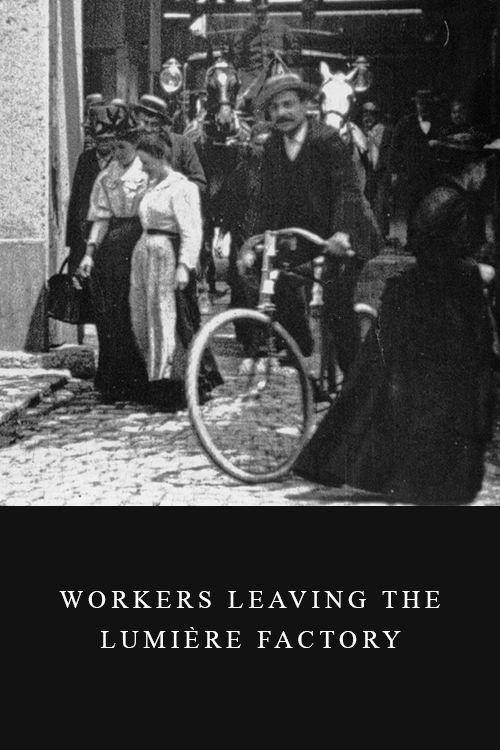
Workers Leaving the Lumière Factory captures a simple yet revolutionary scene of men and women exiting the main gate of the Lumière photographic equipment factory in Lyon, France. The film shows workers streaming out in groups, some on foot while others ride bicycles or board horse-drawn carriages. The composition divides the frame vertically, with the factory's large iron gates on the left and a wall on the right, creating a natural pathway for the workers' movement. The scene unfolds in a single continuous shot lasting approximately 46 seconds, documenting the end of a workday with remarkable clarity and detail. This seemingly mundane moment was captured with such technical precision that individual workers' clothing, movements, and interactions remain visible over 125 years later.
Director
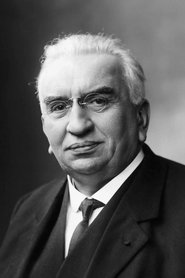 Louis Lumière
About the Production
Release Date December 28, 1895 (first public screening)
Box Office Not applicable - shown as part of demonstrations rather than commercial releases
Production Lumière Company
Filmed In Lumière Factory, Lyon, France
Filmed using the Lumière brothers' invention, the Cinématographe, which served as both camera and projector. Three distinct versions were created on different days, varying in carriage details (one horse, two horses, or no carriage) and workers' clothing indicating different seasons. The film was shot on 35mm film at 16 frames per second, with 800 frames total across 17 meters of film stock. The camera was positioned to capture the workers' natural exit from the factory, demonstrating the Lumière brothers' preference for documenting real life rather than staging scenes.





Themes & Topics
Historical Background
In 1895, France was experiencing the Belle Époque, a period of cultural and technological flourishing following the Industrial Revolution. The Lumière brothers operated in Lyon, a major industrial center known for silk production and manufacturing. This was the year of the first public projection of motion pictures, marking the birth of cinema as a public medium. The film emerged alongside other technological marvels of the era, including the automobile and early wireless telegraphy. The workers depicted represent the growing industrial working class that had transformed European society in the preceding decades. France was also a colonial power, and the technological prowess demonstrated by the Lumière invention contributed to national pride. The film predates the widespread use of electricity in homes, making the projection technology itself a marvel to contemporary audiences.
Why This Film Matters
Workers Leaving the Lumière Factory represents the birth of cinema as both an art form and a documentary medium. It established the fundamental language of film, including the concept of capturing moving reality in a rectangular frame. The film's simple yet powerful demonstration of motion photography changed how humanity would record and perceive time itself. It influenced generations of filmmakers who would follow, from the documentary tradition to narrative cinema. The film's focus on ordinary people and daily life helped establish cinema as a medium for all social classes, not just elite entertainment. Its preservation and continued study make it a foundational text in film education worldwide. The image of workers leaving a factory has become an iconic visual metaphor for the relationship between labor and industry, reproduced and referenced countless times in subsequent art and media.
Making Of
Louis Lumière positioned his Cinématographe camera outside his family's factory in Lyon to capture workers leaving at the end of their shift. The filming required careful planning as the camera needed to be manually cranked at a consistent 16 frames per second. The Lumière brothers had invented the Cinématographe just months earlier, a device that was revolutionary for its ability to serve as camera, developer, and projector all in one. The decision to film this ordinary scene reflected their philosophy of capturing 'reality' rather than creating staged entertainment. Workers were likely unaware they were making history as they exited the factory that day. The three versions suggest the Lumière brothers were experimenting with their new technology, possibly testing different lighting conditions or simply ensuring they had usable footage. The factory itself was a symbol of industrial progress, making the film a document of both technological innovation and the working class of the late 19th century.
What Critics Said
Contemporary critics and journalists were astonished by the lifelike quality of the moving images, with many reports emphasizing the 'miraculous' nature of seeing reality reproduced on screen. The film was praised for its clarity and the naturalness of its subjects' movements. Early film historians like Georges Sadoul hailed it as the true beginning of cinema, distinguishing it from earlier experiments that lacked public exhibition. Modern critics recognize it as a seminal work that established documentary cinema's potential to capture everyday life. Film scholars have extensively analyzed its composition, technical achievement, and sociological significance. The film is now universally regarded as one of the most important works in cinema history, studied in virtually every film program worldwide.
Did You Know?
- Often incorrectly cited as the first motion picture, though Louis Le Prince's Roundhay Garden Scene (1888) predates it by seven years
- Three versions exist, each filmed on different days with varying details including different horse-drawn carriages and seasonal clothing
- The film was shown at the first public film screening at the Salon Indien du Grand Café in Paris, where ten Lumière films were demonstrated
- The Lumière brothers initially believed their invention had no commercial future, famously stating 'The cinema is an invention without a future'
- The factory shown produced photographic equipment, including the Cinématographe camera used to film this very scene
- The film's success led to the creation of the first film studio in the world, built by the Lumière brothers in 1896
- Some of the workers in the film were family members of the Lumière brothers
- The original negative is preserved at the French Film Archives (Cinémathèque Française)
- The film was part of a program that charged one franc admission, considered expensive at the time
- The single static camera technique established what would become known as the 'Lumière style' of documentary filmmaking
More film details Visual style, music, quotes, restoration, and more
Visual Style
The film employs a single static camera position, creating a carefully composed frame that captures the factory gates on the left and a wall on the right, forming a natural pathway for the workers' movement. The composition demonstrates sophisticated understanding of visual balance and depth, with workers moving from background to foreground creating a sense of three-dimensional space. Natural outdoor lighting provides clear illumination of the subjects, while the iron gates create interesting geometric patterns. The camera's angle captures both individual workers and the collective movement of the crowd, allowing viewers to focus on details while appreciating the overall scene. The fixed perspective established what would become known as the 'Lumière style' - observational, unobtrusive, and focused on reality rather than manipulation of the image.
Innovations
The film represents a breakthrough in motion picture technology through the use of the Cinématographe, which was lighter and more portable than competing devices like Edison's Kinetoscope. The 35mm film format established in this film became the industry standard for over a century. The 16 frames per second speed created smooth motion while conserving film stock. The camera's intermittent movement mechanism, allowing precise frame-by-frame exposure, was revolutionary for its time. The film's clarity and stability of image were remarkable for 1895, demonstrating the superior quality of the Lumière process. The ability to both shoot and project with the same device made the Cinématographe more versatile and commercially viable than earlier inventions.
Music
As a silent film, Workers Leaving the Lumière Factory had no synchronized soundtrack. During initial screenings, it was likely accompanied by live piano music or small orchestra playing popular tunes of the era. Some exhibitions might have featured sound effects created by performers, such as hoofbeats or factory whistles. The absence of dialogue or narration emphasizes the visual nature of the medium and the universality of the image. Modern restorations and exhibitions often period-appropriate musical accompaniment, typically French popular music from the 1890s or classical pieces that complement the industrial subject matter.
Memorable Scenes
- The entire film consists of one continuous shot showing workers streaming out of the factory gates, with some walking, some on bicycles, and others boarding horse-drawn carriages, creating a natural choreography of movement that captures the rhythm of industrial life in the late 19th century.
What Audiences Thought
Early audiences were reportedly shocked and amazed by the film's realism, with some viewers reportedly ducking or moving aside as the horse-drawn carriage appeared to come toward them on screen. The first public screening in Paris created a sensation, with newspapers reporting widespread astonishment at the 'living photographs.' Working-class audiences recognized themselves and their world on screen for the first time, creating an immediate connection to the new medium. The film's simplicity made it accessible to viewers of all social classes and educational backgrounds. Contemporary accounts describe audiences returning multiple times to see the short films, unable to believe their eyes at the moving images. The success of this and other Lumière films led to rapid expansion of cinema exhibitions across Europe and eventually worldwide.
Film Connections
Influenced By
- Eadweard Muybridge's motion studies
- Étienne-Jules Marey's chronophotography
- Thomas Edison's Kinetoscope experiments
This Film Influenced
- Arrival of a Train at La Ciotat (1896)
- The Sprinkler Sprinkled (1895)
- Baby's Lunch (1895)
- Georges Méliès' early fantasy films
- All subsequent documentary cinema
Film Restoration
The film is well-preserved with original nitrate negatives maintained at the Cinémathèque Française in Paris. Digital restorations have been created from the surviving elements, ensuring the film's accessibility for future generations. All three versions of the film survive, allowing for comparative study of the Lumière brothers' early work. The film remains in the public domain and is widely available through various archives and educational platforms.
Where to Watch
- YouTube (various restored versions)
- Internet Archive
- Criterion Channel (as part of Lumière collections)
- Museum of Modern Art (MoMA) online collection
- British Film Institute (BFI) Player
- Cinémathèque Française digital archives
- Various film history educational platforms