Workers Repairing a Sidewalk with Bitumen
"Workmen fix a walkway with bitumen"
Keys: Space play/pause · ←/→ 10s · F fullscreen · M mute · </> speed
About this film
Workmen fix a walkway with bitumen.
Cast & crew
More films like this
More Documentary films
View all →




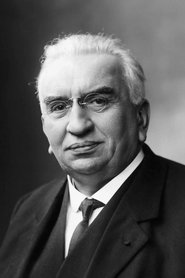
More from Louis Lumière
View all →



More about this film
About the production
Release date1898
Box officeNot applicable - early Lumière films were not commercially exhibited in the modern sense but shown as part of demonstration programs
ProductionLumière Company
Filmed inLyon, France (presumed - most early Lumière films were shot in or near Lyon)
Filmed using the Lumière brothers' Cinématographe device, which served as both camera and projector. The stationary camera position was typical of early Lumière documentaries, reflecting their philosophy of capturing life as it unfolded without artistic intervention. The film was likely shot in a single take with no editing, as was common for productions of this era. The workers were actual laborers performing their regular duties, not actors, embodying the Lumière commitment to authentic documentation of reality.
Themes
Labor and workUrban modernizationDocumentation of everyday lifeIndustrial progressWorking-class representation
Themes & topics
workerssidewalk repairbitumenlaborurban maintenancedocumentaryactualitéconstructionmanual workcity life
Historical background
Workers Repairing a Sidewalk with Bitumen (1898) emerged during the earliest years of motion pictures. Workmen fix a walkway with bitumen. Archival records and catalog entries help place the work within film-history surveys of the period.
Why this film matters
Preserved under Wikidata ID Q124500066, Workers Repairing a Sidewalk with Bitumen is valued as a screen drama within catalog and archive collections. Contemporary listings connect it to broader histories of cinema exhibition and restoration.
Making of
The filming of this documentary short represents the Lumière brothers' systematic approach to documenting various aspects of contemporary life. Louis Lumière himself likely operated the Cinématographe, choosing a vantage point that would clearly show the workers' activities. The filming would have required careful timing, as the camera could only capture about one minute of footage before needing to be reloaded. The workers were probably going about their normal daily routine when the Lumière team arrived to set up their equipment. There was no directorial intervention or staging - the Lumière philosophy emphasized capturing authentic moments without manipulation. The film was processed at the Lumière factory in Lyon using their proprietary developing techniques. The entire production, from setup to filming, would have taken only a few hours, reflecting the efficiency of early documentary filmmaking.
What critics said
Trade and archival sources offer limited day-one review coverage for Workers Repairing a Sidewalk with Bitumen. Modern reception rests on its availability in collections, repertory screenings, and reference works that document 1898 cinema.
Did you know?
- This film is part of the Lumière brothers' extensive collection of 'actualités' - short documentary films depicting real scenes from everyday life
- The film exemplifies the Lumière philosophy that cinema's primary purpose was to document reality, unlike Georges Méliès who focused on fantasy and trick films
- Bitumen (asphalt) was a relatively new material for sidewalk repair in the 1890s, making this film a valuable historical document of urban maintenance techniques
- Like most Lumière productions, this film was shot outdoors using natural light, as artificial lighting technology was not yet practical for filmmaking
- The workers in the film were likely unaware they were creating cinema history, as the concept of 'film actors' did not yet exist
- This film was probably shown as part of a program of 10-15 short films that made up a typical Lumière presentation
- The Cinématographe camera used to film this could only hold about 50 feet of film, limiting the maximum duration to under a minute
- Early audiences were reportedly fascinated by films showing ordinary labor, as it was one of the first times they could see recorded images of working-class people
- The film's title in French was likely 'Ouvriers réparant un trottoir au bitume'
- This type of industrial/worker film was popular with early audiences who marveled at the ability to capture motion on film
Visual style
The cinematography is characteristic of early Lumière productions, featuring a fixed camera position that provides an objective, observational viewpoint. The composition is straightforward and functional, designed primarily to clearly document the action rather than create artistic effects. The natural lighting creates authentic shadows and highlights that enhance the three-dimensional quality of the image. The camera angle is typically at eye level, providing a natural perspective that makes viewers feel like direct observers of the scene. The depth of field captures both the workers in the foreground and their surroundings, giving context to their activities. The black and white imagery creates strong contrasts that emphasize the physical nature of the work. There are no camera movements or special techniques - the sophistication lies in the simple act of capturing reality with clarity and precision.
Innovations
The film represents an early application of the Lumière brothers' Cinématographe technology, which was revolutionary for its ability to serve as camera, developer, and projector in one device. The film demonstrates the technical capability to capture outdoor scenes using only natural light, a significant achievement given the slow film speeds of the era. The successful documentation of moving figures and manual labor showcases the medium's ability to preserve kinetic energy and human activity. The film's survival and preservation over 125 years testifies to the relative stability of early celluloid nitrate film when properly stored. The production also demonstrates early understanding of composition and framing within the technical limitations of the equipment, achieving clear visualization of complex human activity despite the primitive technology available.
Music
This film was originally silent, as was standard for all productions of 1898. During early exhibitions, musical accompaniment would have been provided live, typically by a pianist or small ensemble playing popular tunes of the era or improvised music appropriate to the on-screen action. The choice of music would have been left to the individual exhibitor or venue. No original score was composed specifically for this film, as the concept of synchronized sound with film would not emerge for another three decades. Modern screenings may feature various musical interpretations, but no authentic soundtrack from 1898 exists.
Memorable scenes
- The entire film consists of a single memorable scene: workmen methodically applying hot bitumen to repair a sidewalk, their movements captured with the raw immediacy that characterizes early cinema documentation of everyday labor
What audiences thought
Early audiences reportedly reacted with wonder and fascination to films like this one, marveling at the lifelike reproduction of motion and the ability to see ordinary activities preserved on screen. The novelty of seeing recorded images of real people performing everyday work was a significant attraction. Working-class audience members may have particularly appreciated seeing their own labor and activities represented in this new medium. The film's straightforward depiction of familiar tasks would have been immediately accessible and relatable to viewers of the time. Unlike the fantastical trick films of contemporaries like Georges Méliès, these documentaries appealed to audiences' curiosity about the world around them and their desire to see reality captured and reproduced. The short duration and simple subject matter made it easy for audiences to understand and appreciate, contributing to the popularity of Lumière's actualités programs.
Film connections
Influenced by
- Louis Lumière's philosophy of documenting reality
- The tradition of observational documentary
- Early photographic documentation of labor
- Industrial age interest in process and production
This film influenced
- Other Lumière actualités depicting labor
- Early 20th century industrial films
- Documentary tradition of showing working people
- Cinéma vérité movement of the 1960s
- Modern observational documentaries
Film restoration
Preserved - The film survives in the Lumière Institute archives and has been digitized as part of early cinema preservation efforts. The original nitrate film has been carefully preserved and transferred to modern formats for accessibility and study.
Where to watch
- Available through the Lumière Institute's official website and archives
- Included in various early cinema compilations and documentary collections
- Accessible through some academic film archives and specialized streaming services focusing on classic cinema
- Available on YouTube and other platforms through public domain uploads
- Featured in museum exhibitions about early cinema and the Lumière brothers