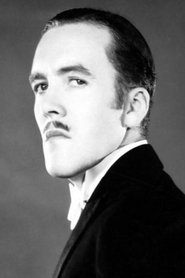
Tyrell Davis
Actor
Born: September 29, 1902 in Surbiton, Surrey, England Died: December 8, 1970 Active: 1925-1938 Birth Name: Harry Davis
Films
4 films

About Tyrell Davis
British character actor: the transition from silent films to the early talkie era of the 1930s. Born Harry Davis in Surbiton, Surrey, he was the son of the prominent engineer Sir Robert Henry Davis, and he received an elite education at the University of Cambridge before pursuing a career on the stage. Davis established himself in the West End and on Broadway before making a significant impact in Hollywood, particularly at Metro-Goldwyn-Mayer (MGM) where he became a frequent presence in sophisticated pre-Code dramas and comedies. He is perhaps most noted for his specialized portrayals of 'effeminate' or 'swishy' characters, a niche that allowed him to bring a unique, albeit often stereotyped, visibility to gay archetypes in early cinema. His most memorable turn came in George Cukor's 'Our Betters' (1933), where he played the flamboyant Ernest with a performance that has since been analyzed by film historians for its bold subtext. Despite a prolific period in the early 1930s appearing alongside stars like Joan Crawford and Norma Shearer, Davis eventually returned to England, where he continued to work in British films until the late 1930s.
The Craft
On Screen
Tyrell Davis was known for a highly stylized, often campy acting approach that utilized exaggerated mannerisms, precise diction, and a distinctive 'lisping' vocal delivery. He excelled in roles that required a sense of aristocratic disdain or flamboyant eccentricity, often serving as a comedic or colorful foil to the more traditional leading men of the era. His performances were characterized by a high degree of theatricality, likely a result of his extensive stage training in England and on Broadway.
Milestones
- Educated at the University of Cambridge before entering the professional stage
- Made a successful transition from the West End to Broadway in the late 1920s
- Became a reliable character actor for MGM during the early sound era (1929-1933)
- Delivered a landmark 'pansy' performance in George Cukor's pre-Code film 'Our Betters' (1933)
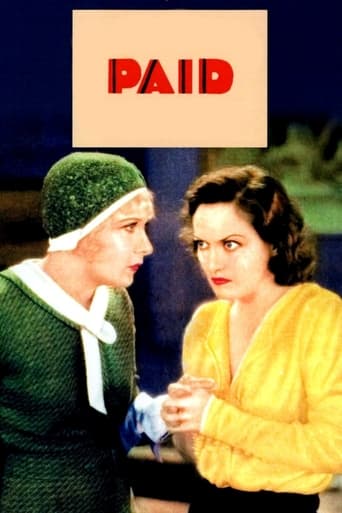
- Appeared in the high-profile Joan Crawford drama 'Paid' (1930), which was a major box office hit
- Worked with legendary directors including George Cukor, Sam Wood, and Michael Curtiz
Best Known For
Iconic Roles
Must-See Films
Accolades
Special Recognition
- Recognized in film history texts (such as William J. Mann's 'Behind the Screen') for his contributions to early LGBTQ+ representation in Hollywood
Working Relationships
Worked Often With
Studios
Why They Matter
Impact on Culture
Tyrell Davis occupies a unique position in film history as one of the primary exponents of the 'pansy' archetype during the pre-Code era. While these roles were often intended for comic relief or to signify decadence, Davis's performances—particularly under the direction of George Cukor—provided a rare, visible presence for queer identities on screen before the strict enforcement of the Motion Picture Production Code in 1934. His role in 'Our Betters' is frequently cited by historians as a prime example of how gay directors and actors 'coded' their lives into mainstream cinema.
Lasting Legacy
His legacy is primarily preserved through the study of queer cinema and the pre-Code era of Hollywood. He is remembered as a versatile character actor who could hold his own alongside the greatest stars of the Golden Age, such as Joan Crawford and John Gilbert. His transition back to the British film industry in the mid-1930s marked the end of his Hollywood influence, but his early sound-era work remains a subject of interest for those studying the evolution of social mores in film.
Who They Inspired
Davis influenced the portrayal of 'dandy' and 'effeminate' characters in the 1930s, setting a standard for the 'swishy' character type that would be both utilized and eventually suppressed by the Hays Office. His work paved the way for later character actors who specialized in high-camp or sophisticated comedic roles.
Off Screen
Tyrell Davis was the son of Sir Robert Henry Davis, the inventor of the Davis Submerged Escape Apparatus. He was briefly married to Lota B. Cheek, though the marriage ended in divorce. Davis was part of the sophisticated social circles of early 1930s Hollywood, often associated with the 'gay entourage' of actors like William Haines and directors like George Cukor.
Education
University of Cambridge
Family
- Lota B. Cheek (dates of marriage and divorce not fully documented)
Did You Know?
- He was the son of Sir Robert Henry Davis, a famous English inventor and head of Siebe Gorman & Co.
- In 'Our Betters' (1933), his character Ernest is described as.
- He appeared in 'His Glorious Night' (1929), the film famously credited with ruining John Gilbert's career due to the audience's reaction to Gilbert's voice.
- Davis was known for his 'lisping' delivery, which he used to great effect in comedic roles.
- He was featured in the 1995 documentary 'The Celluloid Closet' via archival footage from 'Our Betters'.
- Despite his 'swishy' screen persona, he was married to a woman named Lota Cheek in real life.
- He was highly educated, having attended the University of Cambridge, which was rare for Hollywood actors of that period.
In Their Own Words
You must excuse me for coming in my town clothes, but your chauffeur said there wasn't a moment to lose, so I came just as I am! (As Ernest in 'Our Betters', 1933)
That's what I like to see. Two ladies of title, kissing. (As Ernest in 'Our Betters', 1933)
Frequently Asked Questions
Who was Tyrell Davis?
British character with credits in this catalog. He was best known for his roles in Hollywood pre-Code films, often playing sophisticated or flamboyant characters.
What films is Tyrell Davis best known for?
Titles linked here include Paid (1930), Our Betters (1933).
When was Tyrell Davis born and when did he die?
Born September 29, 1902; died December 8, 1970.
What was Tyrell Davis's acting style?
He was known for a theatrical and 'swishy' style, often employing a lisp and exaggerated mannerisms that made him a standout in comedic and aristocratic roles.
Did Tyrell Davis win any awards?
While he did not win major competitive awards like an Oscar, he is highly regarded by film historians for his unique contributions to early sound cinema and LGBTQ+ representation.
What was Tyrell Davis's real name?
His birth name was Harry Davis; he adopted 'Tyrell Davis' as his professional stage and screen name.