
Love in the Rough
"A shipping clerk hides his job at the country club."
Keys: Space play/pause · ←/→ 10s · F fullscreen · M mute · </> speed
About this film
Jack Kelly is a lowly shipping clerk with an extraordinary talent for golf, a skill he honed on municipal courses. When his wealthy employer, Mr. Waters, discovers Jack's prowess, he recruits the young man to help improve his own lackluster game before an important country club tournament. To avoid social embarrassment among his elite peers, Waters insists that Jack pose as a wealthy socialite while staying at the exclusive resort. Complications arise when Jack falls deeply in love with Marilyn, a beautiful heiress, while struggling to maintain his high-society charade. The plot culminates in…
Cast & crew
More films like this
More Comedy films
View all →







More from Charles Reisner
View all →

More about this film
About the production
Release dateSeptember 6, 1930
BudgetApproximately $250,000 (estimated studio standard for MGM 'B' musicals of the era)
Box officeNot publicly disclosed; however, it was considered a modest success for MGM's early sound roster.
ProductionMetro-Goldwyn-Mayer (MGM)
Filmed inMGM Studios, Culver City, California, Local Los Angeles area golf courses
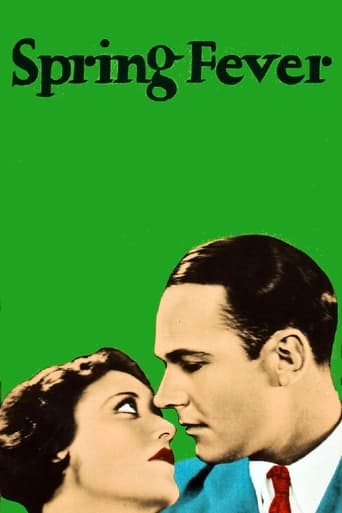
The film was a sound remake of the 1927 silent film 'Spring Fever,' which had starred William Haines and Joan Crawford. MGM rushed the production to capitalize on the new 'talkie' craze and the rising popularity of Robert Montgomery. Unlike many early talkies that were static, director Charles Reisner attempted to keep the camera moving during the outdoor golf sequences. The film features several musical interludes that were typical of the transition period when studios were unsure if audiences wanted straight comedies or full musicals.
Themes
Social Class AmbitionDeception and IdentityThe Democratization of SportsRomance Across Class LinesEscapism
Themes & topics
GolfCountry ClubImposterShipping ClerkTournamentHeiressMusical ComedyPre-Code
Historical background
Love in the Rough (1930) reached screens through Metro-Goldwyn-Mayer (MGM). Exhibitors of the time built early sound programs that mixed shorts, features, and live acts, so a clear premise helped Love in the Rough travel between cities and exchange markets.
Why this film matters
Archivists and revival programmers still cite Love in the Rough (1930) when tracing studio habits, casting pools, and the visual rhetoric audiences once took for granted. Even modest surviving prints help map how Love in the Rough fit beside competing releases of its day.
Making of
Production for 'Love in the Rough' took place during a chaotic time at MGM as the studio transitioned fully to sound. Director Charles Reisner, known for his work with Buster Keaton, brought a sense of physical comedy to the set that helped offset the 'stiffness' often found in early sound recordings. The golf sequences were particularly challenging because the heavy sound equipment of 1930 was difficult to transport and operate on location at actual golf courses. To solve this, some 'outdoor' scenes were actually shot on elaborate indoor sets with grass mats, while others used early 'blimped' cameras to dampen the noise of the machinery during location shooting. Robert Montgomery and Dorothy Jordan reportedly had great chemistry on set, which led to them being paired in several subsequent films.
What critics said
Trade coverage around 1930 discussed Love in the Rough for pacing, clarity, and program fit rather than blockbuster grosses. Later writers value it as evidence of period style and as a reference point beside other films from the same era.
Did you know?
- The film is a direct remake of the 1927 silent comedy 'Spring Fever,' both based on the 1925 play by Vincent Lawrence.
- Robert Montgomery performed many of his own golf swings in the film, showcasing genuine athletic ability.
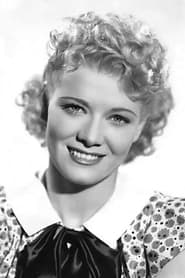
- Penny Singleton, who plays Virgie, later became world-famous as the star of the 'Blondie' film series and the voice of Jane Jetson.
- The song 'Go Home and Tell Your Mother' became a significant hit in 1930, helping to promote the film.
- This was one of Robert Montgomery's earliest leading roles, cementing his persona as a 'breezy' and charming leading man.
- The film features a 'crooner' cameo by Donald Novis, a popular tenor of the early 1930s.
- Benny Rubin, who plays the caddy, was a well-known vaudeville performer famous for his various ethnic dialects and physical comedy.
- The film was released during the 'Pre-Code' era, allowing for slightly more suggestive dialogue than would be permitted a few years later.
Visual style
The cinematography by Henry Sharp is notable for its attempt to break away from the 'proscenium arch' style of early sound films. Sharp utilized deep focus in some of the golf course shots to capture both the actors and the landscape. The film uses high-key lighting typical of MGM's 'glamour' style to make the country club settings look as opulent and inviting as possible.
Innovations
While not a pioneer in technology, the film is a competent example of early sound-on-film synchronization. It successfully integrated musical numbers into a narrative structure without the use of a traditional stage setting, which was a step forward in making the film musical feel more 'naturalistic.'
Music
The music and lyrics were composed by the duo Jimmy McHugh and Dorothy Fields. The primary hit from the film was 'Go Home and Tell Your Mother,' performed by Robert Montgomery and Dorothy Jordan. Other songs include 'I'm Doin' That Thing,' 'One More Waltz,' and 'Learning a Lot From You.' The soundtrack is characteristic of the 'Tin Pan Alley' style that dominated early Hollywood musicals.
Famous quotes
Jack Kelly: 'I'm in the shipping business.' Mr. Waters: 'I didn't tell you to say you owned all the oceans and ships in the world!'
Benny: 'I'm sympathizing with that girl with the blister.'
Mr. Waters: 'It's my golf game. it's ruined my disposition, my health, my business, my family!'
Memorable scenes
- The 'Go Home and Tell Your Mother' musical number where Montgomery and Jordan flirt on the golf course.
- The climactic golf tournament where Jack's true identity is nearly revealed during a high-pressure putt.
- Benny Rubin's physical comedy routine involving a sand trap and a series of increasingly frustrated swings.
What audiences thought
Audiences in 1930 responded warmly to the film, particularly the comedic antics of Benny Rubin and the romantic pairing of Montgomery and Jordan. It was a profitable venture for MGM, proving that the public was still interested in musical comedies even as the initial 'all-singing, all-dancing' fad began to wane. Today, it is mostly remembered by enthusiasts of early 1930s cinema and fans of Robert Montgomery.
Film connections
Influenced by
- Spring Fever (1927)
- The play 'Spring Fever' by Vincent Lawrence
- Vaudeville physical comedy
This film influenced
- The Caddy (1953)
- Caddyshack (1980) - thematic similarities in golf-related class comedy
- Pat and Mike (1952)
Film restoration
The film is preserved and exists in the MGM/Turner Entertainment collection. It has been aired on Turner Classic Movies (TCM) and is available in various archival formats.
Where to watch
- Turner Classic Movies (TCM)
- Warner Archive Collection (DVD)
- Available for digital rental/purchase on some specialized classic film platforms