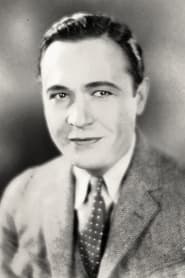
Jason Robards Sr.
Actor
- Born
- April 30, 1892, Chicago, Illinois, USA
- Died
- May 3, 1932
- Active
- 1930-1932
- Birth name
- Jason Nelson Robards
Films 2
About Jason Robards Sr.
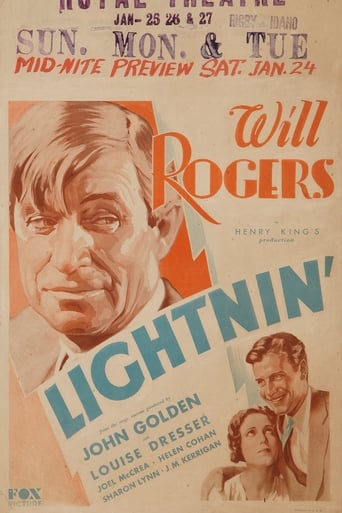
Jason Robards Sr. was an American actor of the early sound era who worked in both stage and screen before his career was cut short by his death in 1932. He is remembered primarily for his film appearance in the 1930 adaptation of Lightnin', one of the early talkie versions of a popular stage success. Because his screen career appears to have been brief and sparsely documented, much of his reputation rests on his association with the theatrical world of the period rather than on an extensive filmography. He was part of the generation of performers who moved between legitimate theater and the new sound film medium at a moment when Hollywood was rapidly transforming from silent cinema to talkies. He should not be confused with his later-born son, actor Jason Robards, who became a major star of the postwar era. Robards Sr.'s legacy is largely one of historical significance: he represents the many stage-trained character actors whose contributions helped stabilize early sound film acting styles and connect Broadway tradition to early Hollywood production.
More about Jason Robards Sr.
On screen
As a stage-trained actor of the early talkie period, Jason Robards Sr. likely relied on clear diction, precise timing, and a controlled theatrical presence suited to early sound recording. Performers of his background often brought a more deliberate, voice-driven style to film than silent-era players, with emphasis on spoken rhythm and character clarity. Because surviving documentation of his performances is limited, his exact screen manner cannot be analyzed in great detail, but his work belongs to the generation that helped define the naturalistic yet still stage-inflected style of early talking pictures.
In film history
Jason Robards Sr. does not have the broad cultural footprint of later Hollywood stars, but he occupies an important place in early sound-film history as part of the theater-to-film bridge generation. Actors like him helped establish the performance standards of the first talking pictures, bringing stage discipline, voice projection, and character realism into an emerging cinematic language. His importance is amplified by his place within a notable acting family, since his son Jason Robards would become an iconic American performer whose prestige cast retrospective attention on the elder Robards. For classic-cinema historians, he is a reminder that early Hollywood was built not only by stars with long filmographies but also by many skilled working actors whose contributions are sparsely preserved yet culturally meaningful.
Later reputation
Jason Robards Sr.'s legacy is mainly historical and genealogical: he is remembered as an early talkies actor and as the father of Jason Robards, one of the great American actors of stage and screen. His own screen career appears brief, but his place in film history is still noteworthy because it reflects the movement of experienced stage actors into Hollywood during the late silent and early sound transition. He stands as one of those performers whose names survive in credit listings, family histories, and archival filmographies, even when their individual body of work is small. In that sense, his legacy lies in representing the thousands of professional actors who supported the industry during its formative years and helped make the sound era possible.
Influence
Jason Robards Sr. likely influenced early sound performance in the broad sense shared by stage-trained actors who brought theatrical discipline and vocal clarity to film acting at the start of the 1930s. While there is no strong evidence of direct mentorship or a documented school of followers, his presence in the theater-and-film world would have contributed to the performance culture from which later character acting styles developed. His most visible long-term influence is indirect: through Jason Robards Jr., whose distinguished career became a benchmark for serious American acting in film and theater. For historians, the elder Robards is part of the lineage connecting stage realism, early Hollywood sound acting, and the later prestige of American character performance.
Off screen
Jason Robards Sr. was the father of actor Jason Robards, the celebrated stage and screen performer who became one of the major American actors of the twentieth century. His family life is historically significant largely because of that connection, which links him to one of the most distinguished acting dynasties in American theater and film. Available public information on his private life is limited, and he does not appear to have left a widely documented record of marriages, residences, or family details beyond his relationship to his son. He died in 1932 at a relatively young age, before his own career had the chance to develop into the kind of long filmography enjoyed by many of his contemporaries.
Credits
- Appeared in the early sound film Lightnin' (1930), one of his best-documented screen credits
- Worked as a stage performer in the American theater tradition before and alongside his film work
- Represented the transition generation of actors adapting theatrical performance styles to early talkies
- Became historically notable as the father of acclaimed actor Jason Robards
- His career is part of the broader history of Broadway-trained performers entering Hollywood in the early sound era
Roles
- The role he played in Lightnin' (1930)
Films
- Lightnin' (1930)
Studios
- Fox Film Corporation
Notes
- He should not be confused with his son, Jason Robards, the Oscar-winning actor born in 1922.
- His best-known film credit is Lightnin' (1930), a film made during the early years of sound cinema.
- He belonged to the generation of actors who moved from stage performance into the new world of talking pictures.
- His screen career appears to have been very brief, which makes him a more obscure figure in film history despite his family connection.
- He died in 1932, only two years after Lightnin', limiting the amount of surviving screen work associated with his name.
- Because early studio records and publicity materials are often incomplete, detailed biographical information about him is comparatively scarce.
- His importance to movie history is heightened by his role as the father of one of America's most respected dramatic actors.
Questions
Who was Jason Robards Sr.?
Jason Robards Sr. was an American actor active in the early sound era of Hollywood. He is best known for appearing in Lightnin' (1930) and for being the father of actor Jason Robards.
What films is Jason Robards Sr. best known for?
He is best known for Lightnin' (1930), which is the most prominent screen credit associated with his name. His film career appears to have been brief, so this title stands out as his principal cinematic work.
When was Jason Robards Sr. born and when did he die?
He was born on April 30, 1892, in Chicago, Illinois, USA, and died on May 3, 1932. His life spanned the transition from the silent era into the early sound period.
What awards did Jason Robards Sr. win?
No major awards or formal nominations are widely documented for Jason Robards Sr. His historical importance comes more from his early film work and his connection to the Robards acting family than from awards recognition.
What was Jason Robards Sr.'s acting style?
As a stage-trained performer in early talkies, his style would have emphasized clear speech, timing, and a controlled theatrical presence. That approach was especially valuable in the first years of sound film, when actors had to adapt their performances to microphones and dialogue-heavy storytelling.
What is Jason Robards Sr.'s legacy in film history?
His legacy lies in his place among the stage actors who helped shape early sound cinema and in his connection to one of America's greatest later actors, Jason Robards. Although his own screen career was short, he remains a meaningful part of classic Hollywood's transition era.