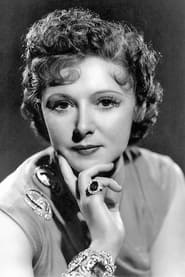
Isabel Jeans
Actor
Born: November 16, 1891 in London, England Died: September 4, 1985 Active: 1915-1977
Films
1 film
About Isabel Jeans
British actress: remarkable over six decades, from the silent era through the Golden Age of Hollywood and into the 1970s. Born into a theatrical family in London, she began her stage career as a teenager and quickly established herself as a talented performer in London's West End. Her film career began in the 1920s with notable roles in British silent films, including her acclaimed performance in Alfred Hitchcock's 'Easy Virtue' (1928). Jeans successfully transitioned to talkies and appeared in numerous British and American films throughout the 1930s and 1940s, often portraying sophisticated, aristocratic characters with her characteristic wit and elegance. She achieved international recognition for her role as Aunt Alicia in the Academy Award-winning musical 'Gigi' (1958), opposite Maurice Chevalier and Leslie Caron. Beyond her film work, Jeans maintained a prolific stage career, appearing in both classical and contemporary productions in London and on Broadway. Her final film appearance came in 1977, marking the end of an extraordinary career that had seen her evolve from silent film star to respected character actress in the modern era.
The Craft
On Screen
Isabel Jeans was renowned for her sophisticated and elegant acting style, characterized by impeccable diction, aristocratic bearing, and razor-sharp wit. She specialized in portraying upper-class, often formidable women with a combination of authority and subtle vulnerability. Her performances were marked by precise timing, especially in comedic roles, where her dry delivery and knowing glances created memorable moments. Jeans had the rare ability to convey complex emotions through minimal gestures, making her particularly effective in both dramatic and light-hearted roles. Her stage training gave her a commanding presence that translated powerfully to the screen, whether in intimate close-ups or grand ensemble scenes.
Milestones
- Stage debut in London's West End (1915)
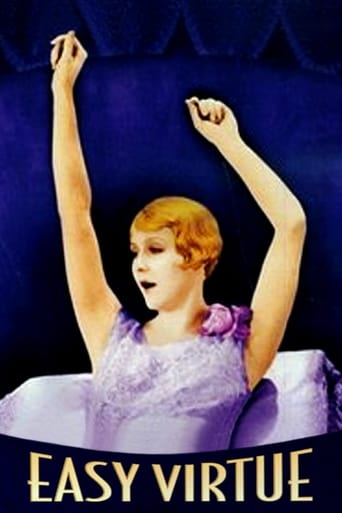
- Breakthrough role in 'Easy Virtue' (1928)
- Successful transition to talkies in the 1930s
- Acclaimed performance in 'Gigi' (1958)
- Memorable role in 'The Innocents' (1961)
- Final film appearance in 'The Other Side of Paradise' (1977)
Best Known For
Iconic Roles
Must-See Films
Accolades
Won
- BAFTA TV Award nomination for Best Actress (1960)
Nominated
- BAFTA TV Award nomination for 'The Scent of Fear' (1960)
- Emmy Award nomination for Outstanding Single Performance by an Actress in a Leading Role (1958)
Special Recognition
- Commander of the Order of the British Empire (CBE) for services to drama (1972)
- Stage lifetime achievement recognition from British theatre community
Working Relationships
Worked Often With
Studios
Why They Matter
Impact on Culture
Isabel Jeans represented the bridge between the silent era and modern cinema, successfully adapting her craft across technological and cultural shifts in filmmaking. Her portrayal of sophisticated, independent women helped establish the archetype of the elegant, witty British lady in international cinema. Through her work in both British and American productions, Jeans contributed to the cultural exchange between Hollywood and British film industries during the mid-20th century. Her role in 'Gigi' exemplified how British performers could authentically portray continental European characters, expanding the scope of international casting in Hollywood productions.
Lasting Legacy
Isabel Jeans left an enduring legacy as one of Britain's most versatile and enduring character actresses. Her career shows the longevity possible in the performing arts when talent is combined with adaptability and professionalism. She is remembered for bringing intelligence and sophistication to every role, elevating even minor parts through her commanding presence and nuanced performances. Her influence can be seen in subsequent generations of British actresses who specialized in portraying aristocratic characters with both authority and humanity. The preservation of her films, particularly 'Easy Virtue' and 'Gigi', ensures that future audiences can appreciate her distinctive contribution to cinema history.
Who They Inspired
Jeans influenced subsequent generations of character actors through her demonstration of how to maintain relevance across different eras of filmmaking. Her ability to transition from leading lady roles to character parts provided a model for career longevity that many actors later emulated. Her precise, controlled acting style influenced the development of the British acting tradition, particularly in the portrayal of upper-class characters. Younger actresses often cited her work as inspiration for balancing elegance with emotional depth in period pieces and sophisticated comedies.
Off Screen
Isabel Jeans came from a theatrical family, with her brother Desmond Jeans also pursuing an acting career. She was married twice, first to actor/director Claude Rains in 1913, though the marriage ended in divorce after several years. Her second marriage was to attorney and playwright Reginald Denham, with whom she had a son. Jeans was known for her discretion regarding her personal life and maintained a professional reputation throughout her long career. Despite her success in Hollywood, she remained primarily based in London and was deeply connected to British theatre throughout her life.
Education
Trained at the Royal Academy of Dramatic Art (RADA), London; additional private coaching in elocution and dramatic arts
Family
- Claude Rains (1913-1915)
- Reginald Denham (1920-1969)
Did You Know?
- Was married to fellow actor Claude Rains, who later became a major Hollywood star
- Her brother Desmond Jeans was also an actor who appeared in early films
- Spoke fluent French, which helped her secure roles in international productions
- Was one of the few silent film stars to successfully transition to talkies
- Appeared in both the 1928 silent version and later adaptations of 'Easy Virtue' story
- Was a close friend of actress Vivien Leigh
- Turned down several Hollywood contracts to remain based in London
- Continued performing on stage well into her 80s
- Was a founding member of the British Actors' Equity Association
- Her voice was considered ideal for early sound recording due to its clarity and precise diction
In Their Own Words
The stage is my first love, but film has given me opportunities I never dreamed possible
Acting is not about becoming someone else, but about revealing the truth within yourself
In comedy, timing is everything. In drama, truth is everything
The camera is both a friend and an enemy - it reveals everything
I've never considered myself a star, merely a working actress who was fortunate enough to work consistently
Frequently Asked Questions
Who was Isabel Jeans?
British actress whose active years covered over six decades, from the silent film era through the Golden Age of Hollywood. She was renowned for her sophisticated performances in both British and American films, as well as her extensive stage career in London's West End and on Broadway.
What films is Isabel Jeans best known for?
Titles linked here include Easy Virtue (1928), Gigi (1958).
When was Isabel Jeans born and when did she die?
Born November 16, 1891; died September 4, 1985.
What awards did Isabel Jeans win?
Isabel Jeans was appointed Commander of the Order of the British Empire (CBE) in 1972 for her services to drama. She received nominations for a BAFTA TV Award in 1960 and an Emmy Award in 1958, recognizing her excellence in television performances.
What was Isabel Jeans's acting style?
Isabel Jeans was known for her sophisticated and elegant acting style, characterized by impeccable diction, aristocratic bearing, and razor-sharp wit. She specialized in portraying upper-class characters with authority and subtle vulnerability, using precise timing and minimal gestures to convey complex emotions effectively.