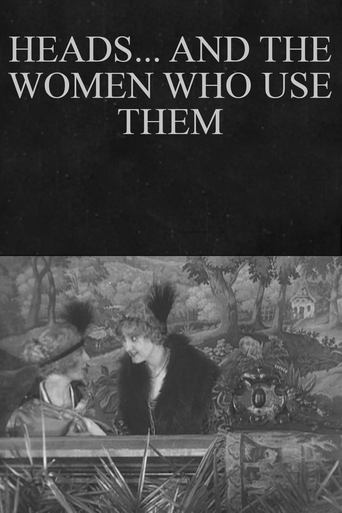

Suzanne Delvé
Actor
- Active
- 1916-1916
Films 1
About Suzanne Delvé
Suzanne Delvé was a French silent-era screen performer whose documented film career is extremely brief, with surviving filmography evidence placing her in 1916. She is credited as an actor in the 1916 film "Heads... and the Women Who Use Them," which suggests she worked during the height of European silent cinema, when many performers appeared in only a small number of productions and are preserved primarily through credits rather than extensive publicity. Beyond this surviving screen credit, little reliably documented biographical information has been found in standard classic-cinema reference sources, which makes her one of the many early film artists whose careers are only partially recoverable. Her name indicates a likely French identity, and her work belongs to the era when cinema was transitioning from novelty entertainment to a more established narrative art form. Because available records are sparse, her wider career arc, theatrical background, and personal history remain uncertain. Her importance today lies mainly in her presence within early film history and in the preservation of her name through surviving film records.
More about Suzanne Delvé
On screen
No reliable contemporary descriptions of her performance style have been located in surviving reference sources. As a silent-era performer, her screen technique would have depended on visual expressiveness, gesture, and facial communication rather than spoken dialogue. Any more specific characterization would be speculative.
In film history
Suzanne Delvé's cultural impact is best understood as archival and historical rather than celebrity-based. She belongs to the vast group of early cinema artists whose names preserve the breadth of silent-film production and remind researchers that film history includes many contributors beyond the best-known stars. Her surviving credit provides evidence of French participation in the global silent film era and helps contextualize the international nature of early screen acting. Even when only a single credit survives, such performers are important to historians because they illuminate the scale, diversity, and often ephemeral nature of early film labor.
Later reputation
Her legacy lies in her documented participation in silent cinema and in the survival of her name in film databases and historical indexes. For researchers, she represents the many lesser-documented actors whose careers were likely short, regionally bound, or incompletely preserved. As with many silent-era figures, her lasting significance comes from the historical record itself: she is part of the material evidence of early French film production. If additional archival sources or surviving prints emerge, her profile could be expanded, but at present her legacy remains that of a scarcely documented yet authentic participant in cinema's formative years.
Influence
There is no documented evidence that Suzanne Delvé directly influenced later actors or filmmakers in a traceable way. Her broader influence is indirect: she contributes to the collective body of silent-era performers who established the visual grammar of screen acting through early film production. In that sense, her work is part of the foundational history that later generations inherited, even if her individual impact cannot be measured from surviving records.
Off screen
No reliable public biographical information about Suzanne Delvé's personal life, family, marriages, or private career has been located in standard film references available for classic-cinema research. Her documented legacy appears to be limited to her film credit, which is common for many early silent-era performers whose archival footprints are thin. Without corroborating primary sources, it is not possible to responsibly assert details about her relationships or background.
Credits
- Credited as an actor in the 1916 silent film "Heads... and the Women Who Use Them"
- Represents the generation of early French screen performers whose work survives mainly through sparse film credits
- Associated with the silent-era period of European cinema
Roles
- Role in "Heads... and the Women Who Use Them" (1916)
Films
- "Heads... and the Women Who Use Them" (1916)
Notes
- Her known filmography is extremely small in surviving references, with only a 1916 credit clearly associated with her.
- She is associated with the silent-film era, when many performers were credited in only a handful of productions.
- Her surname appears in historical film records as Delvé, a distinctly French form.
- She is an example of how many early cinema careers are preserved primarily through cast lists rather than extensive biographies.
- Her documented work predates the widespread international stardom system that developed later in Hollywood.
- The rarity of surviving information about her is typical of many European silent-era performers.
- Her presence in film history helps document the range of actors active during 1916, a key year in silent cinema development.
Questions
Who was Suzanne Delvé?
Suzanne Delvé was a French silent-era actor whose surviving documented screen credit places her in the 1916 film "Heads... and the Women Who Use Them." Very little biographical information has survived, which is common for many early cinema performers.
What films is Suzanne Delvé best known for?
She is best known for "Heads... and the Women Who Use Them" (1916), which is the principal surviving film credit associated with her. At present, no additional confirmed film appearances have been reliably documented in the available classic-cinema record.
When was Suzanne Delvé born and when did she die?
Her birth date and death date are not reliably documented in the available sources. Likewise, her birthplace is not currently confirmed from standard classic-cinema references.
What awards did Suzanne Delvé win?
No awards or formal honors are documented for Suzanne Delvé in the surviving reference material. This is not unusual for early silent-era performers, many of whom worked before modern awards systems were established.
What was Suzanne Delvé's acting style?
No contemporary critical description of her acting style has been found in the available references. As a silent-film performer, her work would have relied on facial expression, gesture, and physical presence rather than spoken dialogue.
What is Suzanne Delvé's legacy in film history?
Her legacy is primarily historical and archival: she is one of the many early film performers whose names survive as part of cinema's foundational record. Even with minimal biographical data, her credit helps document the scope of silent-era French filmmaking.