Heads... and the Women Who Use Them
Plot
A complete plot synopsis for "Heads... and the Women Who Use Them" is not readily available in surviving reference sources. The film is a 1916 French comedy directed by Jacques Feyder, but detailed story descriptions have not survived in widely accessible catalogs or modern scholarship. What can be stated with confidence is that it belongs to Feyder's early silent-period output and likely drew on contemporary comic situations involving gender, behavior, and social observation, in keeping with the title's suggestive contrast between men and women. Because the film predates many of the director's later, better-documented works and may survive only in fragmentary documentation, any fuller narrative reconstruction should be treated with caution.
Director
Jacques FeyderAbout the Production
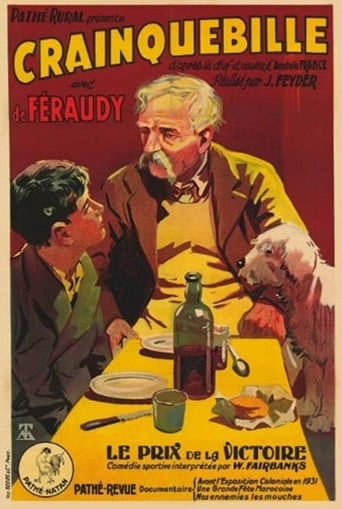
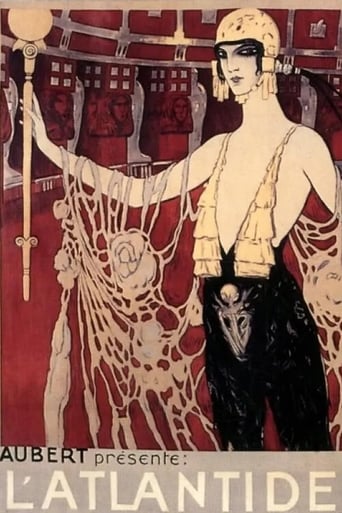
This is an early silent comedy from Jacques Feyder's formative period as a filmmaker, made before he became internationally recognized for major works such as "Crainquebille," "L'Atlantide," and "Carnival in Flanders." Detailed production records, surviving continuity scripts, and publicity materials are scarce, which makes the film difficult to reconstruct with certainty. The available cast information identifies Suzanne Delvé, Georgette Faraboni, and Kitty Hott, but role names and shooting details are not consistently preserved in modern reference sources. Like many French films from the 1910s, it was likely produced with relatively modest means, using studio-based staging and performance-driven comedy rather than elaborate set pieces.
Historical Background
The film was made in 1916, in the middle of World War I, a time when European film production was under strain from wartime disruption, material shortages, and the loss of personnel. French cinema continued to produce comedies, dramas, and short subjects despite the upheaval, and filmmakers often worked within constrained conditions while audiences sought entertainment and escapism. Jacques Feyder's early career unfolded in this transitional era, when silent cinema was rapidly refining its visual language and expanding from short comedies into more ambitious dramatic forms. The film matters historically because it belongs to the relatively under-documented phase of French screen comedy before and during the war, helping illustrate the continuity of popular filmmaking despite extreme social disruption.
Why This Film Matters
Although this title is not among Jacques Feyder's best-known films, it is significant as part of the foundation of his career and as evidence of the breadth of early French silent comedy. Films like this show how directors of the period experimented with social observation, gender satire, and light comic construction long before those ideas became common subjects of sound-era comedy. Its relative obscurity also makes it valuable to film historians because it represents the fragile survival of early cinema history, where many works are known only from secondary records. In a broader sense, it contributes to our understanding of the development of French film authorship during the 1910s and the gradual emergence of directors whose reputations were built across multiple genres.
Making Of
Very little behind-the-scenes documentation survives for this title, which is typical of many French silent films made during the mid-1910s. Jacques Feyder was still early in his career, and this production likely served as part of the apprenticeship period in which he refined his approach to staging, blocking, and visual storytelling. The surviving record is largely bibliographic rather than anecdotal, so there are no widely confirmed stories about the shoot, the script development, or the director's working methods on this particular film. Its existence nonetheless helps chart Feyder's movement from early short-form comedy work toward the more elaborate and psychologically nuanced cinema for which he later became known.
Visual Style
Specific cinematographic credits and technical descriptions are not securely documented in accessible sources. As a 1916 silent French comedy, the film would almost certainly have used static or lightly mobile cameras, carefully composed tableaux, and expressive actor movement to convey humor without synchronized sound. Visual storytelling in this period often relied on clear staging, medium and long shots, and readable facial expressions rather than elaborate camera movement. Because the film is obscure and possibly poorly preserved, no distinctive visual signatures can be confidently attributed beyond the conventions of early silent comedy.
Innovations
No specific technical innovations are documented for this film. Its value lies more in its place within the evolution of silent-era comic filmmaking than in any known formal breakthrough. The production likely demonstrates standard but effective techniques of the period, including pantomime-driven humor, intertitle-supported dialogue, and visually legible staging. If any version survives, further technical analysis would depend on access to the print or archival elements.
Music
As a silent film, it had no synchronized recorded soundtrack. Original exhibition would have been accompanied by live music, often improvised by a pianist or played from cue sheets depending on the venue and the print's distribution context. No specific original score is known to survive for this title. Modern screenings, if any, would typically use a newly compiled accompaniment created by a curator, pianist, or restoration project.
Memorable Scenes
- No specific scenes are reliably documented in surviving accessible sources for this film.
Did You Know?
- This film is an early work by Jacques Feyder, who later became one of the most respected directors in French cinema.
- It is a silent film, so any original presentation would have relied on intertitles, live musical accompaniment, and physical performance.
- The English-language title is unusual and may be a later catalog translation rather than the original French release title.
- Detailed plot summaries are difficult to verify, which is common for many short French films from the 1910s.
- The film belongs to a period when Feyder was still developing the style that would later distinguish his mature works.
- Available cast records list Suzanne Delvé, Georgette Faraboni, and Kitty Hott, but character names are not consistently preserved.
- Many early French comedies from this era have incomplete archival documentation because prints, pressbooks, and production records were frequently lost.
- The title suggests a satirical or comic exploration of gender relations, a common subject in popular cinema of the period.
What Critics Said
Contemporary critical reception is not well documented in easily accessible surviving sources, and there do not appear to be widely preserved reviews that are routinely cited in modern reference works. As a result, the film's immediate reception remains largely unknown, which is not unusual for short silent comedies of the era. Modern critical attention tends to focus less on this specific title and more on Jacques Feyder's later, better-preserved films. Today it is primarily of interest to scholars and archivists researching Feyder's early career and the broader landscape of French silent cinema.
What Audiences Thought
Audience response is not well recorded, and no reliable box-office or attendance data is readily available. Like many short French comedies of the 1910s, it was likely consumed as part of a broader program rather than as a standalone prestige release. Any popular success it may have had would have been localized and ephemeral, leaving limited trace in surviving records. Its present-day audience reception is mainly academic or cinephile interest rather than broad public viewership.
Film Connections
Influenced By
- French music-hall and stage comedy
- Popular silent farce traditions of the 1910s
- Contemporary social-comedy short films
This Film Influenced
- No specific later films are securely documented as direct influences of this title
You Might Also Like
More Comedy Films
View allMore from Jacques Feyder
View allFilm Restoration
Preservation status is uncertain from readily accessible sources. The film is obscure, and no widely cited modern restoration or home-video edition is readily documented, so it may survive only in archives or incomplete references, or it may be effectively lost to general circulation. Confirmation would require consultation of specialized archive catalogs or the holdings of French film heritage institutions.