



Gribiche
"Gribiche, a young boy whose mother is a war widow, gets adopted by"
Keys: Space play/pause · ←/→ 10s · F fullscreen · M mute · </> speed
About this film
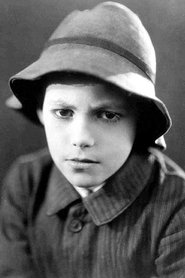
, a young boy whose mother is a war widow, gets adopted by a rich woman. She wants to turn him into a perfect gentleman, but soon he feels unhappy.
Cast & crew
More Drama films
View all →






More from Jacques Feyder
View all →
More about this film
About the production
Release dateDecember 17, 1926
Box officeUnknown - performed well in French theaters and had international distribution
ProductionSociété des Films Jacques Feyder, Les Films Albatros
Filmed inParis, France, Studios de Joinville
The film was shot on location in Paris to capture authentic working-class neighborhoods, with studio work done at Joinville. Director Jacques Feyder insisted on naturalistic performances from his cast, particularly from child actor Jean Forest. The production faced challenges in finding suitable locations that could authentically represent both working-class and wealthy Parisian environments. Feyder's wife, Françoise Rosay, not only starred in the film but also contributed to costume design and character development.
Themes
Class conflict and social mobilityChild psychology and developmentMaterialism versus authenticityThe importance of family and belongingPost-war French society and values
Themes & topics
Historical background
Silent-era production in 1926 relied on intertitles, live accompaniment, and studio systems that were rapidly consolidating into national industries. Archival sources describe Gribiche as 1926 film. Contemporary context can be traced through sources such as the Wikipedia article on Gribiche (film).
Why this film matters
Gribiche remains part of the screen heritage of its era, offering evidence of prevailing genres, production methods, and audience tastes. Later revivals, archive screenings, and digitization have kept such titles accessible to researchers and dedicated viewers long after their first commercial runs.
Making of
Jacques Feyder approached 'Gribiche' with a distinctive vision for social realism in French cinema. He spent months researching working-class conditions in Paris and insisted on authentic locations rather than studio sets. The casting of Jean Forest was particularly crucial - Feyder discovered him at a children's home and worked extensively with him to develop a natural, non-melodramatic performance style. Françoise Rosay's involvement went beyond acting; she collaborated on costume design and helped shape her character's psychological complexity. The production team faced challenges filming in actual Parisian neighborhoods, often having to work around curious local residents. Feyder's direction emphasized subtle visual storytelling, using the contrast between cramped working-class apartments and luxurious bourgeois spaces to reinforce the film's themes. The film's emotional climax reportedly required multiple takes as Forest struggled to maintain authentic emotion while performing the difficult breakdown scene.
What critics said
Trade and newspaper reviews from the silent period for Gribiche survive only in fragments, making precise reception history difficult to reconstruct. Modern assessment tends to emphasize historical value, craft, and cultural context rather than box-office performance.
Did you know?
- Jean Forest, who played Gribiche, was Jacques Feyder's discovery and became his recurring child actor, also starring in Feyder's 'Crainquebille' (1922) and 'The Little Girl Who Wanted to be a Princess' (1927)
- Françoise Rosay, who played Mrs. Maranet, was Jacques Feyder's wife and a celebrated stage actress before transitioning to film
- The film was considered quite progressive for its time in its critique of class differences and materialism
- Gribiche was one of the first French films to realistically portray the psychological effects of social mobility on a child
- The original French title included the subtitle 'Drame en 5 parties et 7 tableaux' indicating its structured narrative approach
- The film's international success helped establish Jacques Feyder as one of France's leading directors of the 1920s
- The character of Gribiche was partly inspired by real cases of children struggling with adoption and social adjustment in post-WWI France
- The film was shot using new panchromatic film stock, which allowed for better tonal range in the Paris street scenes
- Contemporary critics praised the film for avoiding sentimentality while maintaining emotional depth
- The film's distribution in the United States helped introduce French cinematic realism to American audiences
Awards & recognition
- Best Artistic Production at the 1927 Venice Film Festival
- Best Foreign Film recognition from several French cinema societies
Visual style
The cinematography of Gribiche, credited to Léonce-Henri Burel and Georges Specht, was notable for its naturalistic approach and technical sophistication. The filmmakers employed location shooting in authentic Parisian neighborhoods, using natural light to create a sense of realism uncommon in silent cinema. The contrast between working-class and wealthy environments was emphasized through careful composition and lighting techniques. The camera work was innovative for its time, using subtle movements to follow the child protagonist and create a sense of his perspective. The film made effective use of depth of field to create layered compositions that reinforced social themes. Interior scenes were lit to create psychological atmosphere, with the luxurious spaces appearing both beautiful and suffocating. The cinematography avoided the dramatic lighting common in melodramas, opting instead for a more natural style that served the film's realist intentions.
Innovations
Gribiche showcased several technical innovations for its time. The film utilized panchromatic film stock, which was relatively new in 1926 and allowed for more natural rendering of skin tones and textures. The production employed location shooting techniques that were still developing, including portable lighting equipment that enabled filming in authentic Parisian apartments. The film's editing, supervised by Jacques Feyder himself, used subtle cross-cutting techniques to create psychological depth and emotional resonance. The sound stage work at Studios de Joinville demonstrated advanced set construction techniques that could convincingly recreate both working-class and bourgeois environments. The film's special effects, while minimal, included innovative use of superimposition for dream sequences that represented Gribiche's psychological state. The production also experimented with camera movement techniques that were unusual for the period, including tracking shots that followed the young protagonist through different social spaces.
Music
As a silent film, Gribiche would have been accompanied by live musical performance during its original theatrical run. The typical French cinema orchestra of 1926 would have performed a combination of classical pieces and original compositions tailored to the film's emotional beats. The score likely emphasized delicate piano and string arrangements for scenes featuring Gribiche, with more robust orchestral passages for the social contrasts. Modern restorations of the film have been accompanied by newly composed scores, most notably by Timothy Brock, who created an orchestral score that captures both the film's emotional intimacy and social commentary. The original French release may have included musical cues from popular French composers of the period, as was common practice. The film's rhythm and pacing were designed with musical accompaniment in mind, with scene transitions timed to allow for musical bridges and emotional development.
Famous quotes
I don't want to be a gentleman if it means forgetting who I am
Money can buy you a bed, but not the dreams that should fill it
A child's heart is not a toy to be dressed up and put on display
The richest home is empty without love
Sometimes the smallest voices speak the greatest truths
Memorable scenes
- The heartbreaking scene where Gribiche breaks down in his luxurious new bedroom, surrounded by toys but feeling utterly alone
- The powerful contrast sequence showing Gribiche's simple dinner with his mother versus the elaborate formal meals at his new home
- The emotional climax where Gribiche runs through the streets of Paris, escaping his privileged life to find his mother
- The subtle moment when Gribiche first realizes his new 'family' sees him as a project rather than a person
- The final reunion scene between mother and son, filmed with minimal artifice to maximize emotional impact
What audiences thought
Gribiche was a commercial success in France, resonating particularly with middle-class audiences who recognized themselves in its social commentary. The film's emotional core appealed to family audiences, while its social themes attracted more sophisticated viewers. International audiences responded positively to its universal themes of childhood and belonging. The film's success led to increased interest in French cinema abroad and helped establish Jacques Feyder as an internationally respected director. Audience feedback from the period suggests that many viewers found the film's portrayal of a child's psychological struggles particularly moving and authentic. The film's ending, which rejected material wealth in favor of emotional authenticity, reportedly sparked discussions among viewers about values and priorities in post-war society. The film's popularity extended beyond its initial run, with revival screenings throughout the late 1920s and early 1930s.
Film connections
Influenced by
- French literary realism of the 19th century
- Contemporary psychological studies of child development
- The social realist tradition in French literature
- German expressionist cinema's psychological depth
- D.W. Griffith's naturalistic child performances
- Contemporary French theatrical realism
This film influenced
- The 400 Blows (1959) - Truffaut's portrayal of childhood alienation
- Zero for Conduct (1933) - Vigo's rebellion against institutional authority
- Children of Paradise (1945) - Carné's exploration of social class and performance
- The Little Fugitive (1953) - Naturalistic child performance
- The 400 Blows (1959) - Similar themes of childhood alienation
- Forbidden Games (1952) - Child's perspective on adult world
Film restoration
Gribiche is preserved in several film archives, including the Cinémathèque Française and the Museum of Modern Art. While not completely lost, the film exists in varying degrees of completeness. The most complete version runs approximately 110 minutes, though some original footage may be lost. The film has undergone restoration work, particularly in the 1990s and 2000s, with efforts to preserve the original tinting and toning. Some reels show signs of deterioration typical of nitrate film from this period, but the core narrative remains intact. The preservation status is considered good for a film of its age, with multiple archives holding copies. Recent digital restorations have made the film more accessible while working to maintain its original visual qualities.
Where to watch
- Available on DVD/Blu-ray from specialty distributors like Flicker Alley and Kino Lorber
- Streaming on The Criterion Channel (periodically available)
- Can be accessed through university film archives and library collections
- Occasionally screened at film festivals and cinematheque retrospectives
- Available through some streaming services specializing in classic cinema
- Digital versions can be found on archive.org and similar public domain platforms