Gertie the Dinosaur
"A dinosaur with personality answers to her cartoonist's whip"
Keys: Space play/pause · ←/→ 10s · F fullscreen · M mute · </> speed
About this film
Although not the first feature-length animated film, as is sometimes thought, it was the first cartoon to feature a character with an appealing personality. The appearance of a true character distinguished it from earlier animated "trick films", such as those of Blackton and Cohl, and makes it the predecessor to later popular cartoons such as those by Walt Disney. The film was also the first to be created using keyframe animation.
Cast & crew
More films like this
More Animation films
View all →

More from Winsor McCay
View all →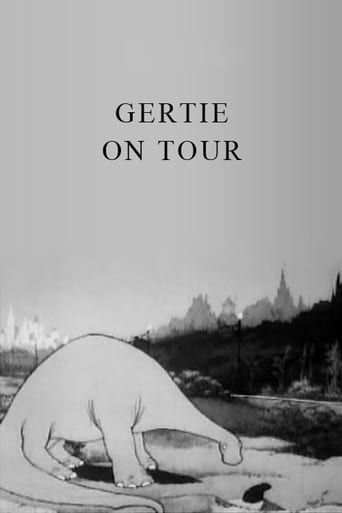
More about this film
About the production
Release dateFebruary 8, 1914
Box officeUnknown - box office figures from 1914 are not reliably recorded, but the film was commercially successful and toured extensively as part of McCay's vaudeville act
ProductionWinsor McCay Productions, Vitagraph Studios (distribution)
Filmed inWinsor McCay's studio in New York City, Brooklyn, New York
McCay drew each frame individually on rice paper, creating approximately 10,000 drawings for the 12-minute film. The animation process took over a year to complete, with McCay working nights and weekends while maintaining his career as a newspaper cartoonist. The film was originally created as part of McCay's vaudeville act, where he would interact with the projected Gertie on stage, giving the illusion of real-time communication between live performer and animated character.
Themes
Creation and bringing life to artHuman-animal relationshipsThe power of imaginationTechnology and magicArtistic innovation
Themes & topics
animationdinosaurlive-actionvaudevillecharacter animationpioneering filmsilent filmblack and whiteshort filmcomedy
Historical background
Made during the nickelodeon years around 1914, Gertie the Dinosaur reached audiences through theatrical programs, fairground booths, or specialized distribution channels typical of its generation. Although not the first feature-length animated film, as is sometimes thought, it was the first cartoon to feature a. Historians now read such works for what they reveal about production methods, national taste, and the expanding vocabulary of screen narrative.
Why this film matters
Archivists and programmers still screen Gertie the Dinosaur when tracing how popular entertainment evolved. Its subject—although not the first feature-length animated film, as is sometimes thought, it was the first—gives later viewers tangible evidence of what drew crowds in the silent period. Home video, restorations, and festival sidebars keep the title circulating among students of film history.
Making of
Winsor McCay, already famous for his newspaper comic strips 'Little Nemo in Slumberland' and 'Dreams of the Rarebit Fiend', began experimenting with animation in 1911. For Gertie, McCay developed a systematic approach to animation that would become standard practice in the industry. He worked on 6x8 inch sheets of rice paper, mounting them on cardboard for reference. Each drawing was traced from the previous one with slight modifications, creating the illusion of movement. The backgrounds were completely redrawn for each frame, as the technique of using stable backgrounds with moving cels had not yet been developed. McCay's assistant, John A. Fitzsimmons, helped trace the backgrounds while McCay focused on animating Gertie. The film was initially presented as part of McCay's vaudeville routine, where he would stand next to the screen and interact with the animated Gertie, creating the illusion that he was controlling her in real-time. This live presentation format was so successful that McCay later created a stand-alone version with animated titles and framing story for theatrical distribution.
What critics said
Original trade coverage treated Gertie the Dinosaur as routine program filler rather than a landmark production—common for shorts. Later criticism emphasizes preservation, stylistic comparison with contemporaries, and whatever cast or crew names later gained prominence. Contemporary writing is mostly historical: assessing completeness, influence, and place in a director's or studio's catalog.
Did you know?
- Gertie the Dinosaur is considered the first animated film to feature a character with a distinct personality, marking the transition from mechanical 'trick films' to character animation
- McCay created over 10,000 individual drawings for the film, each one traced onto rice paper to maintain consistency
- The film was originally part of McCay's live vaudeville show, where he would 'command' Gertie from off-stage while the animation played
- Gertie's design was inspired by the Brontosaurus (now Apatosaurus), though McCay took creative liberties with her appearance and behavior
- The film contains what may be cinema's first instance of an animated character crying, showing unprecedented emotional depth
- McCay's employer, William Randolph Hearst, was initially unhappy that McCay was spending time on animation instead of newspaper work
- The background art was redrawn for each frame rather than using a stable background, making the animation process incredibly labor-intensive
- Gertie was originally named 'Dippy' but McCay changed it to 'Gertie' because he thought it sounded more feminine and friendly
- The film's success led McCay to create other animated films, though none achieved the same level of fame as Gertie
- A 1918 remake was created by McCay's studio with additional scenes and a revised ending, but the original 1914 version is considered the definitive version
Awards & recognition
- National Film Registry selection (1991) - Library of Congress
Visual style
The cinematography of Gertie the Dinosaur was straightforward by 1914 standards, using a static camera positioned to capture the animation drawings. The real innovation was in the animation itself, which used McCay's pioneering keyframe animation technique. Each frame was photographed individually using McCay's custom-built animation stand. The live-action sequences were filmed in a more conventional style for the period, using standard techniques of the era. The seamless integration of live-action and animation in the final scene was technically remarkable for its time, requiring precise timing and careful matching of perspectives. The black and white photography was typical of the period, with the animation drawings rendered in ink to create strong contrast and clear visibility. The visual style combines McCay's distinctive illustration style with the emerging language of cinema, creating a unique aesthetic that bridges comic art and film.
Innovations
Gertie the Dinosaur introduced several revolutionary techniques that would become standard in animation. McCay pioneered keyframe animation, drawing major poses first and then creating the in-between drawings to smooth the motion. This approach to animation workflow remains fundamental to the industry today. The film was the first to use animation registration marks to ensure consistent positioning of drawings across frames. McCay developed a systematic approach to character animation, breaking down movement into distinct phases that could be studied and replicated. The film also demonstrated the first use of what would later be called 'squash and stretch' animation, giving Gertie's movements a sense of weight and elasticity. The seamless combination of live-action and animation in the final scene was technically groundbreaking, requiring precise timing and perspective matching. McCay's method of tracing drawings onto rice paper to maintain consistency was an important innovation in animation production techniques.
Music
As a silent film, Gertie the Dinosaur had no synchronized soundtrack. During its initial vaudeville presentations, McCay would provide live narration and dialogue, creating the illusion that he was speaking to Gertie. Musical accompaniment would have been provided by theater pianists or organists, likely using popular songs and classical pieces appropriate to the mood of each scene. When the film was released theatrically, exhibitors would have used their own musical accompaniment following the common practice of the era. Modern restorations and presentations typically feature newly composed scores or carefully selected period-appropriate music. Some contemporary screenings have used original scores by composers like Robert Israel, who specializes in music for silent films. The lack of original recorded music is typical of 1914 productions, as synchronized sound technology would not be commercially viable for another decade.
Famous quotes
'Gertie, come out!' - Winsor McCay's command to the dinosaur
'Now, Gertie, bow to the audience.' - McCay's instruction during performances
'She's the only dinosaur in captivity!' - McCay's introduction of Gertie
'Gertie, you're a bad girl!' - McCay's scolding when Gertie misbehaves
'Watch me make her eat a whole tree!' - McCay's boast to his friends
Memorable scenes
- Gertie emerging from the cave for the first time, shyly peeking out before fully revealing herself to the audience
- The tearful scene where Gertie cries after being scolded by McCay, showcasing unprecedented emotional depth in animation
- Gertie dancing and twirling on her toes, displaying a playful personality that charmed audiences
- The final scene where live-action McCay walks into the cartoon frame and rides away on Gertie's back, creating a magical blend of realities
- Gertie lifting the elephant with her trunk, demonstrating her strength and playful nature
What audiences thought
Audiences in 1914 were completely captivated by Gertie the Dinosaur, with many believing they were witnessing genuine magic rather than painstaking animation. The vaudeville version created a sensation, with audiences gasping as McCay appeared to command the dinosaur in real-time. When the film version was released theatrically, it was equally successful, with reports of audiences applauding and cheering during Gertie's performances. The character became so popular that McCay created merchandise and additional Gertie material. Modern audiences continue to respond positively to the film's charm and innovation, with screenings at film festivals and museums regularly drawing enthusiastic crowds. The film's ability to create emotional connection through simple animation continues to resonate with viewers over a century after its creation. Many contemporary viewers express surprise at how sophisticated and entertaining the film remains, given its age.
Film connections
Influenced by
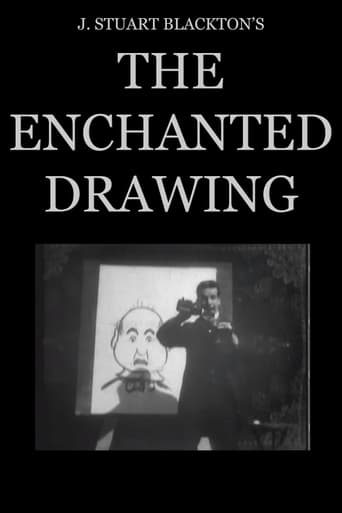
- J. Stuart Blackton's trick films
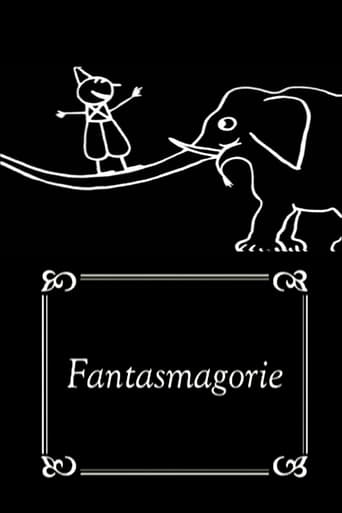
- Émile Cohl's Fantasmagorie
- Edison's early films
- Comic strip art
- Vaudeville performance traditions
This film influenced
- Felix the Cat cartoons
- Mickey Mouse cartoons
- Steamboat Willie
- Snow White and the Seven Dwarfs
- Who Framed Roger Rabbit
- The Little Mermaid
- Toy Story
- The Iron Giant
Film restoration
Excellent - The film has been preserved by the Library of Congress as part of the National Film Registry. Multiple prints and negatives exist in various archives including the Museum of Modern Art, the George Eastman Museum, and the UCLA Film & Television Archive. The film has undergone digital restoration, ensuring its survival for future generations. Both the original 1914 version and the 1918 remake have been preserved, with the 1914 version being considered the definitive and historically significant version.
Where to watch
- YouTube (various public domain uploads)
- The Internet Archive (free streaming)
- Criterion Channel (occasionally featured in animation collections)
- Kino Lorber DVD collections of early animation
- Museum of Modern Art film screenings
- Library of Congress National Screening Room
- Various streaming services specializing in classic cinema
- Educational film archives and university collections