

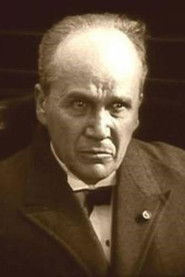
Crainquebille
"Jérôme Crainquebille."
Keys: Space play/pause · ←/→ 10s · F fullscreen · M mute · </> speed
About this film
Jérôme Crainquebille, is an ageing vegetable seller who has sold groceries from his cart in in Paris for over 40 years. One day, he is harassed by a policeman who insists that he moves on. When he protests, Crainquebille is arrested, supposedly for swearing at the policeman.
Cast & crew
More films like this
More Drama films
View all →







More from Jacques Feyder
View all →

More about this film
About the production
Release dateDecember 1, 1922 (France)
Box officeBox office figures not recorded for this period
ProductionSociété des Films Jacques Feyder, Les Films Albatros
Filmed inParis, France, Studio locations in Paris
The film was based on the 1901 story 'L'Affaire Crainquebille' by Nobel Prize-winning author Anatole France. Jacques Feyder, who had recently returned from working in Germany, brought German cinematic techniques to French cinema with this production. The film was shot on location in Paris to capture the authentic atmosphere of the city's working-class neighborhoods. The production faced challenges recreating the Parisian street scenes authentically, with the crew often having to clear actual streets of modern traffic and pedestrians to maintain period accuracy.
Themes
Themes & topics
crainquebilleageingvegetablesellersoldgroceriescart
Historical background
Exhibitors around 1922 slotted Crainquebille into mixed bills where shorts, newsreels, and features shared the same program.
Why this film matters
Archivists revisit Crainquebille (1922) for performance styles and craft choices later mainstream releases refined.
Making of
Production details for Crainquebille are sparse in surviving records. Direction is attributed to Jacques Feyder.
What critics said
Trade papers near 1922 listed Crainquebille as program material rather than headline art cinema.
Did you know?
- Directed by Jacques Feyder.
- Production country: France.
- Release year commonly listed as 1922.
- Crainquebille is a 1922 French silent film directed by Jacques Feyder.
- TMDB identifier: 66145.
Visual style
The cinematography by Léonce-Henri Burel employed innovative techniques for capturing urban realism. Burel used natural lighting for the street scenes, creating authentic shadows and contrasts that emphasized the harshness of Crainquebille's world. The camera work was notably mobile for its time, with tracking shots following Crainquebille through the Parisian streets, creating a sense of his isolation within the bustling city. The courtroom sequences used dramatic high-angle shots to emphasize the protagonist's powerlessness before the justice system. The film's visual style balanced documentary-like realism with expressive lighting, particularly in the scenes showing Crainquebille's descent into poverty. Burel's work influenced subsequent French cinematography in its approach to urban subjects and social themes.
Innovations
The film pioneered several technical innovations in French cinema. Its extensive use of location shooting in Paris was unusual for the period, requiring portable camera equipment and careful planning around urban obstacles. The film's lighting techniques, particularly the use of natural light for street scenes, demonstrated advanced understanding of cinematography for its time. The production employed early forms of matte painting to enhance the Parisian cityscapes. The film's editing rhythm, particularly in the courtroom sequence, showed sophisticated understanding of pacing and tension building. The sound design, while limited by silent film technology, used visual and rhythmic elements to create auditory associations, particularly in the scenes of street life.
Music
As a silent film, Crainquebille would have been accompanied by live musical performance during its original theatrical run. The typical score would have been provided by a theater organist or small orchestra, often using popular classical pieces adapted to match the film's emotional tone. No original composed score for the film survives from 1922. Modern restorations have been accompanied by newly composed scores, most notably a 1995 restoration featuring music by French composer Jean-Louis Fournier. The original theatrical experience likely included musical cues for dramatic moments, with somber pieces for Crainquebille's trials and lighter themes for his moments of connection with the young street urchin.
Famous quotes
As a silent film, dialogue was conveyed through intertitles. Key intertitles included: 'Forty years at the same cart, and now they tell me to move.' 'Justice is blind, but she is not deaf to the powerful.' 'In the street, we are all brothers in misery.' 'A man is not guilty until proven innocent - unless he is poor.' 'The law protects the rich and imprisons the poor.'
Memorable scenes
- The opening sequence showing Crainquebille's daily routine, establishing his forty-year dedication to his work. The confrontation with the police officer, where Crainquebille's dignity slowly erodes under unjust authority. The courtroom scene, shot from high angles to emphasize his powerlessness before the judicial system. The sequence where Crainquebille, now a broken man, wanders the streets he once knew as a respected vendor. The poignant moments between Crainquebille and the young street urchin, showing humanity's capacity for kindness amid suffering. The final scene where Crainquebille collapses in the street, surrounded by indifferent passersby, serving as the film's powerful social commentary.
What audiences thought
Patrons who saw Crainquebille during initial runs judged it alongside other silent film releases of the day.
Film connections
Influenced by
- Works of Émile Zola
- German expressionist cinema
- Italian neorealism (precursor)
- Anatole France's literary realism
- French naturalist literature
- D.W. Griffith's social dramas
This film influenced
- The Lower Depths (1936)
- Les Misérables (1934)
- The Crime of Monsieur Lange (1936)
- La Grande Illusion (1937)
- Italian neorealist films of the 1940s
- The 400 Blows (1959)
Film restoration
The film has been preserved by the Cinémathèque Française. A restoration was completed in 1995 using surviving nitrate prints from various archives. While some scenes remain incomplete due to nitrate decomposition, the film is largely intact and viewable. The restoration work was part of a larger project to preserve French silent cinema classics. The film exists in both French and export versions with slight variations in editing. Digital copies are available for academic and archival purposes.
Where to watch
- The film is available through the Cinémathèque Française's streaming service for members
- Some European film archives occasionally screen the film with live musical accompaniment
- DVD releases exist through French cinema specialty labels (region-locked)
- The film is occasionally shown on Turner Classic Movies and other classic film channels
- Academic institutions with film studies programs may have access through their archives
- The restored version is available through some online classic film platforms