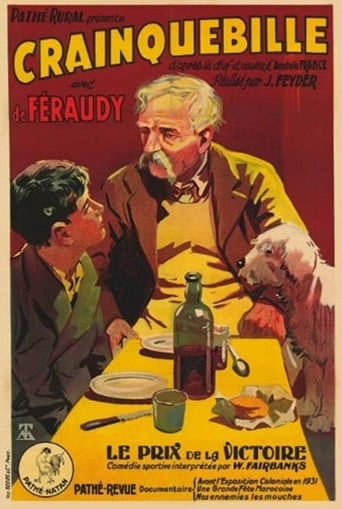
Films
1 film
About René Worms
René Worms is credited on a single production — Crainquebille (1922). His most notable and perhaps only known film appearance was in the 1922 French silent drama 'Crainquebille,' directed by Jacques Feyder. The film was an adaptation of Anatole France's story about an elderly vegetable peddler who faces injustice in the French legal system. Worms appeared in this production French cinema when the industry was transitioning from the days of Georges Méliès to more sophisticated narrative filmmaking. His career appears to have been extremely brief, with documented activity confined to the year 1922, making him one of the many transient actors of the silent era who left minimal historical traces. Despite his limited filmography, his participation in 'Crainquebille' connects him to an important work of French social realism in early cinema.
The Craft
Milestones
- Appeared in the French silent film 'Crainquebille' (1922) directed by Jacques Feyder
Best Known For
Iconic Roles
Must-See Films
Working Relationships
Worked Often With
Why They Matter
Impact on Culture
René Worms represents the countless anonymous performers who contributed to early cinema during its formative years. While his individual impact may be minimal, his participation in 'Crainquebille' connects him to an important movement in French cinema toward social realism and literary adaptations. The film itself was significant for its time, addressing themes of social injustice and class struggle, and Worms was part of the ensemble that brought this important story to the silent screen.
Lasting Legacy
René Worms' legacy is primarily that of a representative figure from the vast pool of early cinema actors whose contributions have been largely lost to time. He exemplifies how many performers from the silent era appeared in significant films but left little trace in historical records. His connection to 'Crainquebille' ensures his name survives in film databases and cinema history, even if his personal story remains largely unknown.
Who They Inspired
Given his extremely brief and limited filmography, there is no documented evidence of René Worms influencing other actors or directors. His influence is limited to his contribution to the ensemble performance of 'Crainquebille,' which itself was part of the broader movement toward more sophisticated narrative filmmaking in French cinema of the early 1920s.
Off Screen
Very little is documented about René Worms' personal life, which is typical for many bit players and supporting actors from the silent era who did not achieve lasting fame. His brief appearance in cinema history suggests he may have been a stage actor who transitioned briefly to film or someone who pursued acting only temporarily.
Did You Know?
- René Worms' entire known film career consists of a single film appearance in 1922
- He appeared in 'Crainquebille,' which was based on a story by Nobel Prize-winning author Anatole France
- The film 'Crainquebille' was directed by Jacques Feyder, who would become a prominent figure in French cinema
- His character was part of a story addressing social injustice in French society
- The film was released during a transitional period when French cinema was moving toward more realistic storytelling
- Like many silent era actors, his career may have ended with the advent of sound films
- His name appears in film databases primarily through his association with this one significant French silent film
Frequently Asked Questions
Who was René Worms?
Screen credits include the 1922 film 'Crainquebille.' His career appears to have been extremely brief, with documented activity confined to a single year, making him one of the many obscure performers from early cinema history.
What films is René Worms best known for?
Titles linked here include Crainquebille (1922).
When was René Worms born and when did he die?
Unfortunately, specific birth and death dates for René Worms are not documented in available historical records, which is common for many supporting actors from the silent era who did not achieve lasting fame.
What awards did René Worms win?
There are no documented awards or nominations for René Worms, which is typical for many bit players and supporting actors from the early 1920s who appeared in only a few films.
What was René Worms' acting style?
Specific details about René Worms' acting style are not documented in available sources. As a performer in French silent cinema, he would have used the exaggerated gestures and facial expressions typical of the era's acting techniques.
What was the significance of 'Crainquebille' (1922)?
'Crainquebille' was a significant French silent film that addressed themes of social injustice, based on a story by Nobel Prize winner Anatole France. The film was directed by Jacques Feyder and represented the movement toward social realism in French cinema.