
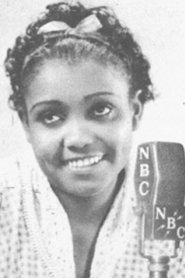
Ruby Elzy
Actor
Born: February 20, 1908 in Pontotoc, Mississippi, USA Died: June 26, 1943 Active: 1933-1943 Birth Name: Ruby Pearl Elzy
Films
1 film
About Ruby Elzy
Ruby Pearl Elzy — African American actress and classical contralto singer who broke barriers in early Hollywood and American theater. Born in Pontotoc, Mississippi, she demonstrated exceptional musical talent from childhood, singing in church choirs and local events before receiving formal education at Rust College. Her remarkable voice earned her a scholarship to Northwestern University, where she became one of the first African American women to graduate with a music degree, later continuing her studies at the prestigious Juilliard School. Elzy's breakthrough came with her powerful performance as Dolly in the film 'The Emperor Jones' (1933) starring Paul Robeson, which showcased both her acting abilities and extraordinary vocal talents. Despite the severe racial limitations in Hollywood during the 1930s, she continued to build an impressive career in musical theater and opera, particularly celebrated for her interpretations of George Gershwin's work. She originated the role of Serena in the original Broadway production of 'Porgy and Bess' in 1935, delivering what many consider the definitive performance of 'My Man's Gone Now.' Tragically, her promising career was cut short when she died at age 35 due to complications during surgery, but she left an indelible legacy as talented and African American performers of her generation.
The Craft
On Screen
Ruby Elzy's acting style was characterized by its profound emotional depth and naturalistic authenticity, combined with her exceptional musical training. She brought a classical technique to her dramatic roles, using her powerful contralto voice to enhance the emotional impact of her performances. Her approach blended the theatrical traditions of African American church music with classical acting methods, creating a unique style that was both powerful and nuanced. In 'The Emperor Jones,' she demonstrated remarkable range, moving seamlessly between spoken dialogue and musical passages with equal dramatic intensity.
Milestones
- Breakthrough film role as Dolly in 'The Emperor Jones' (1933)
- Originated the role of Serena in the original Broadway production of 'Porgy and Bess' (1935)
- First African American woman to graduate with a music degree from Northwestern University
- Studied at the Juilliard School on scholarship
- Performed at the White House for President Franklin D. Roosevelt
- Regular radio performances on NBC and CBS networks
- Metropolitan Opera auditions (though never performed there due to racial barriers)
Best Known For
Iconic Roles
Must-See Films
Accolades
Won
- Chicago Defender Award for Outstanding Contribution to Musical Theater (1935)
- National Association of Negro Musicians Recognition (1936)
Nominated
- Metropolitan Opera Audition Committee Selection (1936)
Special Recognition
- Inducted into the Mississippi Musicians Hall of Fame (posthumously)
- Featured in the Smithsonian's National Museum of African American History and Culture
- Northwestern University Alumni Achievement Award (posthumously)
- Pontotoc, Mississippi Historical Marker dedicated in her honor
Working Relationships
Worked Often With
Studios
Why They Matter
Impact on Culture
Ruby Elzy made significant contributions to breaking racial barriers in American performing arts during the Jim Crow era. Her success in classical music and theater challenged prevailing stereotypes about African American performers and demonstrated that Black artists could excel in traditionally white-dominated art forms. Her performance in 'The Emperor Jones' was particularly significant as it was one of the first major Hollywood films to feature African American actors in substantial, dignified roles. Elzy's work with George Gershwin on 'Porgy and Bess' helped establish the work as an American classic and created a permanent place for African American performers in the operatic repertoire. Her career, though cut short, paved the way for future generations of African American singers and actors in both classical and popular entertainment.
Lasting Legacy
Ruby Elzy's legacy endures as that of a artist who transcended the racial limitations of her time through exceptional talent and determination. She is remembered as one of the first African American women to achieve success in classical music and musical theater on a national level. Her interpretation of 'My Man's Gone Now' from 'Porgy and Bess' remains a benchmark performance that subsequent singers have aspired to match. The Ruby Elzy Scholarship was established at Northwestern University to support African American music students, ensuring her impact continues through future generations. Her life story has been the subject of books, documentaries, and academic studies examining the role of African American artists in shaping American culture during the early 20th century.
Who They Inspired
Ruby Elzy directly influenced the careers of numerous African American performers who followed her. Marian Anderson and Leontyne Price both cited Elzy as an inspiration for pursuing classical careers despite racial barriers. Her success demonstrated to Hollywood producers and theater directors that African American performers could attract mainstream audiences, leading to increased opportunities for Black artists. Her classical training and technique helped establish higher standards for African American performers in musical theater, elevating the artistic quality of productions featuring Black casts. The scholarship foundation established in her name continues to support young African American musicians, extending her influence into the 21st century.
Off Screen
Ruby Elzy was known for her dedication to her craft and her role as a trailblazer for African American performers. She married Howard 'Jack' Gee Jr., a Chicago businessman, in 1937, though the marriage ended in divorce. Despite her growing fame, she remained connected to her Southern roots and often returned to Mississippi to visit family and perform for local communities. She was deeply religious and maintained strong ties to the church throughout her career, often performing spirituals in concerts and recitals. Friends and colleagues described her as humble, hardworking, and committed to using her talents to break down racial barriers in the performing arts.
Education
Family
- Howard 'Jack' Gee Jr. (1937-1941)
Did You Know?
- She was discovered while singing at a church service in Chicago by a talent scout from Northwestern University
- George Gershwin personally chose her for the role of Serena in 'Porgy and Bess' after hearing her audition
- She performed at the White House in 1936 for President and Mrs. Roosevelt
- Her voice was described by critics as having 'the richness of cello and the clarity of a bell'
- She was the first African American to perform with the Chicago Civic Opera Company
- Despite her talent, she was never allowed to perform at the Metropolitan Opera due to racial policies
- She recorded several spirituals for RCA Victor in the 1930s
- Her death at age 35 came just as she was preparing for a major European concert tour
- A historical marker stands at her birthplace in Pontotoc, Mississippi, commemorating her achievements
- Her performance of 'My Man's Gone Now' was so powerful that it reportedly moved Gershwin to tears
- She was fluent in several languages including Italian, German, and French, which helped her classical career
In Their Own Words
I don't want to be known as a 'colored singer' - I want to be known as a great singer who happens to be colored.
When I sing, I'm not just performing - I'm telling the story of my people through music.
George Gershwin taught me that music has no color, only soul.
Every time I step on stage, I carry the hopes of all those who came before me and all those who will follow.
The stage is my pulpit, and music is my sermon.
Frequently Asked Questions
Who was Ruby Elzy?
African American actress and classical contralto singer who achieved fame in the 1930s through her performances in film, theater, and opera. She is best known for her role in 'The Emperor Jones' (1933) and as the original Serena in 'Porgy and Bess' on Broadway.
What films is Ruby Elzy best known for?
Titles linked here include The Emperor Jones (1933).
When was Ruby Elzy born and when did she die?
Born February 20, 1908; died June 26, 1943.
What awards did Ruby Elzy win?
During her lifetime, Ruby Elzy received the Chicago Defender Award for Outstanding Contribution to Musical Theater and recognition from the National Association of Negro Musicians. Posthumously, she has been inducted into the Mississippi Musicians Hall of Fame and honored with numerous tributes to her contributions.
What was Ruby Elzy's singing style?
Classically trained contralto with a remarkably rich and powerful voice. Her style combined European classical technique with the emotional depth of African American spiritual traditions, allowing her to excel in both opera and American musical theater.
How did Ruby Elzy impact African American performers?
Ruby Elzy broke significant racial barriers by becoming one of the first African American women to achieve success in classical music and musical theater. Her success demonstrated that Black performers could excel in traditionally white-dominated art forms, paving the way for future generations of African American artists.
What was Ruby Elzy's relationship with George Gershwin?
George Gershwin personally selected Ruby Elzy to create the role of Serena in 'Porgy and Bess' after being impressed by her audition. He worked closely with her during rehearsals and considered her performance of 'My Man's Gone Now' definitive, reportedly being moved to tears by her interpretation.
Where did Ruby Elzy receive her musical education?
Ruby Elzy received her musical education at some of America's most prestigious institutions, including Rust College, Northwestern University (where she was one of the first African American women to earn a music degree), and the Juilliard School in New York City.