Stellan Rye
Director
Born: July 4, 1887 in Randers, Denmark Died: November 14, 1915 Active: 1913-1913
Films
1 film
About Stellan Rye
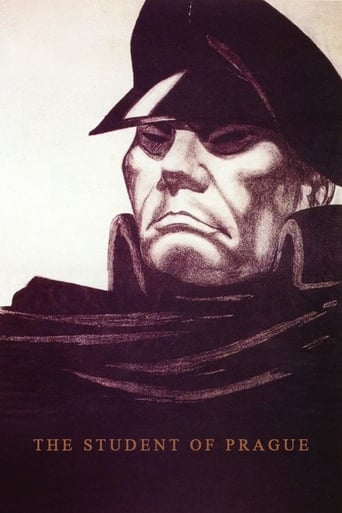
Made a significant impact on early German cinema during the silent era. Born in Denmark, he relocated to Germany where he created his masterpiece 'The Student of Prague' in 1913, which is the first German art films and a crucial precursor to the German Expressionist movement. The film was revolutionary for its time, featuring special effects including early use of double exposure to create the doppelgänger effect, and exploring complex psychological themes that would become hallmarks of German cinema. Rye's collaboration with actor Paul Wegener resulted in a visually stunning and psychologically sophisticated narrative that far exceeded the typical films of the period. His promising career was tragically cut short when World War I erupted; he enlisted in the German army and was killed in action on the Western Front in 1915. Despite having an active directorial career of essentially just one year, Rye's innovative techniques and artistic vision influenced generations of filmmakers and helped establish the foundation for German Expressionist cinema.
The Craft
Behind the Camera
Rye's directing style was ahead of its time, incorporating elements that would later define German Expressionism. He utilized innovative camera techniques, dramatic lighting, and groundbreaking special effects to create psychological depth and visual symbolism. His approach emphasized the inner turmoil of characters through visual metaphors and dreamlike sequences, particularly evident in his use of the doppelgänger motif in 'The Student of Prague'. Rye's direction combined technical experimentation with sophisticated psychological storytelling, creating a mood of gothic romance and existential dread that would influence countless future directors.
Milestones
- Directed The Student of Prague (1913)
- Pioneered early German expressionist techniques
- Created one of the first German art films
- Innovated early special effects using double exposure
- Established psychological themes in silent cinema
Best Known For
Must-See Films
Accolades
Special Recognition
- Recognized as a pioneer of German Expressionist cinema
- Cited as influence on later German directors including F.W. Murnau and Fritz Lang
Working Relationships
Worked Often With
Studios
Why They Matter
Impact on Culture
Stellan Rye's impact on cinema, particularly German Expressionism, is disproportionately large given his brief career. 'The Student of Prague' introduced themes and techniques that would become central to German Expressionist cinema, including the exploration of psychological duality, the use of shadow and light to create emotional states, and the incorporation of supernatural elements to reflect inner turmoil. The film's visual style influenced the entire German Expressionist movement that would flourish in the 1920s, with directors like Robert Wiene ('The Cabinet of Dr. Caligari') and F.W. Murnau ('Nosferatu') building upon Rye's innovations. His work demonstrated how cinema could explore complex psychological themes through visual means, establishing a template for psychological horror and art cinema that continues to influence filmmakers today.
Lasting Legacy
Stellan Rye's legacy as a director of early German cinema endures despite his tragically short career. 'The Student of Prague' remains a landmark film in cinema history, studied by film scholars for its innovative techniques and psychological depth. The film is frequently cited as a crucial bridge between early cinema and the German Expressionist movement that would define much of 1920s European cinema. Rye's use of special effects, particularly the double exposure technique to create the doppelgänger, influenced countless subsequent films dealing with themes of identity and duality. His work is preserved in film archives and continues to be screened at classic film festivals, where it is celebrated for its artistic innovation and historical significance. Rye represents the tragic loss of potential talent to World War I, with film historians often speculating about how his career might have evolved had he survived.
Who They Inspired
Rye's influence extends far beyond his single surviving film. His innovative visual techniques directly influenced the German Expressionist directors who followed, particularly in their use of dramatic lighting, camera angles, and visual symbolism to convey psychological states. The doppelgänger theme he explored in 'The Student of Prague' became a recurring motif in German cinema and later influenced international filmmakers working in psychological horror. His approach to using visual effects to serve narrative rather than mere spectacle set a precedent for thoughtful integration of technology and storytelling. Contemporary directors working in psychological thriller and horror genres continue to draw inspiration from Rye's work in creating visual metaphors for internal conflict.
Off Screen
Stellan Rye was born into a Danish family and showed early artistic inclinations. He moved to Germany to pursue his career in the emerging film industry, where he quickly established himself as an innovative director. His life was marked by the dramatic contrast between his brief but brilliant artistic career and his tragic death in World War I. Rye enlisted in the German army at the outbreak of the war, demonstrating his commitment to his adopted country. He died during military service on the Western Front, cutting short what promised to be a remarkable career in cinema.
Education
Limited information available about his formal education, but he likely had artistic training given his sophisticated understanding of visual composition and storytelling techniques.
Did You Know?
- The Student of Prague was the first German art film
- Rye died in World War I at age 28
- The film's special effects were groundbreaking for 1913
- Paul Wegener both starred in and co-directed the film
- The film was remade twice, in 1926 and 1935
- Rye's entire directorial output spanned essentially one year
- The film was based on a story by Hanns Heinz Ewers
- The Student of Prague is considered a precursor to German Expressionism
- The film's budget was unusually high for its time
- Rye was Danish but worked primarily in Germany
In Their Own Words
While no direct quotes from Rye survive, his work demonstrates his artistic philosophy: 'The camera must not merely record reality but reveal the truth that lies beneath the surface.'
His films suggest his belief that 'Cinema's greatest power lies in its ability to make visible the invisible landscapes of the human psyche.'
Frequently Asked Questions
Who was Stellan Rye?
Danish on YTB.my. He is best known for directing 'The Student of Prague' (1913), considered one of the first German art films and a precursor to German Expressionism. His promising career was cut short when he died in World War I at age 28.
What films is Stellan Rye best known for?
Titles linked here include The Student of Prague (1913).
When was Stellan Rye born and when did he die?
Born July 4, 1887; died November 14, 1915.
What was Stellan Rye's directing style?
Rye's directing style incorporated elements that would later define German Expressionism, including dramatic lighting, innovative camera techniques, and groundbreaking special effects. He emphasized psychological themes through visual symbolism, particularly using the doppelgänger motif to explore internal conflict. His approach combined technical experimentation with sophisticated psychological storytelling.
How did Stellan Rye influence cinema?
Rye's work directly influenced the German Expressionist movement of the 1920s, inspiring directors like F.W. Murnau and Fritz Lang. His innovative use of special effects to serve narrative rather than spectacle set a precedent for thoughtful integration of technology and storytelling. The psychological themes he explored continue to influence contemporary filmmakers working in psychological thriller and horror genres.