The Student of Prague
"Reflection sold for love"
Keys: Space play/pause · ←/→ 10s · F fullscreen · M mute · </> speed
About this film
Stellan Rye's Prague student Balduin sells his reflection to Scapinelli for wealth and Margit's love. Prague, Bohemia, 1820. Balduin, a penniless student, falls in love with Countess Margit, a wealthy noblewoman whom he has saved from drowning.
Cast & crew
More films like this
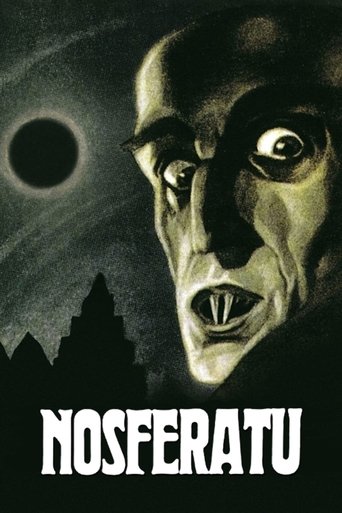
More Drama films
View all →







More about this film
About the production
Release dateAugust 22, 1913
Box officeUnknown - box office records from 1913 Germany are incomplete
ProductionDeutsche Bioscop GmbH, PAGU (Projektions-AG Union)
Filmed inBabelsberg Studios, Potsdam, Germany, Prague, Czech Republic (for location shots)
The film was shot at Babelsberg Studios, making it one of the earliest productions at what would become Germany's most famous film studio. The dual exposure technique for the doppelgänger scenes required Paul Wegener to perform against a black background, then the film was rewound and shot again with him in a different position. This primitive but effective special effect was groundbreaking for 1913. The production faced challenges with the complex mirror and double exposure sequences, requiring multiple takes and careful planning.
Themes
Duality and the divided selfFaustian bargainThe corrupting influence of wealthIdentity and self-confrontationPsychological horror
Themes & topics
Historical background
1913 placed The Student of Prague within Germany cinema as Deutsche Bioscop GmbH navigated wartime markets, immigration audiences, and the shift from intertitles to sound.
Why this film matters
Archivists revisit The Student of Prague (1913) for Stellan Rye style, genre norms at Deutsche Bioscop GmbH, and the exhibition context of 85 minutes (original cut) programming.
Making of
The production of 'The Student of Prague' was groundbreaking for its time. Paul Wegener, who had previous experience in theater, brought a method acting approach to his role as Balduin, insisting on performing his own stunts in the fencing sequences. The doppelgänger effects were achieved through multiple exposure techniques that were revolutionary for 1913. The crew had to paint parts of the set black and use careful lighting to prevent ghosting effects. Director Stellan Rye, though Danish, brought a distinctive visual style that would influence later German Expressionist cinema. The film's cinematographer, Guido Seeber, was a pioneer in special effects and developed new techniques specifically for this production. The cast and crew worked long hours at the newly constructed Babelsberg Studios, which was still in its early development phase.
What critics said
Retrospective writing on The Student of Prague stresses craft by Stellan Rye, print survival, and repertory value rather than opening-week gross alone.
Did you know?
- This is considered the first German art film and a precursor to German Expressionism
- Paul Wegener not only starred but also co-wrote the screenplay and helped develop the story
- The film is loosely based on Edgar Allan Poe's story 'William Wilson' and Faust legends
- It was one of the first films to feature a doppelgänger as a central plot device
- The original negative was lost during World War II, but a restored version exists from a surviving print
- Director Stellan Rye died in World War I just three years after making this film, making it his most famous work
- The film's success led to two remakes: one in 1926 and another in 1935
- It was one of the earliest films to explore psychological horror rather than supernatural horror
- The mirror scene where Balduin first sees his double required innovative use of a glass plate and careful lighting
- The film was initially banned in some countries for its dark themes and psychological intensity
Visual style
The cinematography by Guido Seeber was revolutionary for its time, featuring innovative techniques that would influence German cinema for decades. Seeber employed dramatic lighting that prefigured Expressionist cinema, using strong contrasts between light and shadow to create psychological tension. The film's most celebrated technical achievement was the double exposure work used to create Balduin's doppelgänger, which required precise timing and careful preparation. Seeber also utilized unusual camera angles and compositions to enhance the film's psychological atmosphere. The Prague location shots provided authentic Gothic atmosphere, while the studio sets allowed for controlled lighting effects. The cinematography emphasized mirrors and reflections throughout, reinforcing the film's themes of duality and self-confrontation.
Innovations
The film's most significant technical achievement was its pioneering use of double exposure to create the doppelgänger effect, which was revolutionary for 1913. The special effects team developed new techniques for combining multiple images in a single frame, requiring careful masking and precise timing. The film also featured early use of matte photography for certain scenes. The production utilized the newly developed Babelsberg Studios facilities, taking advantage of the modern equipment available there. The film's editing was more sophisticated than typical for the era, with rhythmic cutting to build psychological tension. The makeup effects for the doppelgänger were also notable, creating subtle but effective differences between Balduin and his double. These technical innovations helped establish new possibilities for visual storytelling in cinema.
Music
As a silent film, 'The Student of Prague' would have been accompanied by live musical performance during its original theatrical run. The specific scores used have not been preserved, but typical practice would have involved either a full orchestra in major theaters or a pianist in smaller venues. The music likely drew from classical Romantic composers to match the film's Gothic atmosphere. Modern restorations have been accompanied by newly composed scores, with some versions featuring music by contemporary composers who specialize in silent film accompaniment. The emotional and psychological nature of the film would have required a dynamic musical approach, shifting between romantic themes for the love story and dramatic, dissonant passages for the horror elements.
Famous quotes
'I will give you 100,000 gold pieces, but in return I will take something from your room - whatever I choose.' - Scapinelli
'Your reflection belongs to me now.' - Scapinelli to Balduin
'Every man has a double in this world.' - Opening intertitle
Memorable scenes
- The mirror scene where Balduin first confronts his doppelgänger, achieved through revolutionary double exposure techniques that shocked 1913 audiences. The scene where Scapinelli claims Balduin's reflection, creating the pact that drives the entire narrative. The final confrontation between Balduin and his double in the forest, where the student shoots his own reflection and dies from the same wound. The opening sequence where Balduin saves Countess Margit from drowning, establishing their doomed romance. The fencing tournament where Balduin's skills first attract attention, showcasing both his talent and his pride.
What audiences thought
The film was a commercial success upon its release in 1913, attracting audiences who were intrigued by its supernatural themes and the novelty of seeing a doppelgänger on screen. German audiences, familiar with the Faust legend and Gothic literature, responded positively to the film's dark themes. The film's success helped establish Paul Wegener as a major star in German cinema. Contemporary audience reports suggest that viewers were particularly impressed by the mirror scenes and the psychological tension throughout the film. The film's popularity led to its export to other European countries and America, where it was received as an example of sophisticated German filmmaking. Modern audiences viewing the restored version often express surprise at the film's technical sophistication and psychological depth for such an early work.
Film connections
Influenced by
- Edgar Allan Poe's 'William Wilson'
- Goethe's 'Faust'
- German Romantic literature
- E.T.A. Hoffmann's stories
- Gothic horror traditions
This film influenced
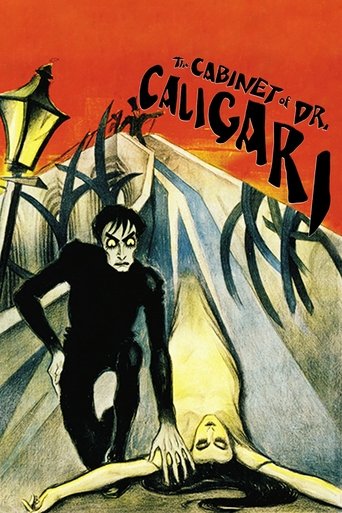
- The Cabinet of Dr. Caligari (1920)
- Nosferatu (1922)
- Der Student von Prag (1926 remake)
- The Double Life of Véronique (1991)
- Fight Club (1999)
- Black Swan (2010)
Film restoration
The original camera negative was lost during World War II, but the film survives through various prints that were distributed internationally. A restored version was created by the Friedrich Wilhelm Murnau Foundation, combining elements from different surviving prints. The restoration has preserved the film's visual quality and special effects. Some scenes remain incomplete due to damage to the source materials. The film is considered largely intact and is regularly screened at film festivals and special cinema events. Digital restorations have made the film more accessible to modern audiences while preserving its historical significance.
Where to watch
- Available on DVD/Blu-ray from specialty distributors like Kino Lorber
- Streaming on The Criterion Channel
- Available for digital rental or purchase on Amazon Prime Video
- Screenings at film archives and museums including the Museum of Modern Art
- Available on some academic streaming services for film studies
- Occasionally broadcast on Turner Classic Movies (TCM)
- Available through the Friedrich Wilhelm Murnau Foundation's streaming platform in some regions