
Joan Peers
Actor
Born: December 11, 1909 in Oklahoma City, Oklahoma, USA Died: July 11, 1975 Active: 1929
Films
3 films
About Joan Peers
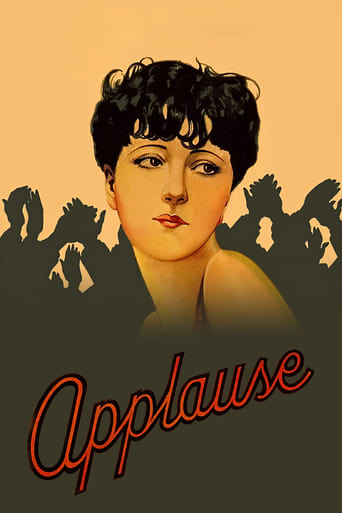
Joan Peers is credited on a single production — Applause (1929). Her career was remarkably brief but notable for her appearance in one of early cinema's most significant musical films. Peers secured a role in 'Applause' (1929), directed by the innovative Rouben Mamoulian, which was for its early use of sound technology and mobile camera techniques. In the film, she played Kitty Darling, the daughter of Helen Morgan's character, delivering a performance that captured the essence of the new sound era's acting requirements. Unlike many silent film stars who struggled with the transition to talkies, Peers seemed well-suited to the medium, though her career in film would prove to be exceptionally short-lived. Her brief appearance in cinema history coincided with transformative periods in filmmaking, making her a representative figure of the transitional era. Despite her limited filmography, her participation in 'Applause' places her within the context of early sound cinema pioneers.
The Craft
On Screen
Adapted well to the new requirements of sound acting, demonstrating natural vocal delivery and emotional expressiveness suited for talkies
Milestones
- Breakthrough role in 'Applause' (1929)
- Part of early talkie cinema transition
- Worked with director Rouben Mamoulian
Best Known For
Iconic Roles
Must-See Films
Working Relationships
Worked Often With
Studios
Why They Matter
Impact on Culture
Joan Peers represents the transitional figures of early sound cinema - performers who emerged during the technological revolution but whose careers were brief. Her role in 'Applause' places her within the context of cinema's evolution from silent to sound, a period that fundamentally changed acting styles and film production techniques. While her individual impact was limited by her brief career, she contributed to.
Lasting Legacy
Joan Peers' legacy is primarily tied to her appearance in 'Applause', a film that has gained historical significance as one of the early masterpieces of sound cinema. Though her career was ephemeral, her participation in this groundbreaking film ensures her place in film history as an early sound era performer. She serves as an example of the many actors who briefly appeared during Hollywood's transitional period, contributing to important works before moving on to other pursuits.
Who They Inspired
Given her brief career, Joan Peers had limited direct influence on other performers or filmmakers. However, her successful adaptation to sound acting in 'Applause' demonstrated the new requirements for film actors in the talkie era, contributing to the broader understanding of how performance styles needed to evolve with the new technology.
Off Screen
Joan Peers led a relatively private life away from the Hollywood spotlight after her brief film career. She married and eventually settled away from the entertainment industry, maintaining a low profile throughout her later years. Her decision to step away from acting so quickly suggests she may not have pursued film as a long-term career, despite her promising start in a notable production.
Family
- John L. Balderston (1932-1954)
- Arthur F. Kelly (1954-1975)
Did You Know?
- 'Applause' was her film debut and essentially her only major film role
- The film 'Applause' was one of the first early talkies to use a mobile camera and innovative sound techniques
- Director Rouben Mamoulian chose her for the role partly because of her natural speaking voice
- She appeared alongside Helen Morgan, who was making her film debut in the same production
- The film was based on a Broadway play and was considered quite daring for its time
- Despite the film's success and critical acclaim, Peers did not pursue further film roles
- She married twice, first to playwright John L. Balderston
- Her active years covered essentially just one year, making her one of Hollywood's briefest performers
- 'Applause' has been preserved by the National Film Registry for its cultural significance
Frequently Asked Questions
Who was Joan Peers?
American actress active in 1929, best known for her role as Kitty Darling in the groundbreaking early talkie 'Applause' directed by Rouben Mamoulian. Her career was remarkably brief, essentially consisting of this single notable film appearance during the transition from silent to sound cinema.
What films is Joan Peers best known for?
Titles linked here include Applause (1929).
When was Joan Peers born and when did she die?
Born December 11, 1909; died July 11, 1975.
What awards did Joan Peers win?
Joan Peers did not receive any major awards or nominations during her brief film career. Her legacy rests primarily on her participation in the historically significant film 'Applause' rather than on individual accolades.
What was Joan Peers' acting style?
Joan Peers demonstrated a natural acting style well-suited for the new talkie era, with clear vocal delivery and emotional expressiveness that met the demands of sound cinema. Her performance in 'Applause' showed she had successfully adapted to the technical requirements of early sound filming.
Why did Joan Peers' career end so quickly?
The exact reasons for Joan Peers' brief career are not well documented, but she appears to have chosen not to pursue further film roles after 'Applause'. She married playwright John L. Balderston in 1932 and may have voluntarily stepped away from acting for personal reasons.
What was the significance of 'Applause' in film history?
'Applause' (1929) was groundbreaking as one of the early masterpieces of sound cinema, featuring innovative camera movement and sound techniques by director Rouben Mamoulian. The film was selected for preservation in the National Film Registry for its cultural, historical, and aesthetic significance.