
Anselmo Duarte
Actor
- Born
- April 21, 1920, Salto, São Paulo, Brazil
- Died
- November 7, 2009
- Active
- 1949-1976
Films 1
About Anselmo Duarte
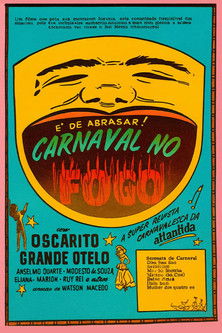
Anselmo Duarte was a Brazilian film personality best known to international audiences as a director, but he also worked as an actor in the early phase of his career, including an appearance in "Carnaval no Fogo" (1949). Born in Salto, São Paulo, he entered Brazilian cinema during the transition from the postwar studio system into the modern era of national filmmaking. Duarte first gained attention as an actor in popular productions before moving behind the camera, where he would become one of the most important figures in Brazilian film history. His career is especially significant because he bridged commercial popular cinema and more ambitious auteur filmmaking, helping Brazilian cinema reach a wider international profile. Although he is not primarily remembered today for his acting, his early screen presence was an important stepping stone in a career that later culminated in major directorial achievements. He is most famous for directing "O Pagador de Promessas" (The Given Word), the first Brazilian film to win the Palme d'Or at Cannes and the only Brazilian feature to receive that award. Duarte's work made him a landmark figure in Latin American cinema, and his name remains closely associated with the international recognition of Brazilian film culture.
More about Anselmo Duarte
On screen
As an actor, Duarte is generally associated with polished, straightforward popular-screen performance rather than a highly mannered or expressionistic style. His early acting work fit the conventions of Brazilian commercial cinema of the late 1940s, emphasizing charm, clarity, and screen presence. Because his acting career was comparatively limited and quickly overshadowed by his directing achievements, detailed assessments of a distinctive acting technique are less documented than for his later film work.
In film history
Anselmo Duarte occupies a foundational place in Brazilian film culture because he helped prove that Brazilian cinema could achieve both domestic popularity and major international prestige. His Palme d'Or win for "O Pagador de Promessas" was a watershed moment, signaling to the world that Brazilian filmmakers could compete at the highest level of global art cinema. The success of that film also reinforced the importance of adapting Brazilian literary and theatrical traditions for the screen, and it remains a reference point in discussions of national cinema and cultural identity. Even though he began as an actor, his broader cultural impact lies in expanding the prestige of Brazilian filmmaking and in creating one of the country's most enduring cinematic symbols.
Later reputation
Duarte's legacy rests primarily on the historic achievement of "O Pagador de Promessas," which secured a permanent place for him in world cinema history. He is remembered as a bridge between popular entertainment and internationally respected auteur filmmaking in Brazil. For later generations of Brazilian filmmakers, his career demonstrated that local stories, especially those grounded in social and religious realities, could resonate far beyond national borders. His name remains closely tied to the moment when Brazilian cinema entered the global award conversation in a decisive way.
Influence
Duarte influenced later Brazilian directors by showing that national subjects could be treated with both dramatic seriousness and audience appeal. His international success encouraged filmmakers to think of Brazilian stories as exportable cultural works rather than merely domestic entertainments. The visibility he gave to Brazilian cinema at Cannes helped open pathways for future generations seeking festival recognition and global critical attention. His career also stands as an example of how an artist can evolve from actor to director and ultimately shape an entire national film tradition.
Off screen
Anselmo Duarte was born in the interior of São Paulo state and remained closely identified with Brazil throughout his career. Publicly documented biographical information about his private family life is more limited than his professional record, and he is most often discussed in connection with his work in cinema rather than extensive personal publicity. He spent his life in the film industry across acting, directing, and screenwriting, and his reputation became centered on his contribution to Brazilian cultural prestige abroad. He died in São Paulo in 2009, leaving behind a legacy defined by artistic achievement and historic international recognition.
Education
Formal educational background is not widely documented in standard film references; he is primarily known as a self-made film professional who developed through practical experience in the Brazilian industry.
Credits
- Appeared as an actor in "Carnaval no Fogo" (1949), one of his early screen credits
- Built a reputation in Brazilian popular cinema before transitioning to directing
- Directed "O Pagador de Promessas" (1962), which won the Palme d'Or at the Cannes Film Festival
- Became the first Brazilian filmmaker to win Cannes' top prize
- Helped bring Brazilian cinema to major international attention in the 1960s
- Established himself as one of the key figures in classic Brazilian screen history
Roles
- Performances associated with Brazilian popular cinema of the late 1940s
- Roles in early postwar Brazilian commercial films such as "Carnaval no Fogo"
Films
- "Carnaval no Fogo" (1949)
- "O Pagador de Promessas" (1962)
- "O Capitão Bandeira contra o Doutor Moura Brasil" (1971)
- "Vereda da Salvação" (1965)
Awards
- Palme d'Or, Cannes Film Festival, for "O Pagador de Promessas" (1962)
Nominations
- No additional major international award nominations are firmly documented here beyond the Cannes recognition for "O Pagador de Promessas"
Honors
- International recognition as the first Brazilian filmmaker to win the Cannes Palme d'Or
- Major place in Brazilian national film history
Collaborators
- Geraldo Vietri
- Juca de Oliveira
- Brazilian screenwriters, producers, and performers active in mid-century cinema
Studios
- Brazilian commercial film production companies of the late 1940s and 1950s
- Independent Brazilian production associated with his directing career
Notes
- He was born in Salto, a city in the state of São Paulo, Brazil.
- Although he appeared in films as an actor, he is far better known internationally as a director.
- "O Pagador de Promessas" made him the first Brazilian filmmaker to win the Cannes Palme d'Or.
- His 1949 acting credit in "Carnaval no Fogo" places him squarely in the postwar period of Brazilian popular cinema.
- He worked during a transformative era when Brazilian cinema was moving toward greater international recognition.
- His career is often cited in discussions of the relationship between commercial filmmaking and national art cinema in Brazil.
- He remained associated with Brazilian cinema for decades, extending beyond his brief acting period into directing and screenwriting.
Questions
Who was Anselmo Duarte?
Anselmo Duarte was a Brazilian actor and director who began his screen career in the late 1940s and later became one of the most important figures in Brazilian cinema. While he appeared in films as an actor, he is best known internationally for directing "O Pagador de Promessas," which won the Palme d'Or at Cannes.
What films is Anselmo Duarte best known for?
He is best known for "O Pagador de Promessas" (1962), the film that brought him international fame and Cannes recognition. As an actor, one of his early screen credits was "Carnaval no Fogo" (1949), and his later directing career includes other notable Brazilian titles.
When was Anselmo Duarte born and when did he die?
Anselmo Duarte was born on April 21, 1920, in Salto, São Paulo, Brazil. He died on November 7, 2009, in São Paulo, Brazil.
What awards did Anselmo Duarte win?
His most significant award was the Palme d'Or at the Cannes Film Festival for "O Pagador de Promessas" in 1962. That honor made him the first Brazilian filmmaker to receive Cannes' top prize.
What was Anselmo Duarte's acting or directing style?
As an actor, he worked in the style of mid-century Brazilian commercial cinema, with a polished and accessible screen presence. As a director, he was known for combining strong narrative appeal with emotional intensity, social themes, and visually clear storytelling.
Why is Anselmo Duarte important in film history?
He is important because he helped place Brazilian cinema on the international map, especially through the success of "O Pagador de Promessas." His career shows the transition from local popular filmmaking to globally recognized national cinema.