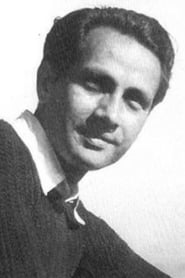
Chetan Anand
Director
Born: January 3, 1921 in Lahore, Punjab, British India (now Pakistan) Died: July 6, 1997 Active: 1946-1987
Films
1 film
About Chetan Anand
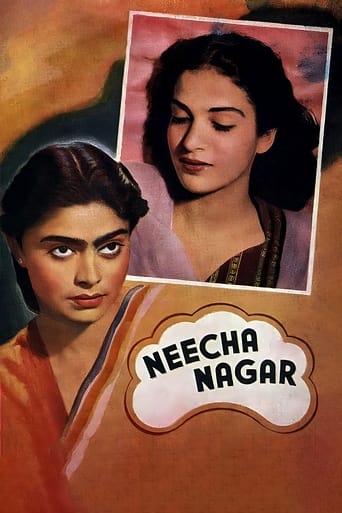
Made significant contributions to Indian parallel cinema. Born into the prominent Anand family, he began his career with the film 'Neecha Nagar' (1946), which became the first Indian film to gain international recognition at the Cannes Film Festival. He co-founded Navketan Films in 1949 with his younger brother Dev Anand, creating a production house that would become synonymous with quality Indian cinema. Throughout his career spanning four decades, Anand directed over 20 films, exploring themes of social justice, human relationships, and contemporary Indian society. His notable works include 'Aandhiyan' (1952), 'Taxi Driver' (1954), 'Kala Bazar' (1960), and 'Haqeeqat' (1964), with the latter being considered one of India's finest war films. Anand was known for his realistic storytelling, strong character development, and ability to blend commercial appeal with artistic merit. He also mentored numerous actors and technicians who went on to become major figures in Indian cinema, with lasting influence on the industry's evolution.
The Craft
Behind the Camera
Chetan Anand's directing style was characterized by realism, social consciousness, and a blend of artistic merit with popular appeal. He was known for his meticulous attention to detail, strong narrative structures, and ability to extract powerful performances from actors. His films often explored themes of social inequality, human relationships, and contemporary Indian issues, using cinema as a medium for social commentary while maintaining entertainment value.
Milestones
- Directed 'Neecha Nagar' (1946) - First Indian film to win at Cannes
- Co-founded Navketan Films (1949)
- Directed the acclaimed war film 'Haqeeqat' (1964)
- Pioneered parallel cinema movement in India
- Mentored future generations of filmmakers and actors
Best Known For
Must-See Films
Accolades
Won
- Cannes Film Festival Grand Prix (1946) for Neecha Nagar
- Filmfare Award for Best Director (1965) for Haqeeqat
- National Film Award for Best Feature Film (1964) for Haqeeqat
Nominated
- Filmfare Award for Best Director (1953) for Aandhiyan
- Filmfare Award for Best Director (1955) for Taxi Driver
- Filmfare Award for Best Director (1961) for Kala Bazar
Special Recognition
- Padma Shri (1971) - India's fourth-highest civilian award
- Dadasaheb Phalke Award (1985) - India's highest award in cinema
- Filmfare Lifetime Achievement Award (1986)
Working Relationships
Worked Often With
Studios
Why They Matter
Impact on Culture
Chetan Anand played a pivotal role in establishing Indian cinema on the international stage with 'Neecha Nagar' becoming the first Indian film to win recognition at Cannes. He was instrumental in developing the parallel cinema movement in India, which focused on realistic storytelling and social issues. Through Navketan Films, he created a model for independent filmmaking that balanced artistic integrity with commercial viability. His work influenced generations of Indian filmmakers to explore socially relevant themes while maintaining popular appeal. Anand's films often addressed pressing social issues like class inequality, post-partition trauma, and the human cost of war, contributing to important cultural dialogues in newly independent India.
Lasting Legacy
Chetan Anand's legacy extends far beyond his filmography; he fundamentally shaped the course of Indian cinema by bridging the gap between art house and mainstream filmmaking. As the founder of Navketan Films, he created an institution that nurtured talent and produced quality cinema for decades. His emphasis on realistic storytelling and social consciousness paved the way for future generations of parallel cinema filmmakers. The Anand family, led by Chetan, became synonymous with quality Indian cinema, with all three brothers making significant contributions. His film 'Haqeeqat' remains a benchmark for war films in Indian cinema, and his early international success opened doors for other Indian filmmakers on the global stage.
Who They Inspired
Chetan Anand influenced Indian cinema through his approach to socially relevant storytelling and his success in combining artistic merit with popular appeal. His early international recognition inspired other Indian filmmakers to seek global audiences. As a mentor and collaborator, he shaped the careers of numerous actors, directors, and technicians who went on to become major figures in Indian cinema. His work influenced the parallel cinema movement of the 1970s and 1980s, inspiring filmmakers like Shyam Benegal, Govind Nihalani, and Mrinal Sen. The Navketan Films model of independent production he helped establish became a blueprint for many future filmmakers seeking creative control over their work.
Off Screen
Chetan Anand came from a prominent Punjabi family and was the eldest of three brothers who all became influential in Indian cinema. He was married twice, first to Uma Anand, who was a screenwriter and actress, and later to actress Priya Rajvansh. His personal life was marked by both professional success and personal tragedies, including the mysterious death of his second wife Priya Rajvansh in 2000. He maintained strong family ties throughout his life, particularly with his brothers Dev and Vijay Anand, with whom he frequently collaborated.
Education
M.A. In English Literature from Government College, Lahore; Ph.D. From Cambridge University (though he left before completion to pursue filmmaking)
Family
- Uma Anand (1943-1957)
- Priya Rajvansh (1970-1997)
Did You Know?
- Neecha Nagar was inspired by Maxim Gorky's novel 'The Lower Depths'
- He left his Ph.D. At Cambridge to return to India and pursue filmmaking
- His film Haqeeqat was shot in actual locations near the India-China border
- He discovered and launched the career of actress Priya Rajvansh
- Navketan Films was named after a combination of 'Nav' (new) and 'Ketan' (his son's name)
- He was the first Indian filmmaker to win an award at the Cannes Film Festival
- His brothers Dev and Vijay Anand both became legendary filmmakers
- He worked as a radio announcer for All India Radio before entering films
- His film Taxi Driver was partially shot on location in Mumbai's streets
- He was a trained classical singer and had a deep appreciation for music
In Their Own Words
Cinema is not just entertainment; it's a mirror to society and a tool for change
I make films for the common man, about the common man, but with uncommon vision
The camera should be a window to truth, not a curtain to hide behind
Every film is a battle between commerce and art, and the wise filmmaker knows when to compromise
Indian cinema doesn't need to copy Hollywood; it needs to find its own voice
Frequently Asked Questions
Who was Chetan Anand?
Indian on YTB.my. He was the eldest of the famous Anand brothers and directed the acclaimed film 'Neecha Nagar,' which became the first Indian film to win at the Cannes Film Festival.
What films is Chetan Anand best known for?
Titles linked here include Neecha Nagar (1946), Aandhiyan (1952).
When was Chetan Anand born and when did he die?
Born January 3, 1921; died July 6, 1997.
What awards did Chetan Anand win?
Chetan Anand won the Cannes Film Festival Grand Prix in 1946 for 'Neecha Nagar,' the Filmfare Award for Best Director in 1965 for 'Haqeeqat,' and received India's prestigious Padma Shri in 1971 and Dadasaheb Phalke Award in 1985 for his contributions to Indian cinema.
What was Chetan Anand's directing style?
Chetan Anand's directing style was characterized by realism, social consciousness, and a blend of artistic merit with popular appeal. He focused on strong narratives, social themes, and realistic storytelling while maintaining entertainment value, often exploring issues of class inequality and contemporary Indian society.
How did Chetan Anand influence Indian cinema?
Chetan Anand influenced Indian cinema by being the first to gain international recognition at Cannes, parallel cinema, and establishing Navketan Films as a model for independent production. He mentored numerous talents and inspired future generations to create socially relevant films with artistic integrity.