Floyd Gibbons
Actor
Born: July 16, 1887 in Washington, D.C., USA Died: September 23, 1939 Active: 1907-1939 Birth Name: Floyd Phillips Gibbons
Films
1 film
About Floyd Gibbons
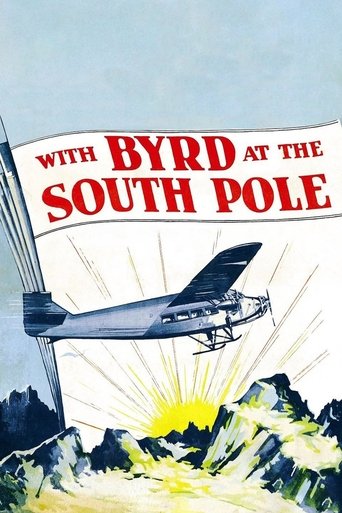
Floyd Phillips Gibbons — American war correspondent and radio pioneer whose swashbuckling life often mirrored the dramatic stories he reported. Born in Washington, D.C., in 1887, he began his journalism career in Minneapolis before joining the Chicago Tribune in 1912, where he gained national fame covering the Pancho Villa Expedition. During World War I, he became a household name after surviving the torpedoing of the RMS Laconia and later losing his left eye while rescuing a wounded Marine at the Battle of Belleau Wood. This injury led to his signature look—a white eye patch—which became a symbol of his fearless reporting style across global conflicts in Russia, China, and Ethiopia. In the early sound era of cinema, Gibbons transitioned his fame into film and radio, famously narrating the Academy Award-winning documentary 'With Byrd at the South Pole' (1930). His rapid-fire, 'staccato' delivery made him one of the first true superstars of broadcast news and newsreel narration. He continued to work as a globetrotting journalist and filmmaker until his sudden death from a heart attack in 1939, just as he was preparing to cover the outbreak of World War II.
The Craft
On Screen
Gibbons was not a traditional character actor but a 'personality' performer, known for his high-energy, authoritative, and rapid-fire vocal delivery. His screen presence was defined by his 'Headline Hunter' persona, characterized by a staccato speaking rhythm that conveyed urgency and excitement, perfectly suited for the early sound era's newsreels and documentaries.
Milestones
- Survived the sinking of the RMS Laconia in 1917 and filed a 4,000-word eyewitness report
- Awarded the French Croix de Guerre for valor at the Battle of Belleau Wood in 1918
- Narrated the first documentary to win an Academy Award, 'With Byrd at the South Pole' (1930)
- Hosted the popular Vitaphone short film series 'Your True Adventures' (1937-1939)
- Authored the best-selling biography of the Red Baron, 'The Red Knight of Germany' (1927)
- Received a star on the Hollywood Walk of Fame for his contributions to radio and newsreels
Best Known For
Iconic Roles
Must-See Films
Accolades
Won
- Croix de Guerre with Palm (France, 1918)
- Posthumous Gold Medal from the Marine Corps League (1941)
Nominated
- Academy Award for Best Cinematography (1930) - Narrated the winning film 'With Byrd at the South Pole'
Special Recognition
- Hollywood Walk of Fame Star (Radio)
- Honorary Member of the United States Marine Corps
- U.S. Merchant Ship 'SS Floyd Gibbons' named in his honor (1944)
Working Relationships
Worked Often With
Studios
Why They Matter
Impact on Culture
Floyd Gibbons was instrumental in bridging the gap between print journalism and the emerging electronic media of radio and sound film. He helped invent the persona of the 'celebrity correspondent,' using his physical trademark—the white eye patch—and his unique vocal style to turn news reporting into a form of popular entertainment. His narration of 'With Byrd at the South Pole' helped legitimize the documentary format in Hollywood, proving that real-life exploration could be a box-office success.
Lasting Legacy
Gibbons is remembered as. His influence persists in the fast-paced style of modern broadcast news and the 'gonzo' tradition of immersive reporting. In 1962, his life was dramatized in 'The Floyd Gibbons Story,' an episode of the television series 'The Untouchables,' where he was portrayed by Scott Brady.
Who They Inspired
His rapid-fire delivery influenced generations of radio announcers and newsreel narrators, setting the standard for the 'voice of authority' in early 20th-century media.
Off Screen
Gibbons was known by his friends as 'Gib.' He was married to a woman from Minneapolis, but the marriage ended in divorce. He spent much of his life traveling to dangerous war zones, leaving little time for a conventional domestic life. At the time of his death, he had been living on a farm near Stroudsburg, Pennsylvania, seeking a brief respite from his globetrotting career.
Education
Attended Minneapolis Central High School; attended Gonzaga College High School; studied law at Georgetown University (expelled).
Family
- Name unavailable (Divorced)
Did You Know?
- He lost his left eye at the Battle of Belleau Wood while trying to rescue a wounded lieutenant.
- He was known for speaking at a rate of over 200 words per minute during his radio broadcasts.
- Gibbons — passenger on the RMS Laconia when it was torpedoed by a German U-boat in 1917.
- He wrote a speculative fiction novel in 1929 titled 'The Red Napoleon' about a global communist invasion.
- He was expelled from Georgetown University for a prank involving flooding a dormitory floor.
- He once cut a telegraph line in Wisconsin to prevent rival reporters from filing a story before him.
- A World War II Liberty ship was named the SS Floyd Gibbons in his honor in 1944.
In Their Own Words
I am a headline hunter.
The story is the thing, and the reporter is just the lucky guy who gets to tell it.
I've got a date with a war.
Frequently Asked Questions
Who was Floyd Gibbons?
Famous American war correspondent, radio commentator, and film narrator known for his white eye patch and rapid-fire speaking style. He became a media superstar in the 1920s and 30s by reporting from the front lines of global conflicts.
What films is Floyd Gibbons best known for?
Titles linked here include With Byrd at the South Pole (1930), Alibi Mark (1937).
How did Floyd Gibbons lose his eye?
Gibbons lost his left eye in June 1918 during the Battle of Belleau Wood in France. He was hit by German machine-gun fire while attempting to rescue a wounded American Marine, an act of bravery for which he received the Croix de Guerre.
What was Floyd Gibbons' signature reporting style?
He was famous for his 'staccato' delivery, speaking at an incredibly fast pace that conveyed a sense of urgent, 'on-the-scene' excitement. This style made him a pioneer of early radio news and newsreel narration.
When did Floyd Gibbons die?
Floyd Gibbons died of a heart attack on September 23, 1939, at the age of 52. He passed away at his farm in Pennsylvania just as he was preparing to return to Europe to cover World War II.