With Byrd at the South Pole
"Admiral Byrd's first expedition to the South Pole on film."
Keys: Space play/pause · ←/→ 10s · F fullscreen · M mute · </> speed
About this film
Admiral Byrd's Antarctic expedition (1930) is a documentary film about Rear Admiral Richard E. Byrd and his 1st quest to the South Pole beginning at the Little America-Exploration Base. The film's soundtrack consists mostly of music and sound effects, with narration read by Floyd Gibbons. The film won at the 3rd Academy Awards for Best Cinematography.
Cast & crew
More films like this
More Documentary films
View all →
More about this film
About the production
Release dateJune 19, 1930
ProductionParamount Publix Corp.
Filmed inAntarctica, Ross Ice Shelf, Little America Base, New York City, New York, USA, Washington, D.C., USA
The film was compiled from over 30 miles (approximately 160,000 feet) of raw footage shot over two years. Because early sound recording equipment was too heavy and delicate for the Antarctic climate, the majority of the film was shot silent. Paramount later added a synchronized musical score, sound effects, and a spoken prologue and epilogue by Admiral Byrd himself. The production was a massive logistical undertaking, involving two ships (the City of New York and the Eleanor Bolling) and three airplanes.
Themes
Man vs. NatureScientific DiscoveryHeroism and EnduranceThe Frontier SpiritTechnological Progress
Themes & topics
AntarcticaSouth PoleExplorationAviationRichard E. ByrdLittle AmericaDocumentary1920sSnow and IceScientific Expedition
Historical background
Audiences around 1930 encountered With Byrd at the South Pole in a market crowded with competing studios fighting for weekly program slots.
Why this film matters
Later homages and restorations keep With Byrd at the South Pole circulating among silent- and classic-film communities long after its first run.
Making of
The filming process was a battle against the elements. Van der Veer and Rucker faced extreme technical challenges, as standard camera oil would freeze solid in the Antarctic cold, requiring them to strip the cameras of all lubrication or use specialized low-temperature blends. They could not develop the film on-site, meaning they had to wait nearly two years to see if their footage was even usable. Some scenes, such as certain daily routines in the camp, were restaged for the camera to ensure clarity, but all were filmed on location in Antarctica rather than in a studio. The aerial sequences were particularly dangerous, as the photographers had to operate heavy cameras in the unheated, open-windowed cabins of the Ford Trimotor while flying over uncharted mountain passes.
What critics said
Trade papers near 1930 treated With Byrd at the South Pole as program material—noticed when exhibitors needed a reliable slot-filler, seldom debated as auteur cinema.
Did you know?
- It was the first documentary film to win an Academy Award in any category.
- The film remains the only documentary in history to win the Academy Award for Best Cinematography.
- Cinematographers Willard Van der Veer and Joseph T. Rucker brought back 30 miles of film, which was edited down to just over 80 minutes.
- A 19-year-old Boy Scout named Paul Siple was chosen through a national contest to accompany the expedition; he later became a famous Antarctic explorer in his own right.
- The flagship 'City of New York' was a Norwegian sealing ship previously named 'Samson,' which some believe was the mystery ship seen near the Titanic when it sank.
- To attract female audiences to a film with no women in the cast, the press book encouraged theater owners to focus marketing on Admiral Byrd's 'good looks.'
- The crew had to keep cameras in special heated boxes and were careful not to bring them indoors quickly to prevent lens fogging and gear freezing.
- The film includes the first aerial footage ever captured in Antarctica, which proved invaluable for scientific mapping.
- Admiral Byrd's dog, a terrier named Igloo, became a minor celebrity through his appearance in the film.
- The 'Floyd Bennett' airplane used for the polar flight was named after Byrd's pilot from his 1926 North Pole expedition, who had recently passed away.
Awards & recognition
- Academy Award for Best Cinematography (Willard Van der Veer and Joseph T. Rucker, 1930)
Visual style
The cinematography is characterized by its stark, high-contrast black-and-white imagery of the Antarctic landscape. Van der Veer and Rucker utilized specialized filters to capture the texture of snow and ice under the harsh polar sun. The film is notable for its pioneering aerial photography, using hand-held cameras to capture the vastness of the polar plateau and the 'hump' of the mountains. The visual style emphasizes the isolation of the men against the infinite white horizon.
Innovations
The film's primary technical achievement was the successful operation of motion picture cameras in temperatures reaching -70 degrees Fahrenheit. It also featured the first successful use of aerial cinematography in the Antarctic interior. The production demonstrated that synchronized sound and music could be effectively layered over silent footage to create a cohesive feature-length documentary for a mass market.
Music
The soundtrack is a 'synchronized' score composed by Manny Baer, featuring orchestral arrangements that emphasize the drama and peril of the journey. As a 'part-talkie,' it features a narration by Floyd Gibbons, a famous war correspondent known for his rapid-fire delivery. The sound effects—such as the howling of Antarctic winds and the drone of airplane engines—were added in post-production to enhance the immersive experience for audiences accustomed to the new 'sound' medium.
Famous quotes
I want you to feel that we are most grateful. We invaded the bottom of the world for the advancement of science.
The whole great continent of Antarctica is white and silent and dead.
It is man against the elements in a primitive state.
Memorable scenes
- The dramatic flight over the 'hump' of the Queen Maud Mountains where the crew must dump food and fuel to gain enough altitude to clear the peaks.
- The dropping of the American flag, weighted with a stone from the grave of Floyd Bennett, over the South Pole at 1:25 AM.
- The arrival of the first sun after the long six-month polar night, showing the men emerging from their snow-buried huts.
- The playful interactions between the expedition's sled dogs and the local penguin populations.
What audiences thought
Audiences in 1930 were enthralled by the film, which offered a window into a 'frozen void' that was previously only reachable through written accounts. It was a major box office draw for Paramount, benefiting from the intense public interest in Byrd's return. The premiere in Washington D.C. was attended by President Herbert Hoover and much of Congress, reflecting the film's status as a national event rather than just a movie.
Film connections
Influenced by
- Nanook of the North (1922)
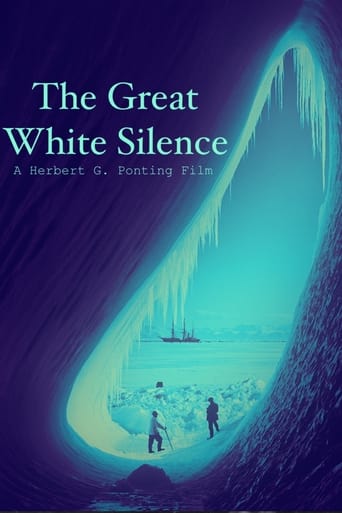
- The Great White Silence (1924)
This film influenced
- Little America (1935)
- The Secret Land (1948)
- March of the Penguins (2005)
Film restoration
The film is well-preserved and has been restored. It was released on DVD in 2000 by Milestone Film & Video as part of their 'The Milestone Collection.'
Where to watch
- Kanopy
- Milestone Films (DVD/Streaming)
- YouTube (Public Domain/Archival uploads)
- Library of Congress (Archival)