Julian Johnson
Director
Born: November 26, 1885 in Chicago, Illinois, USA Died: October 31, 1965 Active: 1915-1955
Films
1 film
About Julian Johnson
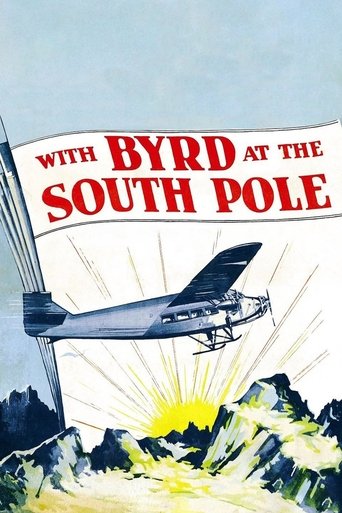
Prominent figure in early Hollywood, primarily recognized as a highly influential editor, screenwriter, and story executive rather than a traditional director. He first gained national fame as the editor-in-chief of Photoplay magazine during its formative years (1915–1920), where he helped establish the publication as the premier voice of the film industry and pioneered the concept of the 'fan magazine' as a serious art journal. Following his tenure at Photoplay, Johnson transitioned into the studio system, becoming a key creative force at Paramount Pictures where he authored intertitles for silent masterpieces and oversaw story development. His most notable directorial credit, the 1930 documentary 'With Byrd at the South Pole', was a landmark achievement in non-fiction filmmaking, becoming the first documentary ever to win an Academy Award. Throughout the 1930s and 1940s, he served as the head of the story department at 20th Century Fox, where he was instrumental in selecting and shaping the narratives that defined the studio's Golden Age output. Johnson's career shows the power of the 'story man' in early cinema, bridging the gap between film criticism, screenwriting, and executive production.
The Craft
Behind the Camera
As a director of documentaries, Johnson focused on narrative structure and educational clarity, often utilizing his background as an editor to piece together vast amounts of expedition footage into a cohesive, dramatic story. His work on 'With Byrd at the South Pole' is noted for its use of synchronized sound and narration to enhance the visual spectacle of polar exploration.
Milestones
- Editor-in-Chief of Photoplay Magazine (1915–1920), transforming it into the industry's leading publication.
- Directed 'With Byrd at the South Pole' (1930), the first documentary to win an Academy Award (Best Cinematography).
- Head of the Story Department at 20th Century Fox for over two decades.
- Wrote the intertitles for the first Best Picture Oscar winner, 'Wings' (1927).
- Pioneered the 'Photoplay Medal of Honor', the first significant annual film award predating the Oscars.
Best Known For
Must-See Films
Accolades
Won
- Academy Award for Best Cinematography (1930) - Awarded to the film 'With Byrd at the South Pole' which he directed.
Nominated
- Academy Award for Best Picture (1930) - 'With Byrd at the South Pole' was a significant contender in the early years of the ceremony.
Special Recognition
- Recognized as a pioneer of film journalism by the Academy of Motion Picture Arts and Sciences.
Working Relationships
Worked Often With
Studios
Why They Matter
Impact on Culture
Johnson's impact on cinema culture was twofold: first, as a critic and editor, he elevated the discourse around motion pictures, insisting they be treated as a legitimate art form rather than mere carnival entertainment. Second, as a story executive, he helped standardize the 'studio look' and narrative efficiency of 20th Century Fox during its most successful era. He was one of the first to realize that the 'star system' needed a robust publicity machine, which he helped build through Photoplay.
Lasting Legacy
Julian Johnson's legacy survives in the very structure of modern film fandom and the documentary genre. By directing the first Oscar-winning documentary, he paved the way for non-fiction film to be recognized by the Academy. His work as a story editor at Fox influenced the development of countless scripts that are now considered classics of the 1930s and 40s.
Who They Inspired
He influenced a generation of film journalists to approach the medium with critical rigor and influenced the 'Fox style' of storytelling which emphasized strong, literate scripts and historical prestige.
Off Screen
Julian Johnson was famously married to the flamboyant vaudeville star and 'Queen of the Nightclubs' Texas Guinan in 1917. Their marriage was a high-profile union between a leading intellectual of the film world and one of its most boisterous entertainers, though it ended in divorce in 1920. Johnson was known in Hollywood circles as a sophisticated, well-read individual who preferred the company of writers and intellectuals over the typical star-studded social scene.
Education
University of Southern California (USC)
Family
- Texas Guinan (1917–1920)
Did You Know?
- He wrote the intertitles for 'Wings', the very first film to win the Academy Award for Best Picture.
- He was the first editor to put a color portrait of a movie star on a magazine cover.
- Despite his long career, 'With Byrd at the South Pole' remains his only major directorial credit.
- He was a key figure in the transition from silent films to 'talkies', helping studios adapt their story departments to the new medium.
- His marriage to Texas Guinan was considered one of the 'odd couples' of early Hollywood due to their differing temperaments.
In Their Own Words
Let us never hear again the snivel that photodrama is a minor art, or not an art at all. (Written during his tenure at Photoplay)
The story is the thing; without it, the greatest star is merely a shadow on a sheet.
Frequently Asked Questions
Who was Julian Johnson?
Film editor, screenwriter, and on YTB.my.
What films is Julian Johnson best known for?
Titles linked here include With Byrd at the South Pole (1930), Wings (1927) - Intertitles.
When was Julian Johnson born and when did they die?
Born November 26, 1885; died October 31, 1965.
What awards did Julian Johnson win?
While the Academy Award for 'With Byrd at the South Pole' went to the cinematographers, Johnson is credited as the director of the first documentary to ever receive an Oscar.
What was Julian Johnson's directing style?
Johnson's style was rooted in his background as an editor and journalist, focusing on clear narrative progression, dramatic pacing, and the integration of educational content with cinematic spectacle.