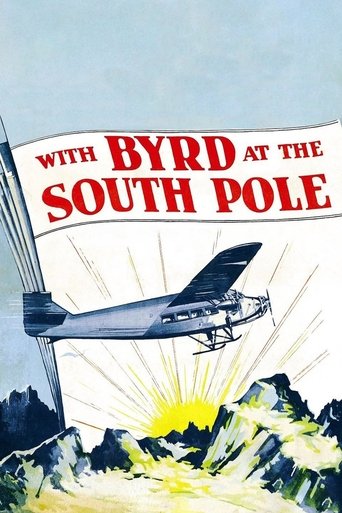
Richard E. Byrd
Actor
Born: October 25, 1888 in Winchester, Virginia, USA Died: March 11, 1957 Active: 1930-1955 Birth Name: Richard Evelyn Byrd Jr.
Films
1 film
About Richard E. Byrd
Rear Admiral Richard Evelyn Byrd Jr. Was an American naval officer, aviator, and polar explorer who became an unlikely cinematic figure during the early sound era. While not a trained professional actor, Byrd 'starred' as himself in the landmark documentary film 'With Byrd at the South Pole' (1930), which chronicled his historic 1928–1930 expedition to Antarctica. His transition to the screen was born of necessity; the expedition required massive funding, and Byrd leveraged his media savvy to partner with Paramount Publix Corp to document the journey. The resulting film was a massive commercial and critical success, capturing Byrd's charismatic leadership and the harrowing conditions of the frozen continent. Byrd's presence on screen helped define the 'explorer-hero' archetype in early 20th-century media, blending real-life bravery with the dramatic flair of Hollywood storytelling. Throughout the 1930s and 40s, he continued to appear in newsreels and documentary shorts, effectively maintaining a public persona that was as much a media celebrity as it was a military commander.
The Craft
On Screen
Byrd did not utilize traditional acting techniques; instead, he practiced a form of 'heroic self-presentation.' In his films, he maintained a stoic, authoritative, and quintessentially American military bearing. He was noted for his natural screen presence and his ability to deliver direct-to-camera addresses with a sense of gravity and sincerity that appealed to Depression-era audiences.
Milestones
- Subject and 'star' of the Academy Award-winning documentary 'With Byrd at the South Pole' (1930)
- First person to fly over the North Pole (1926) and South Pole (1929), both captured on film
- Recipient of the Medal of Honor for his 1926 North Pole flight
- Established the 'Little America' exploration base in Antarctica, which became a recurring setting in his films
- Commanded Operation Highjump (1946-1947), the largest Antarctic expedition ever filmed
Best Known For
Iconic Roles
Must-See Films
Accolades
Won
- Medal of Honor (1926)
- Navy Cross
- Service Medal
- Legion of Merit
- Flying Cross
- Silver Star
- Academy Award for Best Cinematography (awarded to his cameramen for 'With Byrd at the South Pole', 1930)
Nominated
- The film 'With Byrd at the South Pole' was nominated for and won the Academy Award for Best Cinematography (1930)
Special Recognition
- Inducted into the National Aviation Hall of Fame (1968)
- The 'Byrd Station' in Antarctica named in his honor
- United States postage stamps issued in his likeness (1933 and 1988)
- Recipient of the Hubbard Medal from the National Geographic Society
Working Relationships
Worked Often With
Studios
Why They Matter
Impact on Culture
Richard E. Byrd's impact on cinema was profound as he helped pioneer the 'expedition film' genre, which blended scientific documentary with Hollywood-style narrative tension. 'With Byrd at the South Pole' was one of the first non-fiction films to become a major box-office hit, proving that real-life adventure could compete with scripted dramas. His films brought the 'Heroic Age of Antarctic Exploration' into the living rooms of millions, influencing how the public perceived science, masculinity, and American global leadership during the interwar period.
Lasting Legacy
Byrd's legacy in film history is tied to the technical innovations his expeditions required, such as the development of cameras and film stock capable of operating in sub-zero temperatures. He is remembered as the first true 'media explorer' who understood the power of the moving image to immortalize history. His footage remains the primary visual record of early 20th-century polar exploration and continues to be used in historical documentaries today.
Who They Inspired
He influenced a generation of documentary filmmakers by demonstrating that a central, charismatic figure could anchor a non-fiction narrative. His success paved the way for later explorer-filmmakers like Jacques Cousteau and David Attenborough, who similarly used their personal presence to drive public interest in the natural world.
Off Screen
Byrd was born into a prominent Virginia family; his brother Harry F. Byrd became the Governor of Virginia and a U.S. Senator. He married Marie Ames in 1915, and the couple remained together until his death. Despite his public image as a solitary hero in the ice, he was deeply connected to his family and used his expeditions to secure their financial future through media rights and lecture tours.
Education
United States Naval Academy (Class of 1912)
Family
- Marie Ames (1915-1957)
Did You Know?
- The film 'With Byrd at the South Pole' was the first documentary to ever win an Academy Award (for Cinematography).
- Byrd took a pet terrier named Igloo on his 1928 expedition, who became a star in the film and even had a biography written about him.
- He was so popular that he received over 15,000 letters a month from fans after his first Antarctic film was released.
- To film in Antarctica, his cameramen had to build special heated 'blankets' for the cameras to prevent the oil from freezing.
- Byrd — member of the same family as the explorer William Byrd II, the founder of Richmond, Virginia.
- He spent five months alone in a shack during his second expedition, an experience he chronicled in the book 'Alone', which was later considered for film adaptation.
In Their Own Words
I am hopeful that these motion pictures will serve to show the world that the last great frontier is being conquered by science.
I am a citizen of the most beautiful country in the world, but I am also a citizen of the world.
The ice is a cold mistress, but she tells the truth in the end.
Frequently Asked Questions
Who was Richard E. Byrd?
Famous American naval officer and polar explorer who became a cinema personality through his starring roles in documentaries about his own expeditions. He is best known for being the first person to fly over both the North and South Poles.
What films is Richard E. Byrd best known for?
Titles linked here include With Byrd at the South Pole (1930), Discovery (1935).
When was Richard E. Byrd born and when did he die?
Born October 25, 1888; died March 11, 1957.
What awards did Richard E. Byrd win?
In addition to military honors like the Medal of Honor and the Navy Cross, the films documenting his work won multiple Academy Awards, including Best Cinematography and Best Documentary Feature.
What was Richard E. Byrd's acting style?
Byrd did not act in the traditional sense; he portrayed himself with a stoic, commanding presence that emphasized his real-life role as a military leader and scientific pioneer.