John Hubley
Director
Born: June 21, 1914 in Marinette, Wisconsin, USA Died: February 21, 1977 Active: 1935-1977 Birth Name: John Raymond Hubley
Films
1 film
About John Hubley
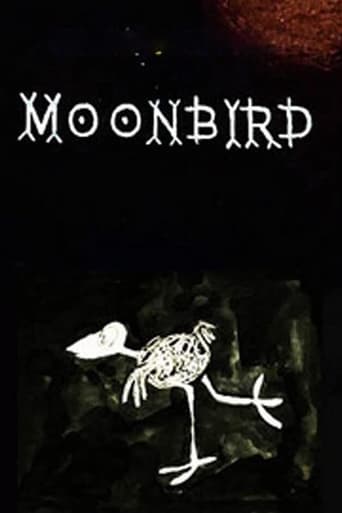
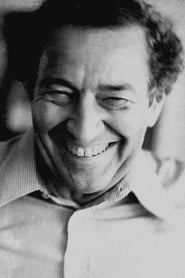
American animation director and filmmaker who revolutionized the art form through his innovative techniques and humanistic storytelling. Born in 1914, Hubley began his career at Disney Studios in the 1930s, working on classics like 'Snow White and the Seven Dwarfs' and 'Fantasia' before leaving due to creative differences and the 1941 Disney animators' strike. He co-founded United Productions of America (UPA) in 1943, where he developed a modernist aesthetic that broke away from Disney's realistic style, creating simplified, stylized characters and backgrounds that emphasized emotional truth over literal representation. After being blacklisted during the McCarthy era, Hubley established Storyboard Studios with his wife Faith Hubley, creating independent animated films that explored personal themes and experimental techniques. His 1959 film 'Moonbird,' which he co-directed with Faith, won an Academy Award for Best Animated Short Subject and exemplified his innovative approach to capturing authentic children's dialogue through improvised recording sessions. Hubley continued to push animation boundaries throughout the 1960s and 1970s, creating over 30 films that combined abstract visuals with humanistic themes, until his death in 1977 while working on 'The Cosmic Eye'. His legacy as one of animation's most influential artists animators and filmmakers worldwide.
The Craft
Behind the Camera
John Hubley's directing style revolutionized animation through its emphasis on emotional authenticity, modernist aesthetics, and humanistic storytelling. He rejected Disney's literal realism in favor of simplified, stylized designs that used abstract shapes and limited animation to convey deeper emotional truths. Hubley pioneered the use of improvised dialogue, often recording children's natural conversations to create authentic voices for his characters. His visual approach incorporated contemporary art movements, using bold colors, geometric shapes, and experimental techniques that bridged fine art and commercial animation. Hubley's films frequently explored philosophical and personal themes, using animation as a medium for adult contemplation rather than just children's entertainment.
Milestones
- Co-founded United Productions of America (UPA) in 1943
- Directed Academy Award-winning 'Moonbird' (1959)
- Created the character Mr. Magoo for UPA
- Blacklisted during McCarthy era but continued independent work
- Founded Storyboard Studios with wife Faith Hubley
- Pioneered improvised dialogue recording techniques
- Developed modernist animation aesthetic breaking from Disney style
- Created over 30 animated films exploring humanistic themes
Best Known For
Iconic Roles
Must-See Films
Accolades
Won
- Academy Award for Best Animated Short Film - Moonbird (1959)
- Academy Award for Best Animated Short Film - The Hole (1962)
- Academy Award for Best Animated Short Film - Herb Alpert and the Tijuana Brass Double Feature (1966)
- Venice Film Festival Award - Gerald McBoing-Boing (1951)
- Cannes Film Festival Palme d'Or for Best Short Film - The Hole (1962)
Nominated
- Academy Award nomination - Gerald McBoing-Boing (1950)
- Academy Award nomination - The Tell-Tale Heart (1953)
- Academy Award nomination - Of Stars and Men (1962)
- Academy Award nomination - The Hat (1969)
- Academy Award nomination - Voyage to Next (1974)
- BAFTA nomination - The Hole (1963)
Special Recognition
- Walt Disney Family Museum honoree
- ASIFA-Hollywood Annie Award recipient
- New York Film Critics Circle Award winner
- Retrospectives at Museum of Modern Art and Whitney Museum
- Inducted into Animation Hall of Fame
Working Relationships
Worked Often With
Studios
Why They Matter
Impact on Culture
John Hubley fundamentally transformed animation from a commercial medium into an art form capable of expressing complex human emotions and philosophical ideas. His work at UPA challenged Disney's dominance and proved that audiences would embrace modernist, stylized animation that prioritized artistic expression over realistic representation. Hubley's innovative techniques, particularly his use of improvised dialogue and abstract visuals, influenced generations of animators and helped establish animation as a legitimate medium for adult storytelling. His films during the 1950s and 1960s reflected and shaped the counterculture movement, using animation to explore themes of individuality, social justice, and human consciousness. Hubley's success with independent production paved the way for future independent animators and demonstrated that personal, artistic animation could find both critical acclaim and commercial success.
Lasting Legacy
John Hubley's legacy endures through his revolutionary contributions to animation theory and practice, his award-winning films that continue to be studied in film schools worldwide, and the generations of animators he influenced. His establishment of independent animation production proved that artists could create meaningful work outside the studio system, inspiring the independent animation movement of the 1970s and beyond. Hubley's visual innovations, particularly his modernist aesthetic and simplified character designs, became foundational elements of contemporary animation. The Hubley Studio, continued by Faith after his death, maintained his commitment to artistic experimentation and humanistic storytelling. His films remain in the permanent collections of major museums, and his techniques for recording authentic children's dialogue continue to influence animated filmmaking. Hubley's integration of fine art principles with commercial animation helped bridge the gap between avant-garde and popular culture, elevating the artistic status of animation permanently.
Who They Inspired
John Hubley's influence extends across multiple generations of animators, from his contemporaries at UPA who adopted his modernist style, to independent animators who followed his path of personal filmmaking. His work directly inspired the creators of 'The Pink Panther' series, the animators at Terrytoons, and the founders of Pixar who cited his emphasis on character-driven storytelling. Hubley's techniques for improvisation and authentic dialogue recording influenced directors like Bob Godfrey and Alison De Vere. His visual style influenced the UPA-influenced look of 1950s advertising animation and later, the minimalist approach of studios like Cartoon Network. Contemporary animators including Don Hertzfeldt, Michel Ocelot, and Bill Plympton have acknowledged Hubley's influence on their independent approaches. His integration of jazz music with abstract visuals in films like 'The Hole' prefigured music video aesthetics and influenced experimental filmmakers. Hubley's success with adult themes in animation helped create space for more sophisticated animated content, influencing everything from 'The Simpsons' to adult animation festivals worldwide.
Off Screen
John Hubley's personal life was deeply intertwined with his artistic career and political convictions. He married animator Faith Elliott in 1955, forming both a romantic and creative partnership that would define his later work. Together they had four children: Emily, Georgia, Mark, and Ray, all of whom became involved in the arts. Hubley's political beliefs led to his blacklisting during the McCarthy era, forcing him to leave UPA and establish an independent studio. The family's home and studio in New York became a creative hub for avant-garde artists and animators. Hubley was known for his intellectual curiosity and commitment to social justice, themes that frequently appeared in his films. His sudden death from a heart attack in 1977 cut short a career that was still evolving and experimenting with new forms of expression.
Education
Art Center College of Design (Los Angeles), studied painting and illustration
Family
- Claudia Hubley (1940s-1950s)
- Faith Hubley (1955-1977)
Did You Know?
- Was blacklisted during the McCarthy era for refusing to name names to the House Un-American Activities Committee
- Co-created Mr. Magoo character at UPA, though he left before the series became popular
- Used his children's actual conversations as dialogue for 'Moonbird', recording them secretly
- His wife Faith continued running their studio after his death, completing 'The Cosmic Eye'
- Served in the Army Air Corps during World War II, making training films
- Was a talented jazz musician and incorporated jazz into many of his films
- His first wife Claudia also worked as an animator at Disney
- Taught at Harvard University's Visual and Environmental Studies department
- His films are in the permanent collection of the Museum of Modern Art
- Was a founding member of ASIFA (International Animated Film Association)
- Named
- His daughter Georgia Hubley is the drummer for the indie rock band Yo La Tengo
In Their Own Words
Animation should be a form of personal expression, not just a commercial product
The important thing is not to copy reality but to create a reality of your own
We're trying to make films that have something to say about the human condition
Simplicity is the ultimate sophistication in animation
Every frame should be a painting, every movement should have meaning
Children's voices are the most honest actors you'll ever find
Animation is not a genre, it's a medium
The best animation comes from the heart, not the handbook
Frequently Asked Questions
Who was John Hubley?
American animation on YTB.my. He co-founded UPA, won three Academy Awards, and created independent animated films that elevated animation to a serious art medium.
What films is John Hubley best known for?
Titles linked here include Moonbird (1959), Gerald McBoing-Boing (1950).
When was John Hubley born and when did he die?
Born June 21, 1914; died February 21, 1977.
What awards did John Hubley win?
John Hubley won three Academy Awards for Best Animated Short Film: 'Moonbird' (1959), 'The Hole' (1962), and 'Herb Alpert and the Tijuana Brass Double Feature' (1966). He also received numerous international awards including Cannes Film Festival honors and Venice Film Festival awards.
What was John Hubley's directing style?
Hubley's directing style emphasized modernist aesthetics with simplified, stylized designs that prioritized emotional truth over realism. He pioneered improvised dialogue recording, used abstract visuals influenced by contemporary art, and focused on humanistic themes that appealed to adult audiences.
How did John Hubley influence animation?
Hubley revolutionized animation by breaking from Disney's realistic style, establishing independent animation as viable, and proving animation could address adult themes. His modernist aesthetic influenced generations of animators and helped establish animation as a legitimate art form rather than just children's entertainment.
Was John Hubley blacklisted during the McCarthy era?
Yes, John Hubley was blacklisted in 1952 after refusing to testify before the House Un-American Activities Committee. This forced him to leave UPA and establish his own independent studio, Storyboard Studios, where he created his most personal and acclaimed work.
Did John Hubley work with his family?
Yes, Hubley had extensive creative collaborations with his family. His second wife Faith Hubley was his primary creative partner from 1955 until his death, and they co-directed many films together. Their children frequently provided voices and inspiration for their work, and several became artists themselves.