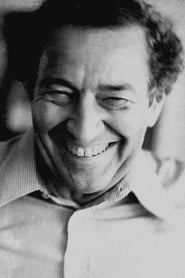

Moonbird
"Two boys slip out at night to capture a moonbird."
Keys: Space play/pause · ←/→ 10s · F fullscreen · M mute · </> speed
About this film
Preserved by the Academy Film Archive in 2003. It won an Oscar for Best Short Subjects (Cartoons) at the 32nd Academy Awards, in 1960. Two boys go outside at night to capture a bird.
Cast & crew
More Animation films
View all →

More about this film
About the production
Release dateDecember 25, 1959
Box officeNot applicable - short film distributed theatrically with features
ProductionStoryboard Studios, John Hubley Productions
Filmed inLos Angeles, California
The dialogue was entirely improvised by the Hubley brothers, who were recorded by their father without their knowledge while they played in the backyard. The animation was created using a limited animation style with bold, simple lines and a distinctive color palette. John Hubley pioneered the use of recorded children's authentic dialogue as the foundation for animated storytelling, breaking from traditional scripted animation. The production took approximately 6-8 months to complete, with a small team of animators working in a collaborative, experimental environment.
Themes
Childhood imaginationFather-son relationshipsThe nature of reality vs. fantasyInnocence and wonderThe magic of nighttime
Themes & topics
Historical background
Released around 1959, Moonbird reached audiences while exhibitors were still shaping program length and star promotion.
Why this film matters
For historians, Moonbird documents what typical program fare looked like in 1959, not only marquee blockbusters.
Making of
The creation of 'Moonbird' represents a revolutionary approach to animated filmmaking. John Hubley, having left Disney due to creative differences and political blacklisting, established his own studio to pursue more experimental and personal projects. The breakthrough came when he secretly recorded his sons playing in their backyard, capturing their authentic childhood dialogue about catching a mysterious bird. Hubley then built the entire film around this spontaneous conversation, creating visuals that matched the boys' imaginative world. The animation team worked to synchronize the movement and expressions with the recorded dialogue, a technique that was groundbreaking at the time. The limited animation style, characterized by bold lines and simplified backgrounds, was both an artistic choice and a practical necessity for an independent production. The film's success proved that authentic, unscripted material could form the foundation of compelling animation, influencing generations of independent animators.
What critics said
Audience surveys from 1959 are sparse; interest in Moonbird is inferred from reissue and archive activity.
Did you know?
- The dialogue was entirely improvised by John Hubley's sons, Mark (age 7) and Ray (age 5), who didn't know they were being recorded for a film
- Won the Academy Award for Best Animated Short Film in 1960, beating out Disney's 'Noah's Ark'
- The film was preserved by the Academy Film Archive in 2003 as part of their efforts to save important animated works
- John Hubley was blacklisted during the McCarthy era and formed his own independent studio after leaving Disney
- The animation style was revolutionary for its time, using limited animation techniques that influenced future animators
- The 'moonbird' was never actually shown on screen, existing only in the boys' imagination and dialogue
- This was one of the first animated films to use authentic children's dialogue rather than adult actors imitating children
- The film's success helped establish independent animation as a viable alternative to studio productions
- Mark and Ray Hubley would later follow in their father's footsteps, becoming animators themselves
- The recording session took place in the Hubley family backyard with a hidden microphone
Awards & recognition
- Academy Award for Best Animated Short Film (1960)
- Golden Gate Award for Best Short Film, San Francisco International Film Festival (1960)
- Blue Ribbon Award, American Film Festival (1960)
Visual style
The visual style of Moonbird employs a distinctive limited animation technique characterized by bold, expressive lines and a sophisticated color palette. Hubley and his team used a minimalist approach, focusing attention on the essential elements of each scene while eliminating unnecessary detail. The nighttime setting is rendered through deep blues and purples, with the flashlight creating dramatic contrasts of light and shadow. The character designs are simple yet expressive, capturing the boys' emotions through subtle gestures and movements. The animation often uses static backgrounds with limited character motion, a technique that actually enhances the focus on the dialogue. The visual style draws from modernist art movements, particularly abstract expressionism and mid-century modern design, creating a timeless aesthetic that doesn't feel dated.
Innovations
Moonbird pioneered several technical innovations in animation. The synchronization of animation with unscripted, recorded dialogue was groundbreaking, requiring animators to work with unpredictable speech patterns and timing. The film demonstrated the effectiveness of limited animation techniques for creating emotional impact without complex movement. Hubley's team developed new methods for capturing the subtleties of children's speech through animation, including micro-expressions and naturalistic gestures. The production also showcased how independent animators could create professional-quality work with limited resources and small teams. The film's success helped establish new workflows for animated productions that prioritized authentic performance over polished technique.
Music
The sound design of Moonbird is revolutionary for its use of entirely authentic, unscripted dialogue. The film features no musical score, instead relying on ambient night sounds and the boys' natural speech patterns. The recording captures every nuance of the children's conversation - their pauses, overlaps, and spontaneous exclamations. Sound effects are minimal but effective, including the crunch of footsteps on grass, the rustle of leaves, and the distant call of the imagined moonbird. The lack of background music was a deliberate artistic choice, creating an intimate, documentary-like atmosphere that draws viewers into the boys' world. The audio quality, while technically limited by 1950s recording equipment, enhances the film's authenticity and immediacy.
Famous quotes
I got him! I got the moonbird!" - Ray Hubley
He's got wings like this... big!" - Mark Hubley
Shhh! Be quiet! You'll scare him away!" - Mark Hubley
He's probably sleeping up in that tree right now." - Ray Hubley
Moonbirds only come out when the moon is full." - Mark Hubley
Memorable scenes
- The opening scene where the boys sneak out of the house with their flashlight and net, their whispered dialogue capturing the excitement of a secret mission
- The moment when they spot something in the trees and their conversation becomes increasingly animated and speculative
- The climactic scene where one brother claims to have caught the moonbird, followed by the other's delighted disbelief
- The final moments as they head back inside, still discussing their adventure and planning their next attempt
What audiences thought
Audiences responded enthusiastically to Moonbird's authentic portrayal of childhood adventure. Parents and children alike related to the realistic dialogue and the universal experience of nighttime exploration. The film's brief runtime and engaging story made it popular in both theatrical screenings and educational settings. Many viewers noted how accurately it captured the way children actually speak and think, a rarity in animated films of the era. The film won audience awards at several film festivals and continues to be popular in animation retrospectives and children's film programs. Contemporary audiences often express surprise at how modern the film feels despite being over six decades old, testament to its timeless appeal and authentic approach to storytelling.
Film connections
Influenced by
- Documentary filmmaking techniques
- Abstract expressionism
- Modernist design principles
- Children's psychology research
- Independent film movement
- Spontaneous improvisation in performance art
This film influenced
- The Hole (1962)
- The Hat (1964)
- Windy Day (1968)
- Cockaboody (1973)
- Voyage to Next (1974)
- Independent animated shorts of the 1960s-70s
Film restoration
Preserved by the Academy Film Archive in 2003 as part of their Academy Film Archive Preservation Program. The original 35mm negative has been restored and maintained in climate-controlled storage. Digital preservation copies have been created for archival and educational purposes. The film is considered to be in good preservation condition with no significant deterioration.
Where to watch
- The Criterion Channel (streaming)
- Academy Film Archive screenings and retrospectives
- Museum of Modern Art film collection
- Selected animation festivals and retrospectives
- Educational film distributors
- Public domain collections in some regions