John Murray Anderson
Director
Born: September 20, 1886 in St. John's, Newfoundland, Canada Died: January 30, 1954 Active: 1919-1954
Films
1 film
About John Murray Anderson
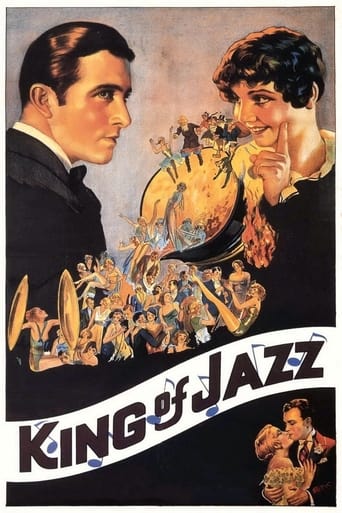
Titan of the stage and screen, primarily celebrated as a visionary theatrical director and producer who revolutionized the aesthetic of the musical revue. Born in Newfoundland, he moved to New York and became a dominant force on Broadway, creating the 'Greenwich Village Follies' and directing dozens of lavish productions that emphasized visual splendor over traditional narrative. In 1930, Universal Pictures recruited him to direct 'King of Jazz,' a massive Technicolor musical extravaganza starring Paul Whiteman, which remains his singular and most significant contribution to cinema. This film showcased his mastery of the 'revue' format, utilizing innovative camera movements, massive sets, and early Two-Color Technicolor to create a visual feast that influenced the future of movie musicals. Despite the film's artistic success, Anderson found the constraints of Hollywood studio life stifling and returned to his first love, the live theater. Throughout the 1930s and 40s, he continued to stage some of the most successful revues in history, including editions of the 'Ziegfeld Follies' and 'Billy Rose's Jumbo,' maintaining a reputation for impeccable taste and technical innovation until his death in 1954.
The Craft
Behind the Camera
Anderson — pioneer of the 'revue' style, focusing on breathtaking visual compositions, innovative lighting, and fluid transitions rather than linear plots. In 'King of Jazz,' he utilized the 'crane shot' extensively, which was revolutionary for the early sound era, and experimented with surrealist imagery and massive, stylized sets. He was known for his 'color-consciousness,' meticulously coordinating costumes and scenery to maximize the impact of early Technicolor processes.
Milestones
- Created and directed the 'Greenwich Village Follies' (1919–1924)
- Directed the landmark Technicolor musical film 'King of Jazz' (1930)
- Staged the 1934, 1936, and 1943 editions of the 'Ziegfeld Follies'
- Directed the massive circus-musical 'Billy Rose's Jumbo' at the Hippodrome (1935)
- Produced and directed 'John Murray Anderson's Almanac' (1953), his final Broadway success
- Staged the Ringling Bros. And Barnum & Bailey Circus for several seasons in the 1940s
- Directed the London production of 'Bow Bells' (1932)
Best Known For
Must-See Films
Accolades
Won
- Donaldson Award for Best Director (1954) for 'John Murray Anderson's Almanac'
- Posthumous recognition for 'King of Jazz' preservation in the National Film Registry (2013)
Nominated
- Tony Award nomination for Best Director (Note: The Tony Awards were established late in his career, but his final show received multiple honors)
Special Recognition
- Inducted into the American Theater Hall of Fame (Posthumous)
- The John Murray Anderson School of Theatre was named in his honor during his lifetime
- Subject of the autobiography 'Out Without My Overshoes' (1954)
Working Relationships
Worked Often With
Studios
Why They Matter
Impact on Culture
John Murray Anderson was instrumental in bridging the gap between the vaudeville tradition and the modern Broadway musical. His work on 'King of Jazz' provided a blueprint for the 'spectacle' film, proving that the camera could be as dynamic as the performers on stage. He brought a European sensibility of art and design to American popular entertainment, elevating the 'girlie show' into a sophisticated art form that emphasized color theory and architectural staging.
Lasting Legacy
His legacy is preserved primarily through the restored version of 'King of Jazz,' which is studied by film historians as a masterpiece of early color cinematography and production design. In the theater world, he is remembered as the man who gave the 'revue' its dignity and artistic merit. His influence can be seen in the lavish MGM musicals of the 1940s and 50s, particularly those directed by Vincente Minnelli, who shared Anderson's obsession with color and dreamlike art direction.
Who They Inspired
He influenced a generation of choreographers and directors to think of the stage and screen as a three-dimensional canvas. His use of the 'moving platform' and complex lighting cues became standard practice in both Broadway and Hollywood musical sequences.
Off Screen
Anderson was known for his sophisticated, often eccentric personality and was a prominent figure in the New York social and artistic circles. He was the son of a prominent Newfoundland merchant and was educated in Scotland and Switzerland. He married Genevieve Lyon in 1914, but she tragically died of tuberculosis only two years later in 1916; he never remarried and dedicated his life entirely to the theater and his artistic pursuits.
Education
Edinburgh Academy, Scotland; Lausanne University, Switzerland; American Academy of Dramatic Arts, New York
Family
- Genevieve Lyon (1914-1916; her death)
Did You Know?
- He was the first person to use a camera crane in a musical film to achieve sweeping overhead shots.
- He famously hated the 'star system' and preferred to focus on the ensemble and the visual design of the show.
- Anderson — trained singer and actor before he realized his true talent lay in directing.
- The film 'King of Jazz' featured the first-ever animated sequence in a Technicolor feature film.
- He was known for his sharp wit and once wrote a book of light verse titled 'The Music Box'.
- He directed the first-ever stage appearance of the legendary comedy duo Abbott and Costello in a revue.
- He was a perfectionist who would often spend hours adjusting a single spotlight to get the exact shade of blue he desired.
In Their Own Words
The eye is the first path to the heart of the audience.
I don't want a plot; I want a series of beautiful moments that leave the spectator breathless.
In the theater, color is not an ornament; it is a character in itself.
Frequently Asked Questions
Who was John Murray Anderson?
Highly influential Canadian-born on YTB.my. He was a pioneer in visual storytelling, emphasizing color, lighting, and grand spectacle.
What films is John Murray Anderson best known for?
Titles linked here include King of Jazz (1930).
When was John Murray Anderson born and when did they die?
Born September 20, 1886; died January 30, 1954.
What awards did John Murray Anderson win?
He won the Donaldson Award for Best Director for his final Broadway show, 'John Murray Anderson's Almanac' (1954). His film 'King of Jazz' was later inducted into the National Film Registry for its historical significance.
What was John Murray Anderson's directing style?
His style was characterized by 'spectacle over story,' focusing on intricate visual patterns, bold use of color, and innovative technical effects. He treated the stage and film frame like a painting, often using massive sets and experimental lighting to create a dreamlike atmosphere.