
King of Jazz
"Whiteman’s jazz revue in early Technicolor"
Keys: Space play/pause · ←/→ 10s · F fullscreen · M mute · </> speed
About this film
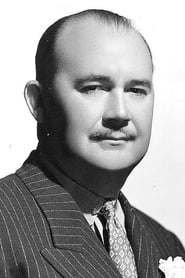
A large-scale revue musical built around Paul Whiteman and his orchestra, presenting a series of musical performances, sketches, and staged tableaux in early two-color Technicolor, emblematic of Hollywood’s early sound-era “all-star” musical productions.
Cast & crew
More films like this
More Animation films
View all →


More about this film
About the production
Release dateApril 19, 1930
Budget$2,000,000 (estimated)
Box office$900,000 (Initial US release; eventually profitable after 1933 re-release and international sales)
ProductionUniversal Pictures
Filmed inUniversal Studios - 100 Universal City Plaza, Universal City, California, USA
The film had a notoriously troubled production, spending nearly $500,000 before a single frame was shot due to script delays and the high weekly salaries of Whiteman's orchestra. Director John Murray Anderson, a Broadway veteran, was hired after the studio failed to secure Florenz Ziegfeld. The production utilized the massive 'Broadway Crane,' a 60-ton camera crane built for the 1929 film 'Broadway,' to achieve its sweeping, dynamic shots.
Themes
The 'Melting Pot' of American CultureThe Evolution of Modern MusicSpectacle and GrandeurVaudeville Traditions
Themes & topics
Historical background
King of Jazz appeared in 1930, when the studio era between the Great Depression and World War II shaped how movies were financed, distributed, and discussed. Audiences of the day encountered the work amid shifting tastes in acting, pacing, and spectacle. Its focus on a large-scale revue musical built around paul whiteman and his orchestra, presenting a series of musical performances, sketches, and staged tableaux in early two-color technicolor, emblematic of hollywood’s early sound-era “all-star” musical productions mirrors themes circulating in popular culture of that moment.
Why this film matters
King of Jazz (1930) belongs to the wider archive of world cinema, documenting a large-scale revue musical built around paul whiteman. Archivists and historians value such titles for what they reveal about craft, genre, and audience expectations. Restorations and festival screenings keep the work visible to viewers far beyond its first run.
Making of
The production was a logistical nightmare for Universal. Paul Whiteman was not an actor and rejected two different scripts that required him to play a character, insisting the film simply showcase his music. This led to the 'revue' format. To ensure high audio quality, Whiteman insisted on pre-recording the music—a revolutionary technique at the time—which Universal executives initially opposed. The 'Rhapsody in Blue' sequence alone cost a fortune, featuring a custom-built silver-and-gray set designed to trick the two-color Technicolor process into displaying a blue-like hue. The production was so expensive that it was nicknamed 'Universal's Rhapsody in Red' by Hollywood insiders after it initially failed to recoup its costs.
What critics said
Press coverage from 1930 is fragmentary for many titles of this vintage; surviving notices for King of Jazz tend to stress novelty, star power, or topical appeal. Later writing places the picture within its national and generic context, weighing both period conventions and moments that still land for modern viewers. Streaming and disc releases have revived discussion among classic-film audiences.
Did you know?
- Features the first-ever Technicolor animated cartoon sequence, produced by Walter Lantz (later creator of Woody Woodpecker).
- Bing Crosby makes his first-ever motion picture appearance as part of The Rhythm Boys.
- The dancers in the film, the Russell Markert Girls, were the original troupe that became the Radio City Music Hall Rockettes.
- Because two-color Technicolor could not reproduce the color blue, the 'Rhapsody in Blue' sequence had to be filmed using a specific shade of green and filters to create an illusion of turquoise/blue.
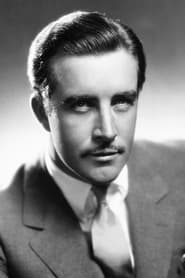
- Bing Crosby was originally set to sing the solo 'Song of the Dawn,' but he was jailed for 60 days following a drunk driving accident during production; the song was given to John Boles instead.
- The film was produced by Carl Laemmle Jr., who was only 21 years old at the time.
- Universal produced nine different foreign-language versions of the film, often replacing the master of ceremonies with a local star (e.g., Bela Lugosi for the Hungarian version).
- It was the first feature film to use a pre-recorded soundtrack, allowing the performers to lip-sync and the cameras to move more freely.
- The 'Melting Pot' finale features a giant prop pot that was so large the orchestra and dozens of dancers could perform inside it.
- Bix Beiderbecke, the jazz cornetist Bix Beiderbecke, was a member of Whiteman's band but left shortly before filming began due to health issues.
Awards & recognition
- Academy Award for Best Art Direction (Herman Rosse)
Visual style
The film is a masterpiece of early Technicolor cinematography by Hal Mohr, Ray Rennahan, and Jerome Ash. It utilized the two-color subtractive process (red and green) with incredible ingenuity, using lighting and filters to expand the perceived color palette. The use of the 'Broadway Crane' allowed for unprecedented vertical and sweeping camera movements that were rare in the early sound era.
Innovations
First feature-length film to use a mostly pre-recorded soundtrack. First film to feature a Technicolor animated sequence. Notable for the use of the 60-ton 'Broadway Crane' for complex camera movement. Innovative use of color filters to simulate blue in a two-color system.
Music
The soundtrack is a comprehensive showcase of the Paul Whiteman Orchestra's repertoire. Key tracks include 'Rhapsody in Blue' (Gershwin), 'It Happened in Monterey,' 'Happy Feet,' 'A Bench in the Park,' and 'Song of the Dawn.' It features the vocal harmonies of The Rhythm Boys and solos by John Boles and Jeanie Lang.
Famous quotes
Paul Whiteman: 'I'm Charles Irwin, and this book is Paul Whiteman's scrapbook. Its pages are crowded with melodies and anecdotes which we are going to bring to life for you by the magic of the camera.'
Narrator (Melting Pot): 'America is a melting pot of music, wherein the melodies of all nations are fused into one great new rhythm: JAZZ!'
Memorable scenes
- The 'Rhapsody in Blue' sequence featuring a massive blue grand piano that opens to reveal the entire orchestra.
- The opening Technicolor cartoon where a cartoon Paul Whiteman 'soothes the savage beast' with a fiddle.
- The 'Happy Feet' number featuring The Rhythm Boys and a creative use of forced perspective with 'giant' dancing feet.
- The 'Melting Pot' finale where various national groups in traditional costumes descend into a literal giant pot.
What audiences thought
Initial audiences in 1930 were somewhat 'musical-weary,' and the film underperformed significantly in the United States. However, it was a massive hit overseas, particularly in South Africa and parts of Europe. Today, it is a favorite among cinephiles and jazz historians who marvel at its restored Technicolor beauty.
Film connections
Influenced by
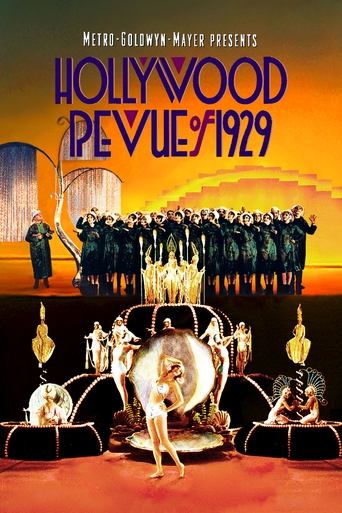
- The Hollywood Revue of 1929
- Ziegfeld Follies
- Broadway variety shows
This film influenced
- 42nd Street
- The Great Ziegfeld
- Fantasia (specifically the visualization of music)
Film restoration
Extensively restored. For decades, only truncated black-and-white or poor-quality color prints existed. In 2016, Universal Pictures completed a major 4K digital restoration from the original nitrate camera negative and other archival sources, restoring it to its full 105-minute length.
Where to watch
- The Criterion Collection (Blu-ray/DVD)
- Criterion Channel
- Available for digital rental/purchase on major platforms like Amazon and Apple TV