Jeanette Loff
Actor
Born: October 9, 1906 in Orofino, Idaho, USA Died: August 4, 1942 Active: 1926-1934 Birth Name: Janette Lov
Films
1 film
About Jeanette Loff
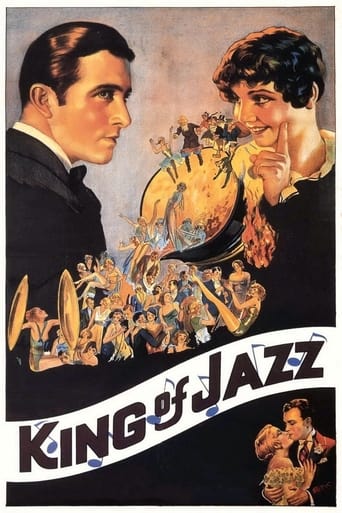
Luminous soprano and actress who rose to prominence during the transition from silent films to 'talkies,' best remembered for her ethereal beauty and vocal talent. Born Janette Lov in Idaho to parents of Danish and Norwegian descent, she began her musical journey as a pipe organist in Portland, Oregon, before her striking looks caught the attention of film scouts. She made her cinematic debut in the mid-1920s, quickly becoming a popular leading lady in silent features like 'Hold 'Em Yale' and 'The Love Mart.' Her career reached its zenith in 1930 when she was cast as a featured soloist in Universal's lavish Technicolor musical 'King of Jazz,' where she performed alongside the Paul Whiteman Orchestra. Despite her early success and a contract with Universal Pictures, she struggled to maintain her momentum as the musical craze of the early 1930s began to wane. She briefly retired from the screen to pursue stage work and radio in New York, returning only for a final film appearance in 1934 before her life was tragically cut short by ammonia poisoning under mysterious circumstances.
The Craft
On Screen
Loff was primarily cast as the 'ingénue' or the 'ethereal beauty' due to her delicate features and blonde hair. In silent films, her acting was characterized by a restrained, naturalistic charm rather than the exaggerated pantomime common to the era. With the advent of sound, her style became heavily dictated by her musical abilities; she possessed a clear, operatic soprano voice that allowed her to deliver lines with a melodic, rhythmic quality that suited the early 1930s penchant for musical romances.
Milestones
- Signed a contract with Cecil B. DeMille's production company in 1927
- Featured as a primary soloist in the landmark Technicolor musical 'King of Jazz' (1930)
- Starred opposite Rod La Rocque in 'Hold 'Em Yale' (1928)
- Earned critical acclaim for her soprano voice in early sound operettas
- Successfully transitioned from silent film ingénue to sound era musical star
Best Known For
Iconic Roles
Must-See Films
Accolades
Special Recognition
- WAMPAS Baby Star nominee (1920s)
- Featured in numerous 'Most Beautiful' lists in fan magazines of the early 1930s
Working Relationships
Worked Often With
Studios
Why They Matter
Impact on Culture
Jeanette Loff represented the 'Golden Girl' archetype of the late 1920s—a transitionary figure who bridged the gap between the silent screen's visual beauty and the sound era's demand for vocal talent. Her participation in 'King of Jazz' is historically significant as it was one of the first major feature films to utilize the two-color Technicolor process extensively, and Loff served as one of the visual and auditory centerpieces of that spectacle. She was a fashion icon for a brief window, often photographed for 'Photoplay' and 'Motion Picture Magazine' to showcase the sophisticated, sleek styles of the early 1930s.
Lasting Legacy
Loff's legacy is primarily tied to the preservation of early sound musicals. While her filmography is relatively small, her performance in 'King of Jazz' remains a vital piece of cinema history for scholars studying the evolution of the movie musical. Her tragic and somewhat mysterious death at the age of 35 has also made her a figure of interest in 'Hollywood Babylon' style histories, though she is most respectfully remembered for her genuine talent as a vocalist who helped prove that silent stars could indeed have beautiful voices.
Who They Inspired
She influenced the early 'musical star' template at Universal Pictures, setting a standard for the type of classically trained singers the studio would later seek out, such as Deanna Durbin. Her transition from a small-town organist to a Hollywood lead served as a 'Cinderella story' that inspired many aspiring performers during the Great Depression.
Off Screen
Jeanette Loff was the daughter of Marius and Inga Lov. She was married twice; her first marriage was to jewelry salesman Harry Roseboom in 1923, which ended in a publicized divorce in 1929 after she claimed he was overly jealous of her film career. In 1936, she married Bert E. Friedlob, a prominent businessman. Her personal life was often the subject of tabloid interest due to her striking appearance and the tragic nature of her early death, which occurred at her home in Beverly Hills.
Education
Attended the Ellison-White Conservatory of Music in Portland, Oregon, where she trained as a lyric soprano and learned to play the pipe organ.
Family
- Harry Roseboom (1923-1929)
- Bert E. Friedlob (1936-1942)
Did You Know?
- She was a professional pipe organist before becoming an actress, playing in theaters to accompany silent films.
- Her death was caused by ingesting ammonia, but it remains a point of historical debate whether it was an accident or suicide.
- She was known as the 'Girl with the Platinum Hair' before Jean Harlow popularized the term.
- She took a break from Hollywood in 1931 to perform on Broadway and in vaudeville.
- She was of Scandinavian descent, which contributed to her distinct 'Nordic' beauty that studios marketed heavily.
- Her performance in 'King of Jazz' was filmed in the early two-strip Technicolor process.
- She was once considered for the lead in several high-profile operettas that eventually went to Jeanette MacDonald.
In Their Own Words
I would rather sing one beautiful song than act in ten mediocre films. Music is where the soul truly speaks.
The transition to sound was not a hurdle for me; it was an invitation to finally use the voice I had trained my whole life to share.
Frequently Asked Questions
Who was Jeanette Loff?
American actress and singer who gained fame in the late 1920s and early 1930s. She was celebrated for her soprano voice and her roles in early musical films like 'King of Jazz'.
What films is Jeanette Loff best known for?
Titles linked here include King of Jazz (1930), Hold 'Em Yale (1928).
How did Jeanette Loff die?
Jeanette Loff died at the age of 35 from ammonia poisoning. The circumstances remain mysterious, with conflicting reports suggesting it was either a tragic accident or a suicide.
Was Jeanette Loff a trained singer?
Yes, she — classically trained lyric soprano who studied at the Ellison-White Conservatory of Music and worked as a professional pipe organist before entering films.
What was Jeanette Loff's acting style?
She was known for playing sweet, refined ingénues. Her style was defined by her poise and her ability to integrate her operatic singing voice into her dramatic performances.