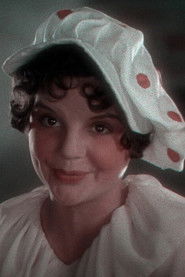
Jeanie Lang
Actor
Born: December 17, 1911 in St. Louis, Missouri, USA Died: September 19, 1993 Active: 1930-1934 Birth Name: Mary Eugenia Wirick
Films
1 film
About Jeanie Lang
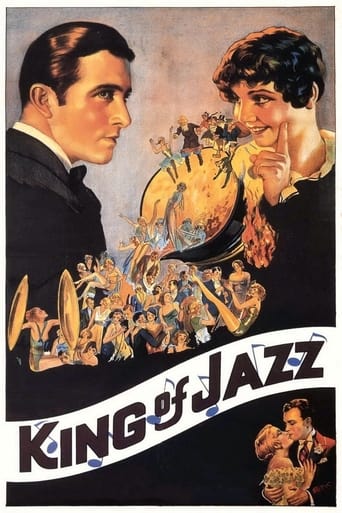
Jeanie Lang, born Mary Eugenia Wirick, was a vibrant American actress and singer who rose to prominence during the early sound era of Hollywood. Born in St. Louis, Missouri, in 1911, she began her performance career on the local stage before moving to California with her family. Her big break occurred during a chance tour of Universal Studios, where she was discovered by bandleader Paul Whiteman, who was impressed by her unique vocal quality. This encounter led to her being cast in the lavish Technicolor musical revue 'King of Jazz' (1930), where she became one of the film's standout performers. Known for her 'squeaky' and elfin singing style, she transitioned into a successful radio career in the early 1930s, performing on major networks like CBS and NBC. Despite her brief film career, she remained a popular figure in the musical entertainment industry through the mid-1930s before eventually retiring from the spotlight.
The Craft
On Screen
Lang was characterized by an 'elfin' and 'pixie-like' screen presence, often playing into the 'ingenue' archetype of the early 1930s. Her performance style was heavily integrated with her singing, utilizing a high-pitched, novelty vocal technique that contemporary critics dubbed the 'squeak school of singing.' She possessed a natural comedic timing that she utilized in the brief sketches of musical revues.
Milestones
- Discovered by Paul Whiteman during a public tour of Universal Studios in 1929
- Featured as a lead vocalist in the landmark Technicolor film 'King of Jazz' (1930)
- Recorded popular 78rpm singles for Columbia Records including 'Ragamuffin Romeo'
- Became a featured singer on the CBS radio comedy revue with Stoopnagle and Budd in 1932
- Performed as a regular on NBC Radio's 'Musical Grocery Store' program in 1933
- Toured as a stage performer with the Buddy Rogers orchestra in 1934
Best Known For
Iconic Roles
Must-See Films
Accolades
Special Recognition
- Preservation of 'King of Jazz' in the National Film Registry (2013), featuring her performances
Working Relationships
Worked Often With
Studios
Why They Matter
Impact on Culture
Jeanie Lang represented a specific vocal trend in the early 1930s known as the 'novelty' or 'baby-voice' singing style, which was highly popular during the transition from silent films to talkies. Her performance in 'King of Jazz' is historically significant as it was captured in early two-color Technicolor, preserving her image and voice at the dawn of the musical film genre. She helped bridge the gap between vaudeville-style stage performance and the new medium of sound cinema, influencing the 'cute' and 'perky' female archetypes that would follow in the decade.
Lasting Legacy
While her filmography is small, Lang's legacy is cemented by her participation in 'King of Jazz,'. Her recordings of 'Ragamuffin Romeo' and 'I Like to Do Things for You' remain favorites among collectors of 1930s jazz and novelty music. She is remembered by film historians as a 'one-hit wonder' of the Golden Age who perfectly encapsulated the experimental and whimsical spirit of early 1930s entertainment.
Who They Inspired
Her high-pitched vocal delivery and 'giggler' persona influenced the development of novelty female vocalists in radio and early animation, echoing the style later associated with characters like Betty Boop.
Off Screen
Jeanie Lang was born into a family with three older brothers in St. Louis. She attended Maplewood High School before the family relocated to Hollywood to support her burgeoning career. She eventually married Arthur C. Langkamer, whose surname she adopted as 'Lang' professionally, and they remained married until his death in 1986. She spent her later years in Florida.
Education
Maplewood High School, St. Louis, Missouri
Family
- Arthur C. Langkamer (died 1986)
Did You Know?
- She was discovered by Paul Whiteman while she was simply a tourist visiting the Universal Studios lot.
- Critics referred to her as the leader of the 'squeak' school of singing due to her high-pitched voice.
- She was an expert 'giggler' and was often hired for her ability to perform infectious laughs on cue.
- Her birth name was Mary Eugenia Wirick, but she was known as 'Genie' to her family.
- She recorded her famous 'King of Jazz' songs for Columbia Records on March 22, 1930.
- She appeared in the first-ever Technicolor cartoon sequence in film history within 'King of Jazz'.
- Despite her success in 'King of Jazz', she initially turned down the role because she didn't think she was ready for it.
- She performed alongside a young Bing Crosby before he became a solo superstar.
In Their Own Words
I like to do things for you! (Lyric from her signature song in 'King of Jazz')
I didn't think I was ready for a part like that, so I told them no at first. (Regarding her casting in 'King of Jazz')
Frequently Asked Questions
Who was Jeanie Lang?
American actress and singer best known for her breakout role in the 1930 Technicolor musical 'King of Jazz'. She was famous for her unique, high-pitched 'squeaky' singing voice and elfin screen persona.
What films is Jeanie Lang best known for?
Titles linked here include King of Jazz (1930), Freshman Love (1931).
When was Jeanie Lang born and when did she die?
Born December 17, 1911; died September 19, 1993.
What awards did Jeanie Lang win?
Jeanie Lang did not win any major individual competitive awards, though the film 'King of Jazz' in which she starred won an Academy Award for Best Art Direction.
What was Jeanie Lang's singing style?
Her style was known as the 'squeak' school of singing, characterized by a high-pitched, youthful, and novelty-driven vocal delivery that was popular in early 1930s radio and film.
How was Jeanie Lang discovered?
She was discovered by chance while touring Universal Studios as a visitor; bandleader Paul Whiteman noticed her and requested a screen and microphone test immediately.