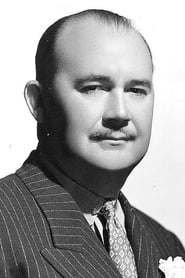
Paul Whiteman
Actor
Born: March 28, 1890 in Denver, Colorado, USA Died: December 29, 1967 Active: 1907-1960 Birth Name: Paul Samuel Whiteman
Films
2 films
About Paul Whiteman
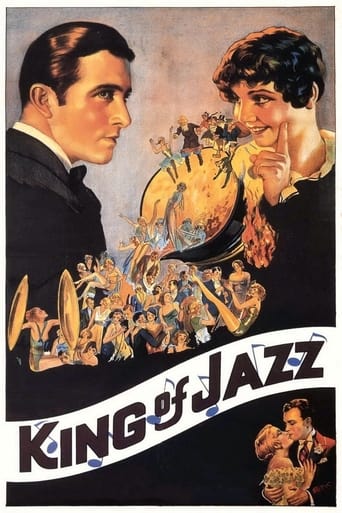
Paul Whiteman, famously known as the 'King of Jazz,' was a monumental figure in early 20th-century American music and cinema. Born into a musical family in Denver, he began his career as a classical violist with the Denver and San Francisco Symphonies before forming his own dance orchestra in 1919. Whiteman's orchestra became the most popular band of the 1920s, bridging the gap between symphonic music and jazz, most notably by commissioning and premiering George Gershwin's 'Rhapsody in Blue' in 1924. His film career was highlighted by the 1930 Technicolor spectacular 'King of Jazz,' which served as a massive showcase for his musical revue and featured early appearances by Bing Crosby. Throughout the 1930s and 1940s, he transitioned into radio and television, eventually serving as the music director for the ABC Radio Network. Despite later controversies regarding his title as the 'King of Jazz' in relation to Black jazz innovators, his influence on the 'symphonic jazz' style and his role as a talent scout for stars like Bix Beiderbecke and the Dorsey Brothers remain central to Hollywood's musical history.
The Craft
On Screen
Whiteman typically appeared as himself or a fictionalized version of a bandleader, utilizing a jovial, authoritative, and larger-than-life persona. His performances were characterized by a charismatic stage presence, often serving as the 'Master of Ceremonies' for elaborate musical revues rather than traditional dramatic acting.
Milestones
- Commissioned and premiered George Gershwin's 'Rhapsody in Blue' in 1924
- Starred in the 1930 Technicolor musical extravaganza 'King of Jazz'
- Managed 28 different bands simultaneously at the height of his 1920s fame
- Discovered and promoted major talents including Bing Crosby, Bix Beiderbecke, and the Dorsey Brothers
- Served as the first Music Director for the ABC Radio Network
- Inducted into the Grammy Hall of Fame for multiple recordings including 'Whispering' and 'Ol' Man River'
Best Known For
Iconic Roles
Must-See Films
Accolades
Won
- Grammy Hall of Fame for 'Rhapsody in Blue' (1974)
- Grammy Hall of Fame for 'Whispering' (1998)
- Grammy Hall of Fame for 'Ol' Man River' (2006)
- Big Band and Jazz Hall of Fame (1993)
- Colorado Music Hall of Fame (2016)
Special Recognition
- Hollywood Walk of Fame Star for Recording (6157 Hollywood Blvd)
- Hollywood Walk of Fame Star for Radio (1601 Vine Street)
- National Recording Registry induction for 'Rhapsody in Blue' (2003)
- National Recording Registry induction for 'Whispering' (2020)
Working Relationships
Worked Often With
Studios
Why They Matter
Impact on Culture
Paul Whiteman was instrumental in making jazz 'respectable' for white middle-class audiences during the 1920s. By blending jazz rhythms with symphonic structures, he helped define the sound of the 'Jazz Age' for the masses. His commissioning of 'Rhapsody in Blue' is considered.
Lasting Legacy
Whiteman's legacy is a complex mix of musical innovation and cultural controversy. While he is credited with launching the careers of dozens of jazz legends and the big band format, his 'King of Jazz' title has been criticized by historians for overshadowing the Black musicians who originated the genre. However, his technical contributions to orchestration and his role in the early development of musical film and radio remain undeniable.
Who They Inspired
He influenced the development of the modern big band and the 'sweet jazz' style of the 1930s. His large-scale orchestral approach paved the way for future bandleaders like Glenn Miller and Lawrence Welk, and his use of featured vocalists set the standard for the 'crooner' era led by his protégé Bing Crosby.
Off Screen
Whiteman was married four times. His most enduring marriage was to film actress Margaret Livingston, whom he married in 1931 and remained with until his death. He was known for his struggle with weight, which his wife Margaret chronicled in the 1933 book 'Whiteman's Burden.'
Education
Attended East High School in Denver; briefly attended the University of Denver before dropping out to pursue a professional music career.
Family
- Nellie Stack (1908-1910)
- Jimmy Smith (1921-1922)
- Mildred Vanderhoff (1922-1931)
- Margaret Livingston (1931-1967)
Did You Know?
- He was the first bandleader to feature a regular male vocal trio (The Rhythm Boys).
- The 1930 film 'King of Jazz' featured the first-ever Technicolor animated cartoon sequence.
- He was once so popular that he earned over $1 million a year in 1922, equivalent to nearly $18 million today.
- Whiteman — skilled violist before becoming a bandleader and played in the San Francisco Symphony.
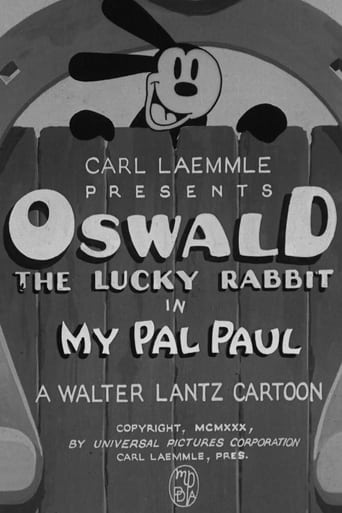
- He appeared as a cartoon character in the Oswald the Lucky Rabbit short 'My Pal Paul' (1930).
- He signed off his radio programs with the phrase: 'Well, that just about slaps the cap on the old milk bottle for tonight.'
- He was a mentor to a young Dick Clark, who read commercials for Whiteman's TV show.
In Their Own Words
You'll never learn to bounce in jazz if you don't know your Bach and Beethoven.
Jazz came to America three hundred years ago in chains.
I wanted to make as much money as I could, as quickly as I could, and I found that jazz was the way to do it.
Frequently Asked Questions
Who was Paul Whiteman?
Famous American bandleader and orchestral on YTB.my. He is best remembered for commissioning George Gershwin's 'Rhapsody in Blue' and leading.
What films is Paul Whiteman best known for?
Titles linked here include King of Jazz (1930), Rhapsody in Blue (1945).
When was Paul Whiteman born and when did he die?
Born March 28, 1890; died December 29, 1967.
What awards did Paul Whiteman win?
While he lived before the modern era of many awards, he has been posthumously inducted into the Grammy Hall of Fame multiple times and has two stars on the Hollywood Walk of Fame for Recording and Radio.
What was Paul Whiteman's musical style?
Whiteman pioneered 'symphonic jazz,' a style that combined the rhythmic elements of jazz with the formal structures and large instrumentation of a classical orchestra. His arrangements were highly polished and left little room for the improvisation typical of traditional jazz.