
Glenn Tryon
Actor
Born: August 2, 1898 in Orchard, Texas, USA Died: April 18, 1970 Active: 1926-1942
Films
9 films

About Glenn Tryon
Glenn Tryon is credited on a single production — Lonesome (1928). Born in 1898, he began his career in Hollywood as an actor, appearing in numerous comedy shorts for Hal Roach Studios, often alongside stars like Harold Lloyd and Charley Chase. His breakthrough came with his role in the critically acclaimed drama 'Lonesome' (1928), where he showcased his ability to handle both comedic and dramatic material. Tryon successfully transitioned to directing in the early 1930s, helming several films for major studios including Universal and RKO. As a director, he specialized in light comedies and musicals, working with notable stars of the era. His career in Hollywood spanned from the mid-1920s through the early 1940s, during which he appeared in over 40 films and directed more than 20 productions. Despite his significant contributions to early cinema, Tryon's legacy remains relatively obscure compared to many of his contemporaries.
The Craft
On Screen
Tryon was known for his naturalistic acting style that adapted well to the transition from silent films to sound. He possessed a boyish charm and everyman quality that made him relatable to audiences. His performances often featured a blend of light comedy and genuine emotion, with an ability to convey subtle feelings through facial expressions during the silent era. In talkies, his clear diction and pleasant speaking voice helped him maintain his leading man status.
Milestones
- Breakthrough role in 'Lonesome' (1928)
- Transition from silent films to talkies
- Successful directorial debut with 'The Girl Said No' (1930)
- Directed several films for Universal Pictures in the 1930s
- Worked as both actor and director during Hollywood's transitional period
Best Known For
Iconic Roles
Must-See Films
Accolades
Special Recognition
- Star on Hollywood Walk of Fame (for contributions to motion pictures)
Working Relationships
Worked Often With
Studios
Why They Matter
Impact on Culture
Glenn Tryon represents the journey of many actors who successfully navigated the challenging transition from silent films to sound pictures. His performance in 'Lonesome' (1928) is particularly significant as it exemplifies the hybrid films of the late silent era that incorporated synchronized sound effects and dialogue sequences. As both an actor and director, Tryon contributed to the development of early sound cinema, particularly in the comedy genre. His work helped establish conventions for sound film production that would influence subsequent generations of filmmakers.
Lasting Legacy
Though not as widely remembered as some of his contemporaries, Glenn Tryon's legacy endures through his contributions to early sound cinema and his successful dual career as actor and director. His film 'Lonesome' (1928) remains a critically acclaimed example of late silent cinema and is preserved in the National Film Registry for its cultural significance. Tryon's career trajectory from actor to director exemplifies the opportunities available in early Hollywood for versatile talent. His work continues to be studied by film historians interested in the transitional period of American cinema.
Who They Inspired
Tryon influenced the development of early sound comedy through his efficient directing style and his ability to work with limited budgets while maintaining entertainment quality. His successful transition from acting to directing provided a model for other performers seeking to expand their roles in the film industry. The naturalistic acting style he employed in 'Lonesome' helped pave the way for more realistic performances in sound films, moving away from the exaggerated gestures common in silent cinema.
Off Screen
Glenn Tryon married actress Lillian Hall in 1924, but the marriage ended in divorce. In 1930, he married actress Jane Frazee, with whom he had two children. The couple divorced in 1945. Tryon's personal life was relatively private compared to many Hollywood figures of his era. After retiring from the film industry, he lived a quiet life in California until his death in 1970 at the age of 71.
Education
Limited formal education; likely self-taught in acting and film craft through experience in the industry
Family
- Lillian Hall (1924-1929)
- Jane Frazee (1930-1945)
Did You Know?
- Appeared in Harold Lloyd's first sound film 'Welcome Danger' (1929)
- Was originally considered for the lead role in 'The Jazz Singer' (1927) before it went to Al Jolson
- Directed his wife Jane Frazee in several films during their marriage
- Was one of the few actors from the Hal Roach stable to successfully transition to dramatic roles
- His film 'Lonesome' (1928) was shot as a silent film but had sound sequences added during production
- Worked as a scriptwriter on several of the films he directed
- Was a skilled musician and often performed his own musical numbers in films
- Retired from directing in the early 1940s to focus on other business ventures
- His star on the Hollywood Walk of Fame is located at 1722 Vine Street
- Served in the U.S. Army during World War I before entering films
In Their Own Words
The transition to sound wasn't as difficult for some of us as people think - we just had to learn to talk with our faces instead of our hands
Directing was always in the back of my mind. When you've been in front of the camera long enough, you start to see how things should be done
Comedy is serious business. One wrong timing and the whole picture falls apart
The best films are made when everyone from the star to the prop boy knows their job and does it well
Frequently Asked Questions
Who was Glenn Tryon?
What films is Glenn Tryon best known for?
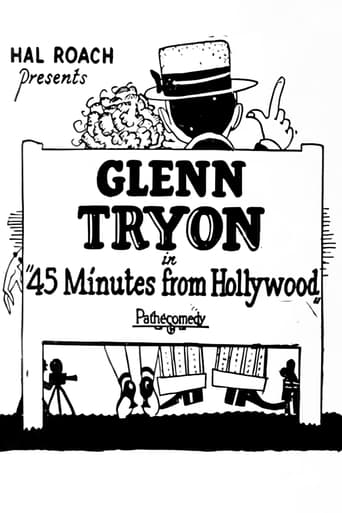
Titles linked here include Lonesome (1928), 45 Minutes from Hollywood (1926).
When was Glenn Tryon born and when did he die?
Born August 2, 1898; died April 18, 1970.
What awards did Glenn Tryon win?
While Glenn Tryon did not receive major Academy Award nominations during his career, he was honored with a star on the Hollywood Walk of Fame for his contributions to motion pictures. His film 'Lonesome' (1928) has been recognized for its cultural significance and was selected for preservation in the National Film Registry in 2010.
What was Glenn Tryon's acting style?
Tryon's acting style was naturalistic and adaptable, successfully transitioning from the exaggerated expressions required in silent films to the more subtle performances needed in talkies. He had a boyish charm and everyman quality that made him relatable to audiences, with a particular talent for blending comedy with genuine emotion in his dramatic roles.
How did Glenn Tryon transition from acting to directing?
Tryon made the transition to directing in the early 1930s, leveraging his extensive on-set experience as an actor. His directorial debut was 'The Girl Said No' (1930), and he went on to direct over 20 films, primarily comedies and musicals for major studios like Universal and RKO. His experience in front of the camera gave him unique insight into working with actors and understanding film production.
Was Glenn Tryon married to any other Hollywood figures?
Yes, Glenn Tryon was married twice to actresses. His first marriage was to Lillian Hall from 1924 to 1929. In 1930, he married actress and singer Jane Frazee, with whom he had two children and frequently collaborated professionally. Their marriage lasted until 1945.