


Broadway
"A naive young dancer in a Broadway show innocently gets involved in backstage…"
Keys: Space play/pause · ←/→ 10s · F fullscreen · M mute · </> speed
About this film
A naive young dancer in a Broadway show innocently gets involved in backstage bootlegging and murder.
Cast & crew
More films like this
More Music films
View all →
More from Pál Fejős
View all →
More about this film
About the production
Release dateApril 14, 1929
Box officeUnknown
ProductionPathé Exchange, Pathe
Filmed inHollywood, California, Studio backlots designed to resemble Broadway theaters
This film was produced during the critical transition period from silent films to talkies, featuring both synchronized music and dialogue sequences. Director Pál Fejös brought European cinematic sensibilities to this American production, incorporating innovative camera movements and lighting techniques that were advanced for the time. The production faced challenges with early sound recording equipment, which limited camera mobility and required actors to remain relatively stationary during dialogue scenes. The Broadway theater sets were elaborate reconstructions designed to capture the authentic atmosphere of New York's theater district.
Themes
Innocence vs. corruptionThe dark side of show businessProhibition and criminal enterpriseRomance in dangerous circumstancesThe American Dream and its compromises
Themes & topics
Historical background
Released in 1929 during the late silent period, Broadway reached audiences when exhibitors were still defining programming conventions. The narrative hook—A naive young dancer in a Broadway show innocently gets involved in backstage…—reflects what contemporary producers thought would draw viewers.
Why this film matters
Broadway remains discussed by archivists tracing how screen stories of its period represented work, desire, conflict, and social order. Its central situation—A naive young dancer in a Broadway show innocently gets involved in backstage…—still prompts questions about genre conventions and audience expectations.
Making of
The production of 'Broadway' faced numerous technical challenges common to early sound films. The cumbersome sound recording equipment of 1929 severely limited camera movement, forcing director Pál Fejös to adapt his typically fluid visual style. The cast had to perform multiple takes due to sound synchronization issues, and many scenes had to be shot with hidden microphones disguised as props. The elaborate Broadway theater sets required careful acoustic treatment to minimize echo and ensure clear sound recording. The film's musical numbers were pre-recorded and then lip-synced by the performers, a practice that would become standard in later musical films. The bootlegging sequences were carefully choreographed to avoid technical difficulties with sound recording during action scenes. The production team worked closely with sound engineers to balance dialogue, music, and sound effects, which was still a relatively new art form in 1929.
What critics said
Trade and newspaper notices for Broadway generally emphasized casting, spectacle, and program fit rather than extended aesthetic argument. Retrospective screenings and archival notes continue to shape how viewers evaluate Broadway today.
Did you know?
- This was one of the early 'part-talkie' films, featuring both synchronized musical segments and spoken dialogue during a transitional period in cinema history.
- Director Pál Fejös was a Hungarian filmmaker who brought European artistic techniques to Hollywood, known for his innovative use of camera movement and visual storytelling.
- The film's release coincided with the height of Prohibition in America, making its bootlegging plot particularly relevant to contemporary audiences.
- Merna Kennedy, who played the female lead, was discovered by Charlie Chaplin and had previously starred in his film 'The Circus' (1928).
- The Broadway sequences were filmed on elaborate studio sets that attempted to recreate the authentic atmosphere of New York's theater district.
- This film was one of the first to explore the darker side of show business, contrasting the glamour of Broadway with the criminal underworld.
- The production utilized early sound-on-disc technology rather than sound-on-film, which was common during this transitional period.
- Glenn Tryon, the male lead, was also a successful silent film director and screenwriter in addition to his acting career.
- The film's release timing was significant as it came just months before the 1929 stock market crash, which would soon change the entertainment industry landscape.
- Despite its crime elements, the film was primarily marketed as a musical, reflecting the popularity of the musical genre during the early sound era.
Visual style
The cinematography of 'Broadway' reflects the technical constraints and artistic compromises of early sound filmmaking. The camera work is more static than in late silent films due to the limitations of sound recording equipment, but director Pál Fejös and cinematographer Gilbert Warrenton still managed to create visually interesting compositions within these constraints. The Broadway theater sequences feature dramatic lighting that captures the theatrical atmosphere, with strong contrasts between the bright stage lights and the dark backstage areas. The film uses shadow effectively in its crime sequences, prefiguring the visual style that would later become associated with film noir. The camera occasionally employs tracking shots during musical numbers, though these were technically challenging to execute with early sound equipment. The visual design successfully creates the illusion of a bustling Broadway environment despite being filmed on studio sets.
Innovations
As an early sound film, 'Broadway' demonstrated several technical innovations that were advancing rapidly in 1929. The film successfully integrated synchronized music with dialogue, representing the sophisticated capabilities of sound technology at the time. The production team developed techniques for recording musical numbers with better acoustic quality than many contemporaneous films. The film's use of both sound-on-disc and early sound-on-film technology shows the transitional nature of cinema technology during this period. The elaborate Broadway sets incorporated acoustic treatment to improve sound quality, demonstrating growing understanding of sound recording principles. The film also experimented with the balance between dialogue, music, and sound effects, a challenge that early sound filmmakers were still learning to master. The synchronization of dance movements with pre-recorded music represented an important step in the development of the movie musical genre.
Music
The film's soundtrack represents an early example of the movie musical format, featuring both diegetic music performed within the story and non-diegetic background score. The musical numbers reflect the popular song styles of the late 1920s Broadway scene, with jazz-influenced arrangements and danceable rhythms. The score was composed specifically for the film, though the exact composer is not well-documented in surviving records. The sound design includes early attempts at sound effects to enhance the bootlegging sequences and backstage atmosphere. The dialogue recording shows the characteristic limitations of early sound technology, with somewhat flat acoustics and occasional synchronization issues. The musical performances were likely pre-recorded using the sound-on-disc method that was common before the industry standardized on sound-on-film technology.
Famous quotes
Broadway isn't just a street, it's a way of life - and sometimes a way of death.
In this business, you learn to dance with danger as well as with the chorus girls.
Every spotlight has its shadow, and on Broadway, the shadows are darker than most.
Some people come to Broadway to dance in the light, others to hide in the dark.
When the curtain falls, the real show begins backstage.
Memorable scenes
- The opening musical number featuring the full Broadway chorus, showcasing the energy and spectacle of 1920s theater with elaborate costumes and synchronized choreography.
- The tense backstage sequence where the protagonist first discovers the bootlegging operation, using dramatic shadows and sound effects to create suspense.
- The murder scene during a theater performance,巧妙 contrasting the glamorous on-stage show with the violent crime happening just behind the curtain.
- The romantic rooftop scene between the leads, with the Broadway lights twinkling in the background, representing both opportunity and danger.
What audiences thought
Contemporary audiences in 1929 responded positively to the film's musical numbers and Broadway setting, finding the combination of music, romance, and crime appealing. The novelty of hearing Broadway-style musical numbers in a film was a major draw for theatergoers still excited by the new technology of sound cinema. The film's bootlegging plot resonated with audiences familiar with Prohibition-era crime stories from newspapers and real life. While specific box office figures are not well-documented, the film appears to have been moderately successful, benefiting from the public's insatiable appetite for early talkies and musical films. Modern audiences who have seen the film through revivals or archival screenings often appreciate it as a time capsule of late 1920s entertainment and culture, though some find the pacing and technical limitations challenging by contemporary standards.
Film connections
Influenced by
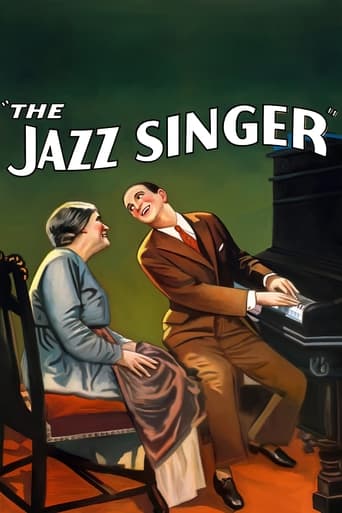
- The Broadway Melody (1929)
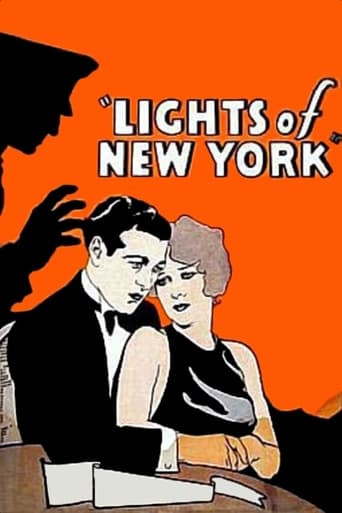
- Lights of New York (1928)
- The Jazz Singer (1927)
- German Expressionist cinema (through director Pál Fejös)
- 1920s gangster films
- Broadway musical theater tradition
This film influenced
- Later backstage musicals
- Early film noir with entertainment industry settings
- Gangster-musical hybrids
- Films exploring show business corruption
Film restoration
The preservation status of 'Broadway' (1929) is uncertain but believed to be incomplete. Many films from this early sound period have been lost due to the unstable nature of early film stock and the lack of systematic preservation efforts in the 1920s and 1930s. Some sources suggest that fragments or copies may exist in film archives, possibly including the Library of Congress or the UCLA Film & Television Archive, but a complete, restored version is not widely available. The film's survival status reflects the broader challenge of preserving early sound cinema, which faced additional risks due to the complex relationship between film elements and sound discs. Any existing copies would likely show significant deterioration and would require extensive restoration work.
Where to watch
- The film is not currently available on major streaming platforms due to its age and preservation status.
- Film archives and specialized cinema institutions may have access to existing copies for research purposes.
- Occasionally screened at classic film festivals or special retrospectives of early sound cinema.
- May be available through specialized film distributors or archives that focus on early cinema preservation.