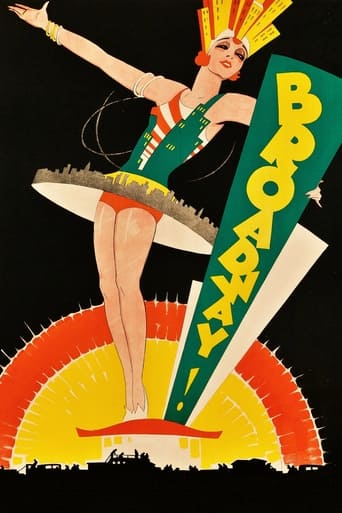
Films
1 film
About Marion Lord
The 1929 film Broadway is the only title linked here for Marion Lord. Her career was remarkably brief but coincided with transformative periods in cinema history. Lord appeared in the 1929 Universal Pictures production 'Broadway,' a musical drama directed by Pál Fejös that showcased the new possibilities of sound in motion pictures. The film was one of the early examples of a fully synchronized musical, featuring elaborate production numbers and innovative sound recording techniques. Unfortunately, like many actors who struggled to adapt to the demands of sound cinema, Lord's film career appears to have ended as quickly as it began. Her single film credit places her among the countless performers who briefly graced the silver screen during Hollywood's experimental period with sound, leaving behind a small but historically significant footprint in cinema's evolution.
The Craft
Milestones
- Appeared in the early sound musical 'Broadway' (1929)
- Worked during the transition from silent to sound cinema
Best Known For
Must-See Films
Working Relationships
Worked Often With
Studios
Why They Matter
Impact on Culture
Marion Lord represents the countless actors who participated in cinema's great technological revolution but whose contributions were largely lost to history. Her appearance in 'Broadway' (1929) places her at the forefront of the sound era's dawn, when Hollywood was desperately seeking performers who could handle both acting and the new demands of singing and dialogue delivery. The film itself was significant as one of Universal's early attempts at a full-scale musical, competing with other studios rushing to capitalize on the sound craze following the success of 'The Jazz Singer' (1927). While Lord herself did not achieve lasting fame, she was part of the experimental period that shaped modern cinema, when studios tested various approaches to sound recording, musical integration, and performance styles that would define the future of filmmaking.
Lasting Legacy
Marion Lord's legacy is primarily historical rather than artistic, serving as a representative example of the many actors who briefly appeared during cinema's transition to sound. Her single film credit in 'Broadway' (1929) ensures her place in film history databases and archives, preserving her contribution to early sound cinema. While she did not achieve the lasting recognition of contemporaries who successfully navigated the talkies era, Lord's career exemplifies the challenges faced by performers during this tumultuous period. Her story highlights the vast number of talented individuals who contributed to cinema's development but whose names have faded from public memory, reminding film historians of the collaborative nature of filmmaking and the many unsung participants in Hollywood's golden age.
Who They Inspired
Due to her extremely brief career, Marion Lord's direct influence on subsequent generations of actors appears to be minimal. However, her participation in early sound cinema contributes to our understanding of the transitional period between silent and talking pictures. The film 'Broadway' itself, with its innovative use of sound and musical elements, was part of the foundation upon which the Hollywood musical would be built. While Lord may not have personally mentored or influenced other performers, her work, along with that of her contemporaries, helped establish the conventions and techniques that would be refined by later, more successful actors in the sound era.
Off Screen
Very little is documented about Marion Lord's personal life, which is typical for many actors who had brief careers in the early sound era. Her limited filmography suggests she may have been one of the many performers who attempted to transition from silent films to talkies but did not achieve lasting success in the new medium.
Did You Know?
- Appeared in only one known film during her entire career
- Her film 'Broadway' (1929) was one of Universal Pictures' early attempts at a full-scale musical
- The film was directed by Hungarian filmmaker Pál Fejös, who was known for his innovative camera techniques
- 1929 was a pivotal year in cinema, marking the full transition from silent films to talkies
- Many actors from the silent era struggled to adapt to sound, leading to very brief careers like Lord's
- The film 'Broadway' featured elaborate production numbers that showcased the new possibilities of sound in cinema
- Marion Lord's career coincided with the stock market crash of 1929, which dramatically affected Hollywood
- Her limited filmography makes her part of what film historians call the 'lost generation' of early talkies actors
Frequently Asked Questions
Who was Marion Lord?
American actress active during the early sound era of cinema, best known for her appearance in the 1929 Universal Pictures film 'Broadway.' Her career was extremely brief, spanning only the year 1929, making her one of the many performers who briefly participated in Hollywood's transition from silent films to talkies.
What films is Marion Lord best known for?
Titles linked here include Broadway (1929).
When was Marion Lord born and when did she die?
Unfortunately, Marion Lord's birth and death dates are not documented in available historical records, which is common for many actors who had very brief careers in the early sound era. The only confirmed information about her timeline is that she was active in 1929.
What awards did Marion Lord win?
There are no records of Marion Lord receiving any major awards or nominations for her work. Given her brief career consisting of only one film appearance, she would not have had the opportunity to accumulate the recognition that more established actors of her era might have received.
What was Marion Lord's acting style?
Due to the limited documentation of her work and the fact that her only known film 'Broadway' (1929) is not widely available for study, Marion Lord's specific acting style remains unknown. However, as an actress working during the transition to sound, she would have needed to adapt to the new demands of dialogue delivery and possibly singing.
Why was Marion Lord's career so short?
Marion Lord's extremely brief career was typical of many actors during the early sound era who struggled to adapt to the new medium. The transition from silent films to talkies was challenging for many performers, as it required different skills including voice projection, dialogue delivery, and often singing ability. Many actors, like Lord, appeared in only one or two films before their careers ended.
What was the significance of the film 'Broadway' (1929)?
'Broadway' (1929) was significant as one of Universal Pictures' early ventures into sound musicals, representing Hollywood's rapid adaptation to talking pictures. The film featured innovative sound recording techniques and elaborate musical numbers that showcased the new possibilities of sound cinema, making it an important example of early sound film production.