Gyan Mukherjee
Director
Born: 1909 in Calcutta, Bengal Presidency, British India Died: 1956 Active: 1939-1956
Films
1 film
About Gyan Mukherjee
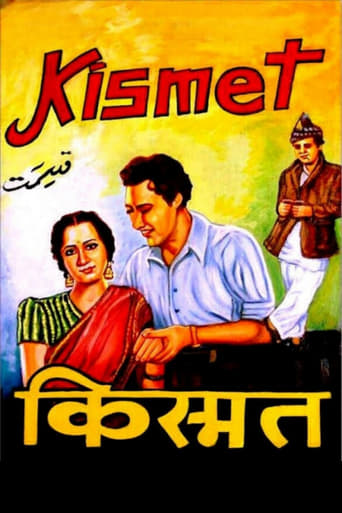
Indian film director who rose to prominence during the golden era of Indian cinema in the 1940s. He began his career working with Bombay Talkies, one of India's most prestigious film studios, where he honed his craft as an assistant before becoming a director. Mukherjee achieved status with his 1943 masterpiece 'Kismet', which became the first Indian film to run for over three years in theaters and established new benchmarks for commercial success in Indian cinema. His directorial style was characterized by innovative storytelling techniques, strong character development, and the ability to blend entertainment with social commentary. Throughout his career, he worked closely with some of the biggest stars of the era, particularly Ashok Kumar, with whom he shared a highly successful professional relationship. Mukherjee's films often featured anti-heroes and complex narratives that were ahead of their time, influencing the direction of Indian popular cinema for decades to come. Despite his relatively short active period, his impact on Indian cinema was profound and lasting.
The Craft
Behind the Camera
Gyan Mukherjee was known for his innovative narrative techniques and ability to create commercially successful films with artistic merit. He pioneered the use of anti-heroes in Indian cinema, breaking away from traditional heroic protagonists. His directing style emphasized strong character development, emotional depth, and social relevance while maintaining mass appeal. Mukherjee was particularly skilled in creating suspense and drama through clever storytelling and pacing.
Milestones
- Directed Kismet (1943) - one of Indian cinema's biggest blockbusters
- Pioneered the anti-hero protagonist in Indian cinema
- Worked extensively with Bombay Talkies studio
- Collaborated frequently with Ashok Kumar
- Created films that ran for record-breaking durations in theaters
Best Known For
Must-See Films
Accolades
Special Recognition
- Posthumously recognized as one of Indian cinema's directors
- Kismet included in lists of greatest Indian films of all time
Working Relationships
Worked Often With
Studios
Why They Matter
Impact on Culture
Gyan Mukherjee's work, particularly 'Kismet', had a transformative impact on Indian cinema and popular culture. The film's success demonstrated that Indian cinema could achieve unprecedented commercial success while maintaining artistic integrity. His introduction of the anti-hero character challenged conventional storytelling norms and opened new possibilities for character-driven narratives in Indian films. The songs from 'Kismet', particularly 'Dukh ke din ab beetat nahi', became cultural anthems that resonated with audiences during the tumultuous period of India's independence struggle. Mukherjee's films often reflected the social and political climate of his time, making them relevant beyond mere entertainment.
Lasting Legacy
Gyan Mukherjee's legacy endures through his groundbreaking contributions to Indian cinema's narrative style and commercial success model. 'Kismet' remains a benchmark for blockbuster success in Indian cinema, and its influence can be seen in contemporary filmmaking approaches. His technique of blending entertainment with social commentary became a template for successful Indian commercial cinema. Mukherjee is remembered as a director who understood both the artistic and commercial aspects of filmmaking, creating a balance that many subsequent directors have sought to emulate. His work continues to be studied in film schools and analyzed by cinema historians for its innovative approach to storytelling and character development.
Who They Inspired
Gyan Mukherjee influenced generations of Indian filmmakers through his innovative narrative techniques and successful blending of art and commerce. His use of anti-heroes paved the way for more complex characterizations in Indian cinema. Directors like Bimal Roy, Raj Kapoor, and later Mani Ratnam have drawn inspiration from his ability to create socially relevant films that achieved mass appeal. His success with 'Kismet' demonstrated the potential of Indian cinema to compete globally, inspiring filmmakers to aim for higher artistic and technical standards. Mukherjee's approach to storytelling, particularly his use of suspense and dramatic tension, influenced the thriller and drama genres in Indian cinema for decades.
Off Screen
Gyan Mukherjee maintained a relatively private personal life despite his professional success. He was known to be deeply dedicated to his craft and spent most of his time working on films. His life was cut short when he died at the young age of 47 in 1956. Details about his family life and personal relationships remain largely undocumented in historical records.
Education
Educated in Calcutta (now Kolkata) during British rule
Did You Know?
- Kismet (1943) was the first Indian film to run for over 200 consecutive weeks in theaters
- The film featured the first double role in Indian cinema played by Ashok Kumar
- Kismet's success was so massive that it saved Bombay Talkies from financial collapse
- The film's song 'Aajkal tere mere pyar ke charche hain' became a nationwide sensation
- Mukherjee was one of the few directors who successfully transitioned from the studio system to independent production
- Despite his success, Mukherjee remained relatively unknown to contemporary audiences outside film circles
- His directorial approach influenced the development of the 'masala film' format in Indian cinema
- Kismet was one of the first Indian films to feature a smuggler as the protagonist
- The film's success coincided with India's independence movement, making its themes particularly resonant
In Their Own Words
Cinema is not just entertainment; it's a mirror to society and its aspirations
A good film should make you think long after you've left the theater
The destiny of a film is decided in the hearts of the audience, not in the balance sheets
Frequently Asked Questions
Who was Gyan Mukherjee?
Indian on YTB.my. He was a key figure in the golden era of Indian cinema and worked primarily with Bombay Talkies studio.
What films is Gyan Mukherjee best known for?
Titles linked here include Kismet (1943), Jhoola (1942).
When was Gyan Mukherjee born and when did he die?
Born 1909; died 1956.
What awards did Gyan Mukherjee win?
While Gyan Mukherjee did not receive formal awards during his lifetime, his film 'Kismet' is posthumously recognized as one of the greatest Indian films ever made. He is honored as a director who significantly influenced Indian cinema.
What was Gyan Mukherjee's directing style?
Mukherjee's directing style was characterized by innovative storytelling, strong character development, and the use of anti-heroes in Indian cinema. He skillfully blended entertainment with social commentary and was known for creating suspense and emotional depth in his films.