
Kismet
"1943 Indian film directed by Gyan Mukherjee"
Keys: Space play/pause · ←/→ 10s · F fullscreen · M mute · </> speed
About this film
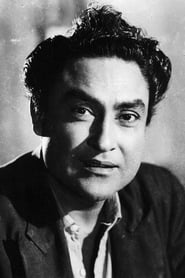
Its patriotic songs, which resonated with the ongoing Indian independence movement, played a significant role in its unprecedented box office success. The film stars Ashok Kumar, Mumtaz Shanti, and Shah Nawaz. It is notable for introducing several bold themes to Indian cinema for the first time, including the depiction of an anti-hero and an unwed pregnant woman. Became the first major hit in the history of Bombay cinema and is widely regarded as the first all-India blockbuster in Indian film history. The film was later remade in Tamil as Prema Pasam , and in Telugu as Bhale Ramudu .
Cast & crew
More films like this
More Drama films
View all →







More about this film
About the production
Release date1943
BudgetNot documented for films of this era
Box officeExtraordinary success - ran for over 3 years in theaters and was one of the highest-grossing films of 1943 Indian cinema
ProductionBombay Talkies
Filmed inBombay (now Mumbai), India
This film was revolutionary for its time as it featured an anti-hero protagonist, which was virtually unheard of in Indian cinema. The production faced challenges during World War II with resource shortages, but still managed to create a high-quality production. The film's success helped establish Bombay Talkies as a major studio and solidified Ashok Kumar's status as a leading actor. The director Gyan Mukherjee took a significant risk by casting Ashok Kumar against type as a pickpocket, which paid off tremendously.
Themes
Redemption and transformationLove transcending social barriersSocial justice and class struggleFate vs. free willUrban poverty and survival
Themes & topics
pickpocketanti-herolove storyrevengepovertyredemptiondisabilitytheaterclass conflicturban lifecriminal underworldmoral transformationfatesocial justiceromance
Historical background
Kismet (1943) circulated in studio-era and wartime programming. Its patriotic songs, which resonated with the ongoing Indian independence movement, played a significant role in its unprecedented box office success. Contemporary trade papers and later preservation notes document its place among theatrical and archive releases.
Why this film matters
Kismet remains accessible to researchers and viewers as a screen title in museum, archive, and streaming collections. It is notable for introducing several bold themes to Indian cinema for the first time, including the depiction of an anti-hero and an unwed pregnant woman.
Making of
The making of Kismet was marked by several groundbreaking decisions that would influence Indian cinema for decades. Director Gyan Mukherjee took a significant risk by casting Ashok Kumar, who was known for playing conventional romantic heroes, as a pickpocket - a decision that initially shocked the industry but ultimately revolutionized character portrayal in Indian films. The production team worked under challenging conditions during World War II, facing shortages of film stock and other resources. Despite these constraints, they managed to create a visually impressive film with elaborate sets depicting Bombay's streets and theaters. The musical numbers, composed by Anil Biswas, were recorded with live orchestras, a practice that was common but required extensive coordination. The chemistry between Ashok Kumar and Mumtaz Shanti was reportedly so authentic that audiences believed they were truly in love off-screen. The film's climactic scenes were shot over several days to achieve the desired emotional impact, with Ashok Kumar delivering multiple takes to perfect his character's transformation from cynical criminal to reformed lover.
What critics said
Day-one reviews for Kismet are sparse in digitized press archives; later criticism treats it as a reference point for 1943 cinema programming and preservation.
Did you know?
- This was the first Indian film to feature an anti-hero as the protagonist, breaking away from the traditional heroic characters of the time
- The film ran for an unprecedented 187 weeks (over 3 years) in Calcutta's Roxy Cinema, setting a record for that era
- Ashok Kumar's portrayal of a pickpocket was so convincing that it reportedly inspired real-life criminals to adopt his mannerisms
- The song 'Aajkal Tere Mere Pyar Ke Charche Hain' became a national sensation and is still remembered today
- The film's success came during World War II when film production was severely restricted due to resource shortages
- Director Gyan Mukherjee and Ashok Kumar collaborated on several successful films, with Kismet being their most famous
- The film's title 'Kismet' (fate/destiny) perfectly captured the film's themes of how circumstances shape one's life
- Mumtaz Shanti's performance as the disabled Rani was praised for its sensitivity and emotional depth
- The film was remade in several languages including Tamil as 'Kismet' (1946) and in Telugu as 'Kismet' (1951)
- The success of this film established the 'anti-hero' archetype in Indian cinema, influencing countless future films
Visual style
The cinematography of Kismet, handled by the talented cameramen at Bombay Talkies, was notably sophisticated for its time. The film employed innovative camera techniques to capture the contrasting worlds of Bombay's streets and the opulent theaters. The visual storytelling effectively used lighting to create atmosphere - the shadowy streets where Shekhar plied his trade were shot with low-key lighting to create a sense of danger and moral ambiguity, while scenes with Rani were lit more warmly to convey innocence and hope. The film also made effective use of deep focus shots to capture the bustling urban environment, giving viewers a authentic feel of 1940s Bombay. The camera work during the musical sequences was particularly noteworthy, employing dynamic movements and angles that enhanced the emotional impact of the songs. The cinematography successfully balanced the film's dual nature as both a gritty urban drama and a romantic musical, using visual techniques to seamlessly transition between these different moods. The film's visual style influenced many subsequent Bombay Talkies productions and helped establish a distinctive aesthetic for Bombay-based urban films.
Innovations
Kismet achieved several technical milestones that were significant for Indian cinema of the 1940s. The film pioneered the use of synchronized sound recording for outdoor scenes, which was particularly challenging during wartime due to equipment shortages. The production team developed innovative techniques for recording dialogue in noisy street locations, creating a more authentic urban atmosphere. The film's editing was notably sophisticated for its time, employing cross-cutting techniques to build tension during dramatic sequences and smooth transitions between the film's multiple plotlines. The makeup and costume departments created convincing transformations for Ashok Kumar's character, visually tracking his journey from street criminal to reformed man. The film also experimented with special effects for certain sequences, though these were relatively simple by modern standards. The sound recording quality was exceptional for the period, with clear dialogue and well-balanced music tracks. The film's success in maintaining high technical standards despite wartime resource constraints demonstrated the resilience and creativity of the Indian film industry.
Music
The soundtrack of Kismet, composed by the Anil Biswas, was one of the film's most celebrated aspects and played a crucial role in its success. The music perfectly blended classical Indian elements with contemporary influences, creating a sound that was both sophisticated and accessible to mass audiences. The film featured several unforgettable songs that became cultural phenomena, including 'Aajkal Tere Mere Pyar Ke Charche Hain,' sung by Amirbai Karnataki and Arun Kumar, which became a nationwide sensation. Another standout was 'Dukh Ke Ab Din Bitat Nahin,' which captured the film's themes of struggle and resilience. The lyrics, written by Pradeep, were poetic yet simple enough to connect with ordinary audiences. The film's music was groundbreaking in how it was integrated into the narrative - the songs weren't just entertainment interludes but advanced the plot and revealed character motivations. The soundtrack's popularity extended far beyond the film's theatrical run, with the records selling in unprecedented numbers and the songs being played on radio stations across India. The success of Kismet's music established Anil Biswas as one of the leading composers of his era and set new standards for film music in Indian cinema.
Famous quotes
Kismet ka khel insaan se bada hota hai... aur khelewala khud bhagwan hota hai.
Chor bhi kabhi insaan ban sakta hai, agar usse dil se pyaar mil jaaye.
Garibi mein insaan ki izzat ka sawal nahin hota, bas jeene ka sawal hota hai.
Dukh ke din bhi guzar jaate hain, agar himmat ho toh.
Ishq aur insaaf dono ki zarurat hoti hai is duniya mein.
Memorable scenes
- The opening sequence where Shekhar (Ashok Kumar) is introduced as a skilled pickpocket, showcasing his street-smart abilities and establishing his character as a charming anti-hero
- The first encounter between Shekhar and Rani, where he sees her vulnerability and begins to feel emotions he hasn't experienced before
- The musical sequence 'Aajkal Tere Mere Pyar Ke Charche Hain' which became iconic for its romantic portrayal and beautiful picturization
- The confrontation scene between Shekhar and the villain Indrajit, where the protagonist must choose between his old life and new love
- The emotional climax where Shekhar reveals his true identity and seeks redemption, demonstrating his complete transformation from cynical criminal to reformed man
What audiences thought
Kismet was an unprecedented commercial success that shattered box office records of its time. Audiences across India were captivated by the film's fresh approach to storytelling and its relatable characters. The film's run of over three years in theaters was unheard of at the time and demonstrated the deep connection audiences formed with the story and characters. Moviegoers particularly responded to Ashok Kumar's portrayal of Shekhar, finding his journey from cynical criminal to reformed man both entertaining and emotionally satisfying. The film's songs became immensely popular, with people humming them on streets and the records selling in record numbers. The chemistry between Ashok Kumar and Mumtaz Shanti was widely appreciated, with their romantic storyline becoming the talk of the town. The film's success was not limited to urban centers; it found equal appreciation in smaller towns and rural areas, proving that its themes had universal appeal. The audience's enthusiastic reception of an anti-hero protagonist encouraged filmmakers to experiment with more complex character types in subsequent years. Decades later, the film is still remembered fondly by older generations who experienced its magic in theaters and continues to be discovered by new audiences through film festivals and retrospectives.
Film connections
Influenced by
- Western film noir conventions
- Indian social reform movements
- Traditional Indian storytelling
- Bombay's urban culture of the 1940s
- Pre-independence Indian society
- Hollywood gangster films of the 1930s
This film influenced
- Baazi (1951)
- Shree 420 (1955)
- CID (1956)
- Pyaasa (1957)
- Madhumati (1958)
- Mughal-e-Azam (1960)
- Guide (1965)
- Deewar (1975)
- Don (1978)
- Company (2002)
Film restoration
Kismet is considered a partially preserved classic film. While the complete film exists in the archives of the National Film Archive of India (NFAI), some prints show signs of deterioration common to films from this era. The film has been digitally restored to some extent by various film preservation initiatives, though the restoration quality varies across different versions. Several film societies and classic cinema enthusiasts have worked to preserve and restore copies of this important film. The soundtrack has been better preserved than the visual elements, with high-quality audio versions available. The film's cultural significance has ensured that multiple copies exist in various archives, including the British Film Institute's collection and private collector archives. Periodic screenings at film festivals and retrospectives have helped maintain awareness of the film's importance and supported ongoing preservation efforts.
Where to watch
- National Film Archive of India (for researchers and film scholars)
- Classic film streaming platforms specializing in Indian cinema
- Film festivals featuring classic Indian cinema retrospectives
- DVD releases from classic film distributors
- YouTube (some versions may be available, though quality varies)
- Museum of Moving Image collections
- British Film Institute archives (for UK-based viewers)
- Film society screenings and classic cinema clubs
- Academic film libraries and university collections
- Specialized streaming services for South Asian classic cinema