
Grete Mosheim
Actor
Born: January 8, 1905 in Berlin, German Empire Died: December 29, 1986 Active: 1924-1976 Birth Name: Margarete Emma Dorothea Mosheim
Films
1 film
About Grete Mosheim
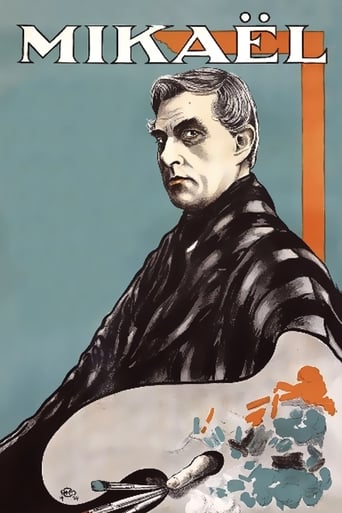
Margarete Emma Dorothea 'Grete' Mosheim — German actress whose over five decades across both European and American stages and screens. Born into a Jewish family in Berlin, she began her acting career in the early 1920s, quickly establishing herself as a prominent figure in German theater and cinema. Her breakthrough role came in Carl Theodor Dreyer's 1924 silent film 'Michael,' which showcased her remarkable screen presence and emotional depth. Throughout the 1920s and 1930s, she became one of Germany's most respected character actresses, working with renowned directors and appearing in numerous successful productions. With the rise of the Nazi regime, Mosheim, being Jewish, was forced to flee Germany in 1933, eventually settling in the United States where she continued her career in Hollywood and on Broadway. After World War II, she returned to Germany, where she resumed her theater career and became a beloved figure in post-war German cultural life. Her final decades were marked by continued stage performances and television appearances, cementing her legacy as versatile and enduring actresses of her generation.
The Craft
On Screen
Known for her naturalistic acting style that bridged the theatrical traditions of German expressionism with the emerging realism of the 1930s. Her performances were characterized by emotional depth, psychological complexity, and a remarkable ability to convey subtle nuances through both gesture and dialogue. Mosheim excelled in both dramatic and comedic roles, bringing a distinctive intelligence and sensitivity to every character she portrayed.
Milestones
- Breakthrough role in 'Michael' (1924)
- Leading actress at Berlin's Deutsches Theater
- Successful Broadway career in the 1930s-40s
- Return to German theater post-WWII
- Awarded the Filmband in Gold for lifetime achievement
Best Known For
Iconic Roles
Must-See Films
Accolades
Won
- Filmband in Gold (German Film Award) for lifetime achievement (1976)
- Bundesverdienstkreuz (Order of Merit of the Federal Republic of Germany)
Nominated
- Multiple theater awards nominations in Germany and Austria
Special Recognition
- Honored member of the Deutsches Theater Berlin
- Recognized as one of Germany's greatest character actresses
- Posthumous retrospectives at major film festivals
Working Relationships
Worked Often With
Studios
Why They Matter
Impact on Culture
Grete Mosheim represents the bridge between the golden age of German cinema and the post-war cultural renaissance. Her career trajectory, from Weimar Republic stardom through exile and return, mirrors the broader experience of many German-Jewish artists of her generation. She helped preserve and transmit German theatrical traditions through the Nazi period and was instrumental in rebuilding German cultural life after the war. Her performances in both silent and sound films demonstrated the evolution of acting techniques in early cinema.
Lasting Legacy
Mosheim's legacy endures through her extensive body of work in film, theater, and television, as well as through the generations of actors she influenced. She is remembered as. Her autobiography and numerous interviews provide valuable insights into the cultural history of 20th-century Germany and the experiences of artists in exile.
Who They Inspired
Mosheim influenced both German and international acting communities through her naturalistic style and emotional authenticity. Her ability to work successfully in both German and English productions paved the way for later European actors in international cinema. Many post-war German actors cited her as an inspiration for maintaining artistic integrity during difficult political times.
Off Screen
Mosheim was married three times throughout her life. Her first marriage was to actor Oskar Homolka, which ended in divorce. She later married American film producer Robert Klein, and after his death, married German actor and director Leonard Steckel. Despite the personal upheavals caused by her exile from Germany during the Nazi regime, she maintained strong ties to German culture and returned to her homeland after World War II. She was known for her resilience and dedication to her craft, continuing to perform well into her seventies.
Education
Trained at Max Reinhardt's acting school in Berlin, where she received classical theater training and learned the techniques of modern acting that would define her career.
Family
- Oskar Homolka (1928-1933)
- Robert Klein (1937-1955)
- Leonard Steckel (1957-1971)
Did You Know?
- Was discovered by Max Reinhardt while still in acting school
- Spoke fluent English, German, and French
- Was one of the few German actresses to successfully transition to Hollywood during the 1930s
- Continued performing on stage until just a few years before her death
- Her role in 'Michael' was praised by critics for its subtlety and emotional depth
- Was offered a Hollywood contract but chose to focus on theater work
- Returned to Germany in 1952 after nearly two decades in exile
- Taught acting classes in her later years
- Was a close friend of Marlene Dietrich
- Published her autobiography 'Ich war so gern zu Haus' in 1984
In Their Own Words
Acting is not about pretending, it's about finding the truth within yourself and bringing it to the surface.
The stage is my home, but the world has been my classroom.
To be an artist in exile is to carry your homeland in your heart while learning to dance in someone else's garden.
Frequently Asked Questions
Who was Grete Mosheim?
Renowned German actress who had a career spanning over five decades in theater, film, and television. She was particularly prominent during the Weimar Republic and later became a respected figure in post-war German cultural life.
What films is Grete Mosheim best known for?
Titles linked here include Michael (1924), Dreyfus (1930).
When was Grete Mosheim born and when did she die?
Born January 8, 1905; died December 29, 1986.
What awards did Grete Mosheim win?
Mosheim received the Filmband in Gold (German Film Award) for lifetime achievement in 1976 and was awarded the Bundesverdienstkreuz (Order of Merit of the Federal Republic of Germany) for her contributions to German culture.
What was Grete Mosheim's acting style?
Mosheim was known for her naturalistic acting style that combined emotional depth with psychological complexity. She successfully bridged the gap between theatrical expressionism and cinematic realism, excelling in both dramatic and comedic roles.
How did the Nazi regime affect Grete Mosheim's career?
As a Jewish artist, Mosheim was forced to flee Germany in 1933 after the Nazis came to power. She emigrated to the United States where she continued her career on Broadway and in Hollywood, eventually returning to Germany after World War II.
What was Grete Mosheim's relationship with Max Reinhardt?
Max Reinhardt was Mosheim's most important mentor and discovered her while she was still in acting school. He cast her in leading roles at his prestigious Deutsches Theater in Berlin, helping establish her as one of Germany's foremost stage actresses.