
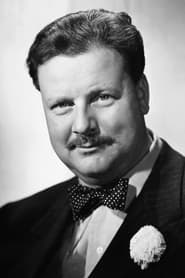
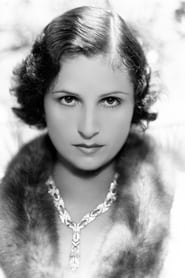
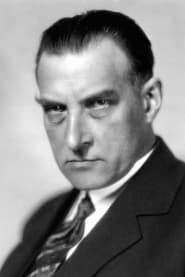
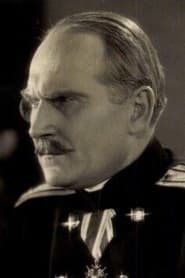

Michael
"Begins at the edge"
Keys: Space play/pause · ←/→ 10s · F fullscreen · M mute · </> speed
About this film
The relationship between a master painter and his longtime model begins to collapse after the former agrees to paint a portrait for a Russian countess.
Cast & crew
More films like this
More Drama films
View all →







More from Carl Theodor Dreyer
View all →

More about this film
About the production
Release date1924-09-26
ProductionSascha-Film, Gotha-Film
Filmed inBerlin, Germany
The film was produced in Germany during the Weimar Republic period, a time of artistic freedom and experimentation. Dreyer, a Danish director working in Germany, brought his distinctive visual style to this German production. The film was shot entirely on studio sets, typical of the period, with elaborate recreations of artist studios and aristocratic interiors.
Themes
Homosexual love and identityArtistic creation and inspirationBetrayal and abandonmentAge and mortalityThe commercialization of art
Themes & topics
Historical background
Made in its country of production around 1924, Michael belongs to the late silent period. Its story of the relationship between a master painter and his longtime model begins to collapse after the former agrees to paint a portrait for a russian countess spoke to audiences of the day through familiar genres and topical settings.
Why this film matters
Archivists and historians still cite Michael when tracing how the late silent period filmmakers staged relationship and master on screen.
Making of
Carl Theodor Dreyer approached the material with remarkable sensitivity for its time, treating the homosexual relationship between Zoret and Michael with dignity and depth rather than sensationalism. The casting of Walter Slezak as Michael was particularly inspired, as his youthful energy and charisma made the character's betrayal all the more poignant. The film's production coincided with the height of the Weimar Republic's cultural golden age, when Berlin was a haven for artistic experimentation and sexual liberation. Dreyer worked closely with cinematographer Karl Freund to create a visual language that emphasized the emotional isolation of the characters, using shadows and composition to reflect their psychological states. The elaborate studio sets were designed to contrast the bohemian world of the artist with the aristocratic opulence of the countess, visually representing Michael's divided loyalties.
What critics said
Reviews from 1924 weighed Michael on pacing, performance, and novelty. Later criticism reads its emphasis on relationship, master, painter through modern standards of craft and representation.
Did you know?
- The film is considered one of the earliest sympathetic portrayals of homosexual love in cinema history
- It was based on the novel 'Mikaël' by Danish author Herman Bang from 1904
- The film was remade in 1916 by director Mauritz Stiller, but Dreyer's version is considered superior
- Walter Slezak, who played Michael, was the son of opera singer Leo Slezak
- The film's original German title was 'Michael'
- Despite its controversial subject matter, the film passed censorship in Germany due to its artistic merit
- Dreyer considered this one of his lesser works, though it's now regarded as a masterpiece
- The painting scenes were authentically recreated with actual artists consulting on set
- The film was thought lost for decades before a print was discovered in the 1960s
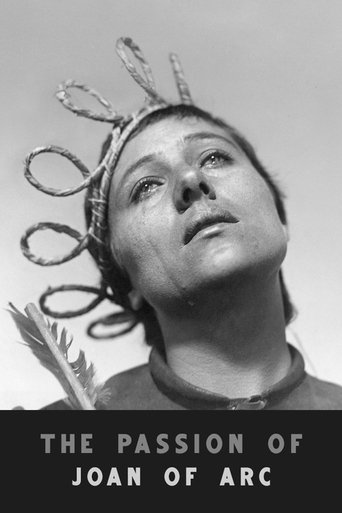
- It was one of the last films Dreyer made before his acclaimed 'The Passion of Joan of Arc'
Visual style
The cinematography by Karl Freund employs sophisticated lighting techniques to create emotional depth and psychological insight. Freund uses chiaroscuro effects to emphasize the isolation of characters, particularly in scenes depicting Zoret's loneliness after Michael's departure. The camera work is notably restrained compared to the expressionistic style common in German cinema of the period, instead favoring more naturalistic compositions that serve the story's emotional realism. The film makes effective use of close-ups to capture subtle emotional shifts, particularly in the faces of the three main characters. The visual contrast between the painter's studio and the countess's luxurious surroundings reinforces the film's thematic concerns about art versus commerce and genuine affection versus social climbing.
Innovations
Michael demonstrated advanced technical achievements in its use of lighting and composition for psychological effect. The film's use of shadow to represent emotional states was particularly innovative for its time. The production design created convincing artistic environments, with the painter's studio filled with authentic-looking artworks and materials. The film's editing technique, while conventional by modern standards, was sophisticated for 1924, effectively pacing the emotional development of the story. The makeup and aging effects on Benjamin Christensen as Zoret were remarkably convincing for the period. The film's preservation and restoration have also involved significant technical achievements in recovering and enhancing the surviving film elements.
Music
As a silent film, Michael would have been accompanied by live musical performance during its original theatrical run. The specific scores used have not been documented, but they likely consisted of classical pieces adapted to suit the film's emotional arc. Modern restorations have been accompanied by newly composed scores, most notably a 2012 version by composer Stephen Horne that emphasizes the film's romantic and tragic elements. The original intertitles, written by Dreyer himself, were minimal but poetic, allowing the visual storytelling to carry the narrative weight. The film's sound design, in the context of silent cinema, relied on musical cues to underscore emotional moments and dramatic transitions.
Famous quotes
Art is the only thing that never betrays us." - Claude Zoret
Youth is a cruel gift that ages so quickly." - Intertitle
In every masterpiece, there is a piece of the artist's soul." - Intertitle
Love that is bought is never love at all." - Intertitle
Memorable scenes
- The opening sequence showing Zoret and Michael working together in the studio, establishing their intimate creative bond
- The first meeting between Michael and Countess Zamikoff at the art exhibition, where their mutual attraction becomes evident
- The heartbreaking scene where Zoret discovers Michael has been stealing from him to support the countess
- The final sequence where the dying Zoret paints his last portrait of Michael from memory
- The devastating moment when Michael returns to find Zoret dead and realizes the magnitude of his betrayal
What audiences thought
Contemporary audience reception to Michael was mixed but generally positive, particularly among the artistic and intellectual circles of Berlin. The film attracted viewers interested in its sophisticated treatment of adult themes and its artistic pedigree. Some audience members were reportedly uncomfortable with the explicit depiction of homosexual love, though the film's artistic merit helped deflect harsh criticism. The film performed moderately well in major German cities but had limited international distribution due to its controversial subject matter. In modern times, as the film has become more accessible through restorations and screenings at film festivals and cinematheques, it has found appreciative audiences who recognize its historical importance and artistic achievement. Today's viewers often express surprise at how progressive and emotionally resonant the film remains nearly a century after its creation.
Film connections
Influenced by
- Herman Bang's novel 'Mikaël'
- German psychological realism
- Weimar Republic cinema
- Scandinavian literary tradition
- European art history
This film influenced
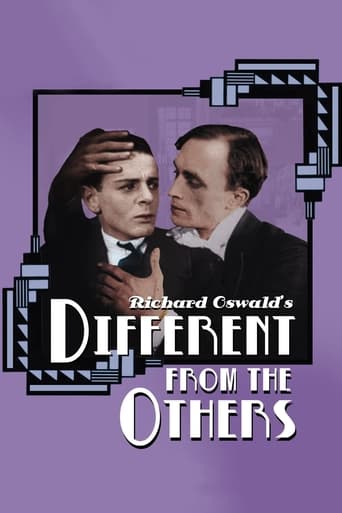
- Different from the Others (1919)
- All That Heaven Allows (1955)
- Death in Venice (1971)
- Maurice (1987)
- The Bridegroom (2013)
Film restoration
The film was believed lost for many years until a print was discovered in the 1960s. The surviving version is incomplete but largely intact. A restoration was undertaken by the Danish Film Institute in the 1990s, which has preserved the film for modern audiences. The restoration has been screened at various film festivals and cinematheques, ensuring this important work remains accessible. While some footage may still be missing, the preserved version captures the essential narrative and artistic vision of Dreyer's original.
Where to watch
- The Criterion Collection
- Mubi streaming service
- The Danish Film Institute's streaming platform
- Various film festival screenings
- Select cinematheques and art house theaters