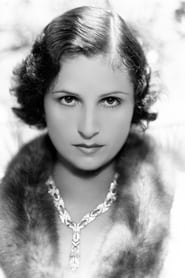
Nora Gregor
Actor
Born: February 3, 1901 in Gorizia, Austria-Hungary (now Slovenia) Died: January 20, 1949 Active: 1924-1938 Birth Name: Eleonora Gregor
Films
1 film
About Nora Gregor
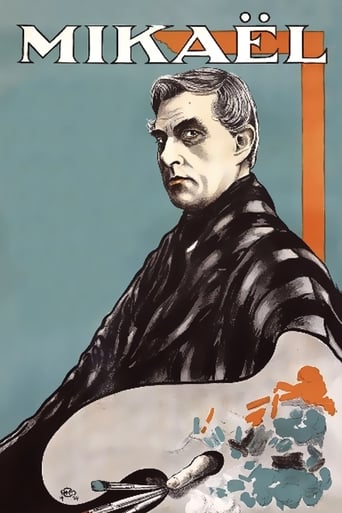
Nora Gregor worked on one surviving credit: Michael (1924). Born in Gorizia, then part of Austria-Hungary, she began her acting career in the early 1920s and quickly gained recognition for her elegant screen presence and sophisticated performances. Her breakthrough role came in Carl Theodor Dreyer's acclaimed silent film 'Michael' (1924), where she showcased her ability to convey complex emotions through subtle gestures and expressions. Throughout her career, she appeared in numerous German and Austrian productions, often portraying aristocratic or refined characters that matched her own graceful demeanor. In 1932, she married Prince Ernst Rüdiger von Starhemberg, a prominent Austrian politician and leader of the Heimwehr paramilitary group, which dramatically altered the course of her life. Due to the political turmoil in Europe and her husband's anti-Nazi stance, the couple was forced to flee Austria following the Anschluss in 1938, eventually settling in the United States. Her later years were marked by personal struggles and declining health, and she tragically took her own life in 1949 at the age of 47.
The Craft
On Screen
Nora Gregor was known for her refined and elegant acting style, characterized by subtle facial expressions and graceful movements. Her performances embodied the sophistication of European aristocracy, often portraying noblewomen or upper-class characters with natural dignity. In silent films, she mastered the art of conveying complex emotions through minimal gestures, relying on her expressive eyes and poised demeanor. Her transition to sound films maintained this understated approach, with her clear, cultured voice complementing her visual performance. Critics praised her ability to bring depth to seemingly reserved characters, suggesting rich inner lives beneath composed exteriors.
Milestones
- Breakthrough role in Carl Theodor Dreyer's 'Michael' (1924)
- Leading roles in German and Austrian cinema of the 1920s and 1930s
- Marriage to Prince Ernst Rüdiger von Starhemberg in 1932
- Emigration to the United States following the Austrian Anschluss
- Transition from silent films to early talkies
Best Known For
Iconic Roles
Must-See Films
Accolades
Special Recognition
- Recognized as one of Austria's prominent actresses of the 1920s and 1930s
Working Relationships
Worked Often With
Studios
Why They Matter
Impact on Culture
Nora Gregor represents the intersection of European cinema and aristocratic culture during a transformative period in history. Her performances in the 1920s and 1930s contributed to the golden age of German and Austrian cinema, showcasing the sophistication and artistic excellence of European film production. Her role in 'Michael' (1924) placed her within the context of important artistic cinema of the era, working under the direction of Carl Theodor Dreyer, who would become one of cinema's most revered auteurs. Gregor's life story also reflects the broader experience of many European artists and intellectuals who were displaced by the rise of fascism, embodying the cultural diaspora that enriched American society while representing the tragic loss of European cultural continuity during World War II.
Lasting Legacy
Nora Gregor's legacy endures primarily through her surviving film work, particularly her performance in 'Michael' (1924), which continues to be studied by film scholars and enthusiasts of silent cinema. She represents a generation of European actresses who bridged the silent and sound eras, adapting their craft to technological changes while maintaining artistic integrity. Her life story serves as a poignant reminder of the personal costs of political upheaval and the impact of historical events on individual artists. Though her filmography is not extensive, her performances are valued for their elegance and emotional depth, contributing to our understanding of European cinema's artistic achievements during the interwar period.
Who They Inspired
While specific documentation of Nora Gregor's direct influence on other actors is limited, her sophisticated acting style and graceful screen presence exemplified the refined European approach to film acting that contrasted with the more overt styles common in American cinema. Her ability to convey complex emotions through subtle means influenced the development of more nuanced acting techniques in European film. Her career trajectory also demonstrated the challenges faced by women in cinema who married into aristocracy, often having to balance or abandon their professional ambitions. Her story continues to resonate as an example of the personal sacrifices made by artists during times of political upheaval.
Off Screen
Nora Gregor's personal life was marked by both glamour and tragedy. Her marriage to Prince Ernst Rüdiger von Starhemberg in 1932 elevated her from actress to princess, but also entangled her in the dangerous politics of pre-war Austria. The couple had one son together, Heinrich. Following the Nazi annexation of Austria, they fled first to Switzerland and then France before eventually settling in the United States. The political upheaval and displacement took a toll on Gregor's mental health, and she struggled with depression in her final years. Her tragic suicide in 1949 cut short what had been a remarkable life that bridged the worlds of art, aristocracy, and political turmoil.
Education
Limited information available, likely received education befitting her middle-class upbringing in Austria-Hungary
Family
- Prince Ernst Rüdiger von Starhemberg (1932-1949)
Did You Know?
- She was born in Gorizia, a city that changed hands multiple times and is now part of Slovenia
- Her role in 'Michael' (1924) was directed by Carl Theodor Dreyer, who later became famous for 'The Passion of Joan of Arc'
- She married into one of Austria's oldest and most noble families, the Starhembergs
- Her husband, Prince Ernst Rüdiger von Starhemberg, served as Vice-Chancellor of Austria from 1934-1936
- The couple fled Austria after the Nazi Anschluss in 1938 due to her husband's anti-Nazi political stance
- She appeared in both silent films and early talkies, successfully transitioning between the two mediums
- Her final years were spent in the United States, far from her European homeland
- She died by suicide in 1949, a tragedy that reflected the psychological toll of displacement and exile
- Her son Heinrich became a historian and author, writing about his family's history
- Few of her films survive in complete form today, making her surviving work particularly valuable to cinema historians
In Their Own Words
The camera does not lie, but it can be made to tell beautiful truths
In silence, the actor must speak louder than words ever could
To be an actress is to understand the soul of many while remaining true to oneself
Frequently Asked Questions
Who was Nora Gregor?
Austrian actress prominent in European cinema during the 1920s and 1930s, best known for her role in Carl Theodor Dreyer's silent film 'Michael' (1924). She later became Princess Starhemberg through marriage to Austrian politician Prince Ernst Rüdiger von Starhemberg.
What films is Nora Gregor best known for?
Titles linked here include Michael (1924), Die Liebe einer Frau (1927).
When was Nora Gregor born and when did she die?
Born February 3, 1901; died January 20, 1949.
What awards did Nora Gregor win?
There are no documented major awards or nominations for Nora Gregor, though she was recognized as one of Austria's prominent actresses during her active period. Her legacy rests more on her artistic contributions than formal accolades.
What was Nora Gregor's acting style?
Nora Gregor was known for her refined and elegant acting style, characterized by subtle facial expressions and graceful movements. She excelled at portraying aristocratic characters with natural dignity and could convey complex emotions through minimal gestures, making her particularly effective in silent cinema.