Bob Burns
Actor
Born: August 2, 1890 in Greenwood, Arkansas, USA Died: February 2, 1956 Active: 1930-1945 Birth Name: Robin William Burn
Films
1 film
About Bob Burns
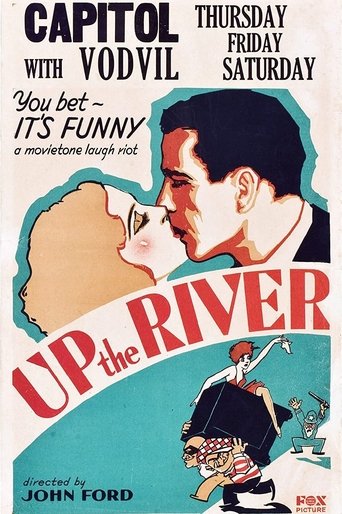
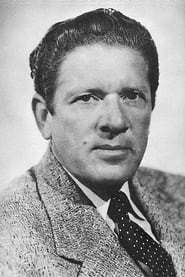
Bob Burns, famously known as 'The Arkansas Traveler,' was a prominent American humorist, radio personality, and film actor who rose to national stardom during the 1930s and 1940s. Born Robin Burn in Greenwood, Arkansas, he spent his youth in Van Buren, where he developed the rustic, homespun persona that would define his career. He is perhaps most historically significant for inventing the 'bazooka,' a novelty musical instrument made from gas pipes and a funnel, which later gave its name to the World War II anti-tank weapon. Burns made his uncredited film debut in the 1930 John Ford comedy 'Up the River,' where he appeared in blackface playing his signature instrument alongside future legends Spencer Tracy and Humphrey Bogart. Throughout the late 1930s, he became a major star for Paramount Pictures, often playing 'hillbilly' characters who possessed a sharp, common-sense wit that resonated with Depression-era audiences. His career was characterized by a deep loyalty to his Southern roots, famously leading him to walk away from a lucrative Paramount contract in 1941 rather than play a role he felt demeaned the people of Arkansas.
The Craft
On Screen
Burns specialized in a 'homespun' and 'rustic' comedic style, characterized by low-key, self-effacing delivery and the use of tall tales about fictional relatives like 'Uncle Fud' and 'Aunt Doody.' He was often compared to Will Rogers for his ability to blend gentle satire with common-sense philosophy.
Milestones
- Invented the 'bazooka' musical instrument at age 13 in a Van Buren plumbing shop.
- Served as a Marine Corps sergeant and jazz band leader in Europe during World War I.
- Made his film debut in John Ford's 'Up the River' (1930).
- Became a national radio sensation on Paul Whiteman's 'Kraft Music Hall' in 1935.
- Served as the host of the 10th Academy Awards in 1938.
- Starred in his own long-running radio programs 'The Arkansas Traveler' and 'The Bob Burns Show'.
- Walked away from Paramount Pictures in 1941 to protect the image of rural Southerners.
Best Known For
Iconic Roles
Must-See Films
Accolades
Won
- Hollywood Walk of Fame Star (6548 Hollywood Blvd) - Awarded February 8, 1960 (Posthumous)
Special Recognition
- Host of the 10th Academy Awards (1938)
- Inducted into the Arkansas Entertainers Hall of Fame
- His childhood home in Van Buren is listed on the National Register of Historic Places
Working Relationships
Worked Often With
Studios
Why They Matter
Impact on Culture
Bob Burns had a profound impact on American vernacular; his invention and naming of the 'bazooka' provided the permanent name for the military's shoulder-fired rocket launcher. He was a pivotal figure in the 'hillbilly' humor movement of the 1930s, helping to transition rural folk humor from vaudeville to the mass media of radio and film. His refusal to play derogatory stereotypes helped shift the portrayal of rural Americans in Hollywood toward more dignified, if still comedic, representations.
Lasting Legacy
Burns is remembered as a bridge between the folk traditions of the 19th-century 'Arkansas Traveler' and modern mass-media comedy. He remains a folk hero in Arkansas, where his legacy is preserved through historical landmarks and his contributions to the 'Golden Age of Radio.' His influence is still felt in the 'country' comedy genre and the linguistic history of the 20th century.
Who They Inspired
He influenced a generation of 'rube' comedians and was a contemporary peer to Will Rogers, helping establish the 'philosopher-humorist' archetype in American entertainment.
Off Screen
Burns was married twice. His first marriage was to Elizabeth Anna Fisher in 1921, with whom he had one son; she passed away in 1936. In 1939, he married his longtime secretary, Harriet M. Foster, and the couple had three children. In his later years, he became a wealthy landowner through savvy real estate investments in the San Fernando Valley.
Education
Attended local schools in Van Buren, Arkansas; largely self-taught musician.
Family
- Elizabeth Anna Fisher (1921-1936; her death)
- Harriet M. Foster (1939-1956; his death)
Did You Know?
- The military 'bazooka' was named by soldiers because of its physical resemblance to Bob's musical instrument.
- He was the first person to host the Academy Awards when they were postponed due to a natural disaster (the 1938 Los Angeles floods).
- He was a skilled trombonist and cornetist before inventing his own instrument.
- His 'bazooka' was made from two pieces of gas pipe and a whiskey funnel.
- He wrote a syndicated newspaper column titled 'Well, I'll Tell You' for 240 newspapers.
- He was an extremely successful land investor, owning a 200-acre model farm in Canoga Park.
- In 'Up the River,' he appeared in blackface, a common but controversial vaudeville practice of the era.
In Their Own Words
I'm just a hillbilly from Van Buren, Arkansas, and I've got a lot of kinfolks.
The bazooka is a musical instrument that sounds like a wounded moose.
Frequently Asked Questions
Who was Bob Burns?
Famous American radio and film comedian of the 1930s and 40s, known as 'The Arkansas Traveler.' He was celebrated for his homespun humor and his invention of a musical instrument called the bazooka.
What films is Bob Burns best known for?
Titles linked here include Up the River (1930), Rhythm on the Range (1936).
When was Bob Burns born and when did they die?
Born August 2, 1890; died February 2, 1956.
What awards did Bob Burns win?
While he did not win an Oscar, he had the honor of hosting the 10th Academy Awards in 1938 and was posthumously awarded a star on the Hollywood Walk of Fame.
What was Bob Burns's acting style?
His style was 'homespun humor,' relying on slow-paced storytelling, tall tales about his fictional relatives, and a gentle, common-sense wit that appealed to everyday Americans.