

Up the River
"Prison baseball and a daring escape"
Keys: Space play/pause · ←/→ 10s · F fullscreen · M mute · </> speed
About this film
Daily life at men and women's prison units where baseball and the marching band are serious business. Two prisoners escape in order to help paroled Steve from being blackmailed by his girlfriend's ex-partner-in-crime.
Cast & crew
More films like this
More Comedy films
View all →







More from John Ford
View all →

More about this film
About the production
Release dateOctober 10, 1930
BudgetApproximately $400,000
Box officeEstimated $1.2 million (Domestic)
ProductionFox Film Corporation
Filmed inFox Hills Studio, Los Angeles, California, Sing Sing Correctional Facility, Ossining, New York (Exterior reference shots)
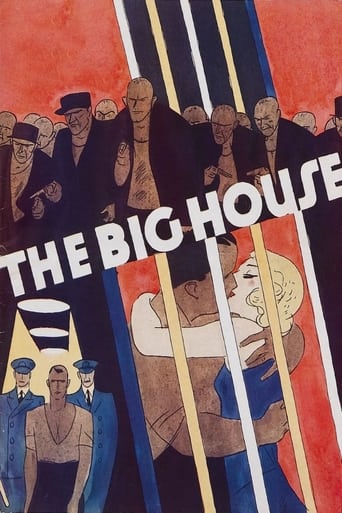
The film was famously shot in just over two weeks to accommodate Spencer Tracy's limited leave of absence from his Broadway play, 'The Last Mile.' Originally conceived as a gritty, realistic prison drama in the vein of MGM's 'The Big House,' director John Ford decided to pivot to a comedy after seeing the success of the rival studio's serious take. Ford brought in veteran actor and writer William Collier Sr. to help rewrite the script on the fly, injecting the humorous banter and satirical tone that defined the final product. The production was also notable for being one of the first to utilize a mobile camera on a crane for prison yard scenes, a technique Ford was experimenting with during the early sound era.
Themes
Themes & topics
prison escapebaseballblackmailmarching bandpre-codewrongful convictioncon man
Historical background
Made in 1930, Up the River reflects production norms of the studio-system peak and early sound decades—shorter runtimes, regional audiences, and limited preservation infrastructure.
Why this film matters
Historians reference Up the River (1930) when discussing 1930 film by John Ford.
Making of
The production of 'Up the River' was a chaotic but creative environment. John Ford, known for his efficiency, reportedly ignored much of the original script by Maurine Dallas Watkins, calling it 'junk.' He worked closely with William Collier Sr. to improvise scenes and dialogue that emphasized the camaraderie between the prisoners. Spencer Tracy, who was still a stage actor at the time, was initially nervous about the transition to film, but Ford's relaxed directing style helped him develop the naturalistic acting method that would later make him a legend. Humphrey Bogart, conversely, was cast as a 'nice boy' type, which is a stark contrast to the hard-boiled noir personas he would adopt later in his career. The crew had to work around the technical limitations of early sound recording, which often required hiding microphones in props like flower pots or prison bars.
What critics said
Where contemporary reviews survive, Up the River is discussed in terms of audience appeal at release; later criticism often reframes it through archive restoration and festival programming.
Did you know?
- This film marks the feature film debut of both Spencer Tracy and Humphrey Bogart.
- It is the only film in which Spencer Tracy and Humphrey Bogart ever appeared together.
- Humphrey Bogart is billed fourth in the credits, despite playing the romantic lead.
- The title 'Up the River' was a common 1930s slang term for being sent to Sing Sing prison, which is located up the Hudson River from New York City.
- Director John Ford discovered Spencer Tracy after seeing him perform in the Broadway play 'The Last Mile' and insisted on casting him despite studio reservations about his 'photogenic' qualities.
- The film features Joan Lawes, the real-life daughter of Lewis E. Lawes, who was the warden of Sing Sing at the time.
- Ward Bond, a staple of John Ford's later 'Stock Company,' appears in an uncredited role as an inmate.
- The film was remade by 20th Century Fox in 1938, starring Preston Foster and Tony Martin.
- Spencer Tracy and Humphrey Bogart were supposed to reunite for 'The Desperate Hours' (1955), but the project fell through because neither would agree to take second billing.
- The film's transition from drama to comedy was so abrupt that some promotional materials still hinted at a serious crime story.
Awards & recognition
- National Board of Review (1930) - Included in the Year-End 'Top Pictures' list
Visual style
The cinematography by Joseph H. August is notable for its early use of deep focus and fluid camera movements in the prison yard. August, who would become a frequent collaborator of Ford's, used high-contrast lighting to give the prison interiors a sense of depth, despite the film's comedic tone. The use of real locations for some exterior shots added a layer of authenticity that was rare for the period.
Innovations
The film is cited for its early experimentation with sound synchronization in large outdoor spaces, specifically during the baseball game sequences. It also utilized some of the earliest examples of 'process photography' (rear projection) for the escape scenes involving automobiles.
Music
The film features a mix of diegetic music provided by the prison marching band and the prison choir. Notable songs include 'The St. Louis Blues,' played on a 'bazooka' (a musical pipe) by Bob Burns, and various traditional marches. The music is used to underscore the 'community' aspect of the prison, a recurring theme in John Ford's work.
Famous quotes
St. Louis: 'Look at this, a roadster. And the gang promised me a limousine with a chauffeur.'
Dannemora Dan: 'Verily I say to you, the wages of sin is a punch in the jaw!'
St. Louis: 'I hate country prisons. The food is bad and the wardens are unsociable.'
Judy: 'I told fortunes... and then I'd recommend certain oil stocks.'
St. Louis: 'We'll be back in time for the big game. Somebody's got to pitch!'
Memorable scenes
- The opening escape scene where St. Louis tricks Dan into checking a tire and then drives off, leaving him behind.
- The 'meet cute' between Bogart and Luce, where they talk through a prison gate while facing away from each other to avoid being caught 'fraternizing.'
- The final baseball game sequence where the escaped convicts sneak back into the prison just to play for their team.
- The scene where St. Louis and Dan attempt to tell a riddle to the warden's young daughter, only for her to repeatedly spoil the punchline.
- The prison choir sequence where the camera pans across the faces of all the inmates, a classic Fordian touch of humanity.
What audiences thought
The film was a significant box office success for Fox Film Corporation, proving popular with Depression-era audiences who enjoyed the escapist humor and the relatable 'everyman' quality of Spencer Tracy. It was particularly well-received in urban centers where the prison slang and baseball themes struck a chord with the working class.
Film connections
Influenced by
- The Big House (1930)
- The Last Mile (Stage Play)
- Chicago (Maurine Dallas Watkins play)
This film influenced
- Stalag 17 (1953)
- The Shawshank Redemption (1994) - for its themes of prison camaraderie
- O Brother, Where Art Thou? (2000)
Film restoration
The film is preserved but exists primarily in a worn exhibition print that has been used for most modern releases, including the 'Ford at Fox' DVD collection. It has undergone basic digital restoration, though some splices and missing frames remain visible.
Where to watch
- Available on DVD (Ford at Fox Collection)
- Streaming on Fandango at Home (Vudu)
- Occasionally aired on Turner Classic Movies (TCM)