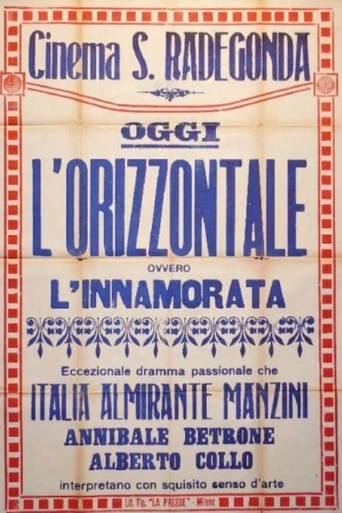
Franz Sala
Actor
- Active
- 1920-1920
Films 1
About Franz Sala
Franz Sala was an Italian silent-era actor whose surviving filmography places him among the many performers active in the flourishing Italian screen industry of the late 1910s and early 1920s. He is credited in the 1920 film L'innamorata, but beyond that title, readily verifiable biographical information about his life remains scarce in standard reference sources. Because his documented screen activity is limited and film records from the period are often incomplete, he is best understood as a minor or supporting figure in early Italian cinema rather than as a widely documented star. His career belongs to the transitional period when Italian studios were producing historical spectacles, melodramas, and romantic vehicles for both domestic audiences and international export. Like many actors of the silent era, his work would have relied on expressive physical performance, facial emotion, and gesture rather than spoken dialogue. No reliable sources currently confirm his birth and death dates, family background, education, or later life, which is common for lesser-documented performers from the silent period. Even with sparse surviving details, his credited appearance in a feature from 1920 makes him part of the historical record of Italy's early film industry.
More about Franz Sala
On screen
No detailed contemporary criticism of Franz Sala's acting style is readily available in standard reference sources. As a silent-era performer, his screen work would have depended on expressive facial movements, body language, and broad emotional clarity to communicate character and narrative. Actors in Italian silent melodramas often balanced restraint with heightened feeling, and Sala's credited work likely followed that general performance mode. Because only limited film documentation survives, any more specific description would be speculative.
In film history
Franz Sala's cultural impact is primarily archival rather than star-driven: he represents the generation of silent-film performers whose names survive in cast lists even when fuller biographies have been lost or never thoroughly recorded. His presence in L'innamorata (1920) places him within the Italian silent cinema ecosystem that helped define early screen melodrama and romantic storytelling in Europe. Although he is not known as a major celebrity, actors like Sala were essential to the functioning of the industry, lending face, body, and emotional legibility to films that depended on visual performance. In a broader sense, his surviving credit helps historians reconstruct the personnel and production networks of early Italian cinema.
Later reputation
Franz Sala's legacy is modest but meaningful within film history because it preserves evidence of a working actor from the silent era whose career was part of the foundation of Italian cinema. He does not appear to have left behind a widely documented star persona, but his credit in a 1920 feature contributes to the larger historical record used by scholars and archivists. For modern databases and historians, such names matter because they help map cast associations, production practices, and the scope of the silent film workforce. His legacy therefore lies in documentation and historical presence rather than in enduring celebrity.
Influence
There is no clear evidence that Franz Sala directly mentored other performers or exerted a major documented influence on later actors or directors. His influence, if any, would have been indirect, as part of the collective performance tradition of silent Italian cinema. Actors of his era helped establish the visual conventions later performers inherited, especially the disciplined use of gesture and facial expression in nonverbal storytelling. In that sense, his contribution belongs to the broader evolution of screen acting rather than to an individually traceable school of performance.
Off screen
No reliable biographical record has been found in standard film references regarding Franz Sala's personal life, including marriages, children, or later activities. This lack of information is not unusual for silent-era supporting actors, many of whom left only fragmentary archival traces. At present, his family background, private relationships, and post-screen career, if any, remain undocumented in accessible sources. Any attempt to describe his personal life in detail would be speculative.
Credits
- Credited appearance in the silent film L'innamorata (1920)
- Participation in the early Italian silent cinema era during a period of strong domestic film production
- Association with the expressive performance traditions required of silent-screen acting
- Representation of the many lesser-documented performers whose work helped build Italy's silent film heritage
Roles
- Role in L'innamorata (1920)
Films
- L'innamorata (1920)
Notes
- Franz Sala is documented as appearing in L'innamorata (1920), which is the main surviving reference point for his film career.
- He is associated with the silent-film era, when actors had to convey emotion visually without synchronized dialogue.
- Standard reference sources do not readily provide his birth and death details, which is common for many lesser-known silent-era performers.
- His surviving record suggests he was active in Italian cinema at a time when the industry was still recovering and reshaping itself after World War I.
- Because his filmography is so limited in accessible databases, he is often encountered by researchers only through cast listings rather than through extensive biographies.
- His name appears in the historical record primarily as a cast credit, underscoring how many early film workers remain partially documented.
- He is a useful example of how archival gaps can obscure the careers of otherwise real and contributing film professionals from the silent period.
Questions
Who was Franz Sala?
Franz Sala was an Italian silent-era actor best known today for being credited in L'innamorata (1920). He appears to have been a working performer in early Italian cinema, though surviving biographical details about his life are very limited.
What films is Franz Sala best known for?
The main film currently associated with Franz Sala is L'innamorata (1920). Because accessible film records are sparse, this title is the clearest surviving anchor for his screen career.
When was Franz Sala born and when did he die?
At present, reliable published sources do not provide verified birth or death dates for Franz Sala. His personal chronology remains undocumented in the standard references available for many silent-era supporting players.
What awards did Franz Sala win?
No awards or formal nominations are currently documented for Franz Sala in the available references. This is not unusual for many early silent-film actors whose careers were not covered by later awards systems or extensive press records.
What was Franz Sala's acting style?
As a silent-film actor, Franz Sala would have relied on expressive gesture, facial emotion, and physical clarity to communicate character and feeling. No detailed criticism of his individual style survives in readily accessible sources, so any more specific description would be speculative.
What is Franz Sala's legacy in film history?
Franz Sala's legacy lies in his place within the historical record of Italian silent cinema. Even though he is not a widely documented star, his credit helps preserve the cast history of early films and the broader development of screen acting in the silent era.