Also available on: Archive.org
L'innamorata

L'innamorata

1920 Italy
Desire and seductionJealousy and betrayalMoral downfallFemale agency and dangerous charismaModernity versus emotion

Plot

Mara Flores, an alluring and socially commanding woman, becomes fixated on Carlo, a disciplined electrical engineer who oversees a power plant and initially resists her advances. When Carlo refuses to be drawn into her orbit, Mara redirects her attention to his impulsive friend Franco, who is also Carlo’s future brother-in-law. Franco quickly falls under her spell and abandons caution, and his involvement with Mara leads him toward emotional ruin and an untimely death. Only after witnessing the destructive consequences of Mara’s allure does Carlo finally begin to succumb to her, but by then the relationship has become fatally entangled in passion, jealousy, and doom. The film unfolds as a melodramatic study of seduction and moral collapse, ending without any promise of a happy resolution.

About the Production

Release Date 1920
Production Itala Film

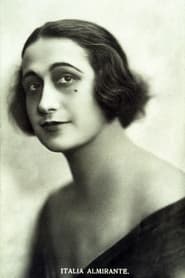
L'innamorata is an Italian silent melodrama from the late silent era, made at a time when Italy was still producing prestige features built around star performers and heightened emotional narrative. The film is closely associated with Italia Almirante-Manzini, one of the great divas of Italian silent cinema, and was tailored to showcase her screen presence as a glamorous but dangerous femme fatale figure. As with many Italian productions of the period, exact budgetary records, shooting locations, and detailed production logistics are not readily documented in surviving public sources. The film’s survival and circulation history is also not well documented in mainstream English-language reference material, which makes it typical of many 1920s Italian films whose reputations rest largely on cast, plot summaries, and archival references rather than complete production paperwork.

Historical Background

L'innamorata was made in 1920, a transitional period for Italian cinema. Italy had been a leading force in world filmmaking before World War I, especially in historical spectacles and diva melodramas, but the industry was now adjusting to postwar economic pressures, changing audience tastes, and intensified international competition, particularly from Hollywood. Silent melodramas like this one remained important because they could capitalize on star charisma and emotionally direct storytelling without relying on language-specific dialogue. The film also reflects an era fascinated by modernity and industrial progress, as suggested by the engineering and powerplant setting, even while the narrative is driven by very old-fashioned themes of desire, jealousy, and tragedy. In that sense, it sits at the intersection of modern industrial imagery and late Romantic melodrama, capturing a distinctive moment in early twentieth-century European screen culture.

Why This Film Matters

The film is significant primarily as part of the Italian silent diva tradition and as an example of how female stardom shaped early European cinema. Italia Almirante-Manzini’s performance persona embodied the glamorous, emotionally forceful woman whose desires command the narrative, a figure that influenced how audiences perceived female agency on screen. Even where the film itself is less well known than major masterpieces of the era, it contributes to the historical record of Italian melodrama and the development of screen archetypes later reused in international cinema. Its value to film history also lies in preserving evidence of Gennaro Righelli’s early work and of the industrial ecosystem of Italian studio filmmaking before the sound era consolidated new production patterns.

Making Of

Very little granular behind-the-scenes documentation survives in widely accessible sources for L'innamorata, but the film clearly belongs to the Italian diva tradition that depended on carefully calibrated star performance, luxurious styling, and emotionally charged tableaux. Italia Almirante-Manzini was a major attraction for audiences, and productions built around her typically emphasized expressive gestures, striking costuming, and highly legible emotional conflict suited to silent storytelling. Gennaro Righelli, who directed many films in Italy and later worked internationally, was part of the professional studio system that helped sustain Italian feature filmmaking after the First World War. Like many productions of its era, the film was likely staged with an emphasis on strong visual composition and performance rather than elaborate location realism, though specific shooting details have not been securely preserved in the usual reference literature.

Visual Style

The film likely uses the visual vocabulary typical of Italian silent melodrama: composed tableaux, careful attention to gesture, expressive close framing where appropriate, and costumes and set design that reinforce character psychology. The industrial setting offers a visual contrast between modern technology and the highly theatrical emotional world of the characters. Silent-era Italian cinematography often favored elegant staging and clear spatial relationships so that narrative turns could be understood without intertitles dominating the experience. While specific shot-by-shot techniques are not widely documented, the film’s dramatic premise suggests strong reliance on visual signaling of seduction, tension, and downfall.

Innovations

No specific technical innovations are widely credited to the film in surviving reference sources. Its primary achievement is historical and stylistic rather than technological: it exemplifies the polished studio melodrama of Italian silent cinema and the diva vehicle format. The use of an industrial powerplant setting may have offered visually distinctive modern backdrops, but there is no documentation of exceptional special effects or new camerawork methods. The film’s significance lies more in performance style, production design, and narrative construction than in technical novelty.

Music

As a 1920 silent film, L'innamorata did not have a synchronized recorded soundtrack. Like most films of the period, it would originally have been accompanied in theaters by live music, which could range from a solo pianist to a small ensemble depending on the venue. No standardized surviving score is widely documented in the available reference record. Any modern presentation would therefore depend on a later archival or commissioned accompaniment, if available.

Memorable Scenes

  • Mara Flores first focuses her attention on Carlo, establishing the film’s central seduction dynamic and her power over the men around her.
  • The shift of Mara’s attention from Carlo to Franco dramatizes the film’s cruel emotional logic and sets the tragedy in motion.
  • Franco’s collapse under Mara’s influence serves as the story’s tragic pivot, showing the destructive consequences of passion unchecked by restraint.
  • The final entanglement between Carlo and Mara closes the narrative in a mood of doomed inevitability, consistent with silent melodrama’s fatalistic endings.

Did You Know?

  • Italia Almirante-Manzini was one of the most celebrated Italian silent-film stars, and this film is frequently discussed in relation to her diva persona and screen image.
  • The story centers on a classic silent-era femme fatale who destabilizes male characters through desire, jealousy, and social power.
  • Gennaro Righelli was a prolific Italian director who worked across the silent and sound eras, and this film belongs to his early feature output.
  • The film is part of the wave of Italian melodramas that relied on intense emotions, moral consequences, and aristocratic or bourgeois settings.
  • Because it is a silent film from 1920, any original music accompaniment would have varied from venue to venue rather than existing as a fixed soundtrack.
  • The plot’s emphasis on an engineer and a powerplant gives the film an unusual modern-industrial backdrop compared with many contemporary costume melodramas.
  • Annibale Betrone and Alfonso Cassini appear among the credited cast, linking the film to the broader network of Italian stage and screen performers of the era.
  • Surviving information about the film is comparatively sparse, which is common for many Italian silent features that have not been widely distributed in modern editions.
  • Its fatalistic romantic structure is characteristic of diva films, where female desire is depicted as both irresistible and destructive.
  • The title translates roughly as 'The Woman in Love,' though the plot treatment is far darker and more tragic than the title might imply.

What Critics Said

Contemporary critical response is not well preserved in the readily available record, and there is no widely cited body of English-language review material comparable to that of more famous international silent classics. Among modern historians, the film is generally treated as a representative diva melodrama and as a vehicle for Italia Almirante-Manzini rather than as a canonical masterpiece. Its reputation today depends more on archival scholarship, cast interest, and its place within Italian silent cinema than on a large body of extant criticism. Where discussed, it is typically appreciated for the star-centered intensity and the social-moral melodrama that were hallmarks of the period.

What Audiences Thought

Specific box-office data and audience surveys are not known, so direct measurement of its reception is unavailable. Given the star power of Italia Almirante-Manzini and the popularity of melodramatic cinema in Italy at the time, it was likely intended for a broad urban audience that valued emotional spectacle and recognizable performers. As with many silent-era releases, reception would have varied by city, theater, and accompanying live music. Today, audience interest is mostly historical, attracting classic-film enthusiasts, silent-cinema scholars, and viewers interested in Italian diva films.

Film Connections

Influenced By

  • Italian diva melodramas of the 1910s and early 1920s
  • Stage melodrama traditions emphasizing moral conflict and heightened emotion
  • Earlier European femme fatale narratives in literature and theater
  • The star persona of Italia Almirante-Manzini

This Film Influenced

  • Later Italian melodramas centered on destructive passion and glamorous female leads
  • Silent-era femme fatale stories in European cinema
  • Post-silent romantic tragedies that combine eroticism with fatalism

Film Restoration

The film is not widely documented in modern circulation, and no mainstream archival consensus is easily verifiable from public reference material. It appears to survive at least as a catalogued historic film record, but a definitive public-facing preservation status, restoration history, or complete accessibility in major streaming or home-video channels is not clearly established in the commonly available sources. In practical terms, it should be treated as a rare silent-era title with limited availability rather than a routinely accessible repertory staple.

Themes & Topics