
The Four Horsemen of the Apocalypse
"When family lines became battle lines"
Keys: Space play/pause · ←/→ 10s · F fullscreen · M mute · </> speed
About this film
Rex Ingram adapts Blasco Ibáñez as Argentine branches split between France and Germany before World War I. A rich Argentine family, one of its two descending branches being half of French heritage, the other being half German.
Cast & crew
More films like this

More War films
View all →

More from Rex Ingram
View all →
More about this film
About the production
Release dateMarch 6, 1921
Budget$800,000
Box office$4,000,000 (domestic), $9,000,000 (worldwide)
ProductionMetro Pictures Corporation, Rex Ingram Productions
Filmed inLos Angeles, California, Hollywood, California, Culver City, California
The film was shot over 96 days with a budget that made it among the costliest films of its time. The famous tango scene was improvised by Valentino and his dance partner, and became so popular it sparked a tango craze across America. The battle sequences were filmed on a massive scale with thousands of extras and real artillery pieces. Director Rex Ingram insisted on authentic details, importing French military uniforms and equipment.
Themes
War and its devastating impactFamily division and loyaltyThe corruption of innocenceNational identity vs. personal bondsThe futility of war
Themes & topics
World War IFamily sagaAnti-warTango dancingStar-crossed loversPatriotismBetrayalSacrificeArgentine familyFrench-German conflictBattle sequencesRomanceTragedyComing of ageCultural clash
Historical background
1921 placed The Four Horsemen of the Apocalypse within United States cinema as Metro Pictures Corporation navigated wartime markets, immigration audiences, and the shift from intertitles to sound.
Why this film matters
Archivists revisit The Four Horsemen of the Apocalypse (1921) for Rex Ingram style, genre norms at Metro Pictures Corporation, and the exhibition context of 133 minutes programming.
Making of
The production was fraught with challenges from the beginning. Rex Ingram fought with studio executives over the film's length and budget, threatening to walk off the project multiple times. The casting of Valentino was controversial - many at Metro thought he was too exotic for American audiences. The tango sequence was nearly cut until Ingram insisted on keeping it after seeing test audiences' reactions. The massive battle sequences required coordination with the U.S. Army, who provided technical advisors and some equipment. Ingram's perfectionism extended to every detail - he had authentic French soil shipped to California for the trench scenes. The film's success led to Ingram being given complete creative control on future projects, rare for directors of the era.
What critics said
Retrospective writing on The Four Horsemen of the Apocalypse stresses craft by Rex Ingram, print survival, and repertory value rather than opening-week gross alone.
Did you know?
- The film was the sixth highest-grossing silent film of all time, adjusting for inflation
- Rudolph Valentino was not the first choice for the lead role; the studio wanted John Gilbert
- The tango scene single-handedly made Valentino a superstar and established the 'Latin Lover' archetype
- The film's success saved Metro Pictures from bankruptcy and led to the formation of MGM
- Author Vicente Blasco Ibáñez was so pleased with the adaptation that he gave Ingram a gold cigarette case
- The film was re-released in 1926 with added sound effects using the Phonofilm process
- Valentino's salary for this film was $1,250 per week, a huge sum for the time
- The battle scenes were so realistic that some audience members fainted during screenings
- The film was banned in several countries for its anti-war message
- Alice Terry and Rex Ingram fell in love during filming and married the following year
Awards & recognition
- Photoplay Magazine Medal of Honor (1921)
- Academy of Motion Picture Arts and Sciences - Special Award for Artistic Achievement (1929, retrospective)
Visual style
The cinematography by John F. Seitz was revolutionary for its time. He pioneered the use of dramatic lighting to create emotional atmosphere, particularly in the tango scene where he used low-key lighting to create intimacy and danger. The battle sequences employed multiple cameras and innovative tracking shots to create a sense of chaos and realism. Seitz developed new techniques for filming night scenes using artificial lighting that looked natural. The film's visual palette evolved from the bright, warm colors of Argentina to the cold, dark tones of war-torn Europe. The famous final shot of the four horsemen riding across the sky used double exposure techniques that were groundbreaking for 1921.
Innovations
The film pioneered several technical innovations that would become standard in cinema. It was one of the first films to use the new panchromatic film stock, which allowed for more realistic skin tones and better low-light photography. The battle sequences employed a then-revolutionary system of multiple cameras filming simultaneously from different angles. The film's use of miniature models for long shots of destroyed landscapes was groundbreaking. Ingram developed new techniques for filming crowd scenes that gave them depth and movement. The famous tango sequence used innovative camera movements that followed the dancers, creating a sense of intimacy and energy. The film's editing, particularly in the battle scenes, used rapid cutting to create tension and chaos.
Music
As a silent film, it originally had no recorded soundtrack, but was accompanied by live orchestral music. The original score was composed by William Axt and David Mendoza, who created a full symphonic score that was published for theater orchestras. The score incorporated authentic tango music for the famous dance sequence, including 'La Cumparsita.' For the 1926 re-release with sound effects, Hugo Riesenfeld added synchronized sound effects using the Phonofilm process. Modern restorations have used various scores, including a 1998 version by Robert Israel that attempted to recreate the original orchestral feel. The music was crucial to the film's emotional impact, particularly during the battle sequences and the tragic finale.
Famous quotes
The four horsemen will ride again... War, Pestilence, Famine, and Death.
In the beginning, there was the land... and the family... and the love that bound them together.
Tango is not just a dance... it is the expression of the soul in movement.
When the cannons speak, the hearts of men grow silent.
We are all brothers until the flags are unfurled.
Memorable scenes
- the tango sequence where Valentino, dressed in a gaucho costume, dances passionately with his partner, creating an atmosphere of raw sensuality and danger that made him an instant star.
- The massive battle sequences showing the horror of trench warfare, with thousands of soldiers charging across no man's land under artillery fire.
- The emotional family reunion scene where relatives from opposing sides meet before the war, foreshadowing their tragic division.
- The climatic final scene where the four horsemen are visualized riding across the war-torn landscape as Julio makes his heroic sacrifice.
- The opening scenes on the Argentine ranch, establishing the family's wealth and unity before the coming conflict.
What audiences thought
Audiences responded to the film with unprecedented enthusiasm. It broke box office records across the country and ran for over a year in some theaters. Valentino became an overnight sensation, with women fainting in the aisles during his tango scene. The film sparked a national tango craze, with dance studios reporting record enrollment. Veterans of World War I particularly praised the film's realistic portrayal of combat, though some found it emotionally difficult to watch. The film's anti-war message resonated strongly with a war-weary public. Long lines formed outside theaters for weeks, and the film's success made it the cultural phenomenon of 1921.
Film connections
Influenced by
- All Quiet on the Western Front (1930)
- Grand Illusion (1937)
- Gone with the Wind (1939)
- War and Peace (various adaptations)
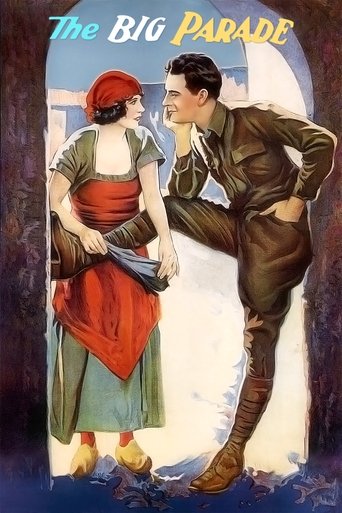
- The Big Parade (1925)
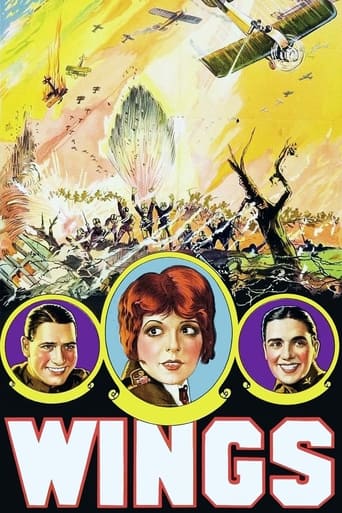
- Wings (1927)
- What Price Glory? (1926)
This film influenced
- Ben-Hur (1925)
- The Ten Commandments (1923)
- The Birth of a Nation (1915)
- Intolerance (1916)
- The Big Parade (1925)
- Wings (1927)
- All Quiet on the Western Front (1930)
- Gone with the Wind (1939)
- Doctor Zhivago (1965)
- War Horse (2011)
Film restoration
The film is preserved in the National Film Registry and was selected for preservation in the United States National Film Registry in 1995 for being 'culturally, historically, or aesthetically significant.' A complete 35mm print exists in the Library of Congress collection. The film underwent a major restoration in the 1990s by the Museum of Modern Art and the UCLA Film and Television Archive. The restored version premiered at the New York Film Festival in 1998. The film is also preserved in the MGM archives and several international film archives. While some footage remains lost or damaged, the majority of the film survives in good condition.
Where to watch
- The Criterion Collection (Blu-ray/DVD)
- Warner Archive Collection (DVD)
- The Criterion Channel (streaming)
- Kanopy (streaming with library card)
- MUBI (occasional streaming)
- Turner Classic Movies (periodic television broadcasts)
- Various public domain streaming sites (lower quality versions)